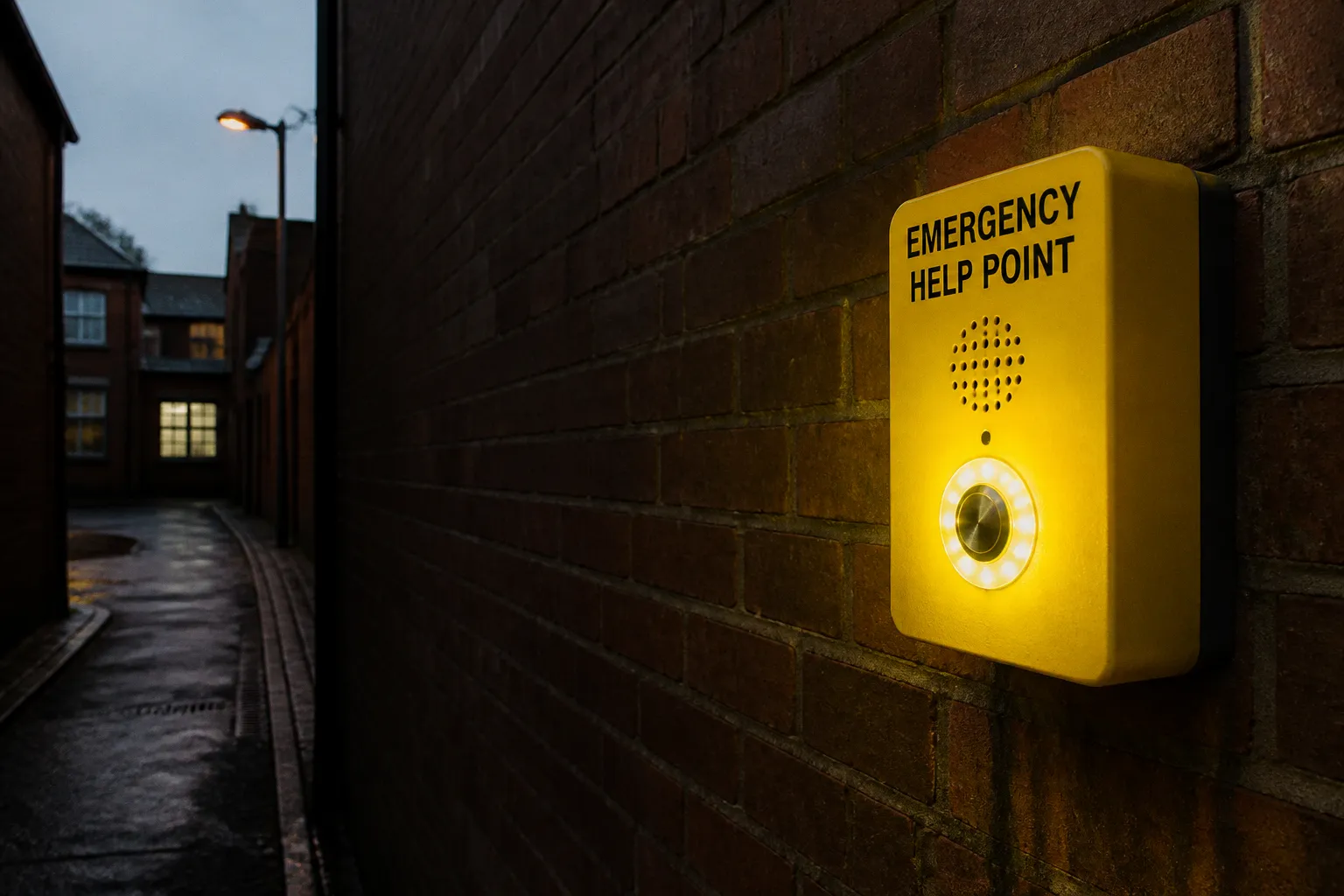
It is a substantial proportion of the borough’s recorded crime, but it does not describe a single problem with a single intervention. It points to a system requiring different access points: specialist domestic abuse support, confidential drop-in provision, late-night street assistance and trained staff in licensed venues.
For women looking for Grimsby safe spaces for women, the local framework is therefore distributed across several types of service. Some locations provide advice and longer-term support. Others are intended to offer immediate assistance during a night out or while travelling through the town centre. They should not be treated as interchangeable.
The distinction is operationally important. A domestic abuse hub is not the same as a late-night patrol. A licensed venue operating Ask for Angela is not a refuge. A safe drop-in space can provide confidential support, but it is not necessarily an emergency accommodation service.
Dedicated support hubs: Wellowgate and Brighowgate
The most clearly defined specialist location is the Domestic Abuse Services Hub opened by Women’s Aid North East Lincolnshire on 1 November 2024. It is at 15 Wellowgate, Grimsby, DN32 0RA.
The hub provides several forms of support in one setting:
- Domestic abuse drop-in sessions for women seeking initial advice or a route into further assistance.
- Legal consultations connected to domestic abuse circumstances.
- Women-only group support programmes.
- A physical point of contact for people who may not be ready to engage with a service through a formal referral route.
That last function is often underestimated. In domestic abuse cases, the barrier is not always a lack of available information. It may be uncertainty about what happens after contact, concern about being recognised, financial dependence, coercive control or the absence of a safe opportunity to make a call. A drop-in service reduces some of the administrative distance between a person and a specialist organisation.
The hub should still be understood within its actual scope. It is a specialist support facility, not a public refuge address and not a guarantee of immediate accommodation. Exact refuge locations are kept confidential for security reasons. Publishing or circulating them would undermine the protective framework those services depend on.
A second local provision is The Cove, operated by Modern Matriarchs CIC from The Snug at 2–4 Brighowgate in Grimsby. It offers a safe drop-in space for women, including general support and confidential one-to-one sessions.
The Cove serves a different but connected purpose. It creates a lower-threshold environment for people who may need to speak to someone without beginning with a formal domestic abuse assessment. The value of that arrangement lies in discretion and accessibility. A person may arrive with a clearly defined concern, or with a less settled understanding that a situation has become unsafe. The service provides a place to discuss it confidentially.
How the venues differ
| Provision | Location | Primary function | What it is not |
|---|---|---|---|
| Domestic Abuse Services Hub | 15 Wellowgate, Grimsby, DN32 0RA | Domestic abuse advice, legal consultations and women-only group support | A publicly listed refuge or general late-night patrol |
| The Cove | The Snug, 2–4 Brighowgate, Grimsby | Safe drop-in support and confidential one-to-one sessions | A substitute for emergency police response |
| Safer Streets Ambassadors | Grimsby town centre, late afternoon to early hours on selected nights | Immediate practical help, first aid and escorts to vehicles or waiting transport | A replacement for policing or specialist casework |
| Ask for Angela venues | Participating licensed premises | A discreet request for staff assistance inside a venue | A guarantee that every venue in the town participates |
The locations are useful precisely because they occupy different points in the response chain. The hub and The Cove support disclosure and onward assistance. Ambassadors address immediate night-time vulnerability. Ask for Angela gives venue staff a standardised way to recognise and respond to a request for help.
Safe access is not one building. It is a network of interventions with different operating hours, thresholds and responsibilities.
Night-time safety in the town centre
Safer Streets Ambassadors patrol Grimsby town centre from late afternoon into the early hours on Thursday, Friday and Saturday nights. Their role is practical rather than investigative. They provide basic first aid and can escort lone women to vehicles or waiting transport.
This matters because night-time risk is often concentrated around transition points: leaving a venue, walking between transport connections, waiting alone or trying to locate assistance after an incident. A visible patrol can shorten the distance between a person and help. It can also provide an alternative to navigating an unfamiliar or poorly supported route alone.
The patrol model is part of the wider Safer Streets 5 programme. Local reporting associated with the programme recorded an 88% reduction in alcohol-related anti-social behaviour around St James’ Square and a 43% drop in robbery in Grimsby Town Centre. Those figures should not be attributed to Safer Streets Ambassadors alone. The programme combined multiple interventions, including CCTV and street patrols.
That distinction is more than a technical footnote. Crime reduction results are frequently presented as if one visible measure produced the entire change. In practice, the outcome is usually the product of several inputs: environmental design, surveillance, patrol presence, venue cooperation, reporting behaviour and enforcement activity. Resource allocation becomes less effective when those components are treated as isolated successes.
The Ambassadors’ operating schedule also defines the limits of the service. Patrols are available on Thursday, Friday and Saturday nights, from late afternoon into the early hours. That does not create a permanent safety presence across every street or every time period. Anyone facing immediate danger should use emergency services rather than waiting for a patrol to appear.
For non-immediate concerns, the appropriate route depends on the nature of the incident. A person seeking specialist domestic abuse support requires a different response from someone who has become separated from friends outside a venue. A person reporting an offence requires a different response again. The local network works best when the first point of contact can direct the case to the correct service instead of attempting to handle every situation as a generic safety issue.
What an Ambassador can practically provide
The late-night patrol function is deliberately limited but useful. An Ambassador may be able to:
1. Provide basic first aid where someone is injured or unwell, while escalating serious incidents to emergency services.
2. Offer a visible point of contact for women who feel unsafe in the town centre.
3. Escort a lone woman to a vehicle or waiting transport.
4. Help connect someone to further assistance when the situation involves an incident, harassment or immediate concern.
5. Reduce the time spent alone in a vulnerable location, which is often the immediate objective after leaving a venue.
They are not a substitute for police officers, ambulance crews, domestic abuse specialists or refuge services. That boundary should remain explicit. The purpose of a preventative framework is not to give every intervention an inflated mandate. It is to ensure that each service performs the task for which it has been designed.
The Ask for Angela protocol in licensed venues
North East Lincolnshire Council’s Community Safety Partnership has implemented the Ask for Angela initiative across licensed venues. The protocol allows a patron to discreetly ask venue staff for help. Staff can then move the person to a safe area or contact the police.
The scheme is based on a simple operational principle: a person does not need to explain the full circumstances publicly before requesting assistance. The phrase functions as a signal to trained or briefed staff that ordinary customer service has changed into a safety response.
That can be relevant in several situations. Someone may feel threatened by a person accompanying them. They may need to leave without alerting another customer. They may have been separated from friends, become distressed or experienced unwanted attention. The scheme does not require the person to make a public allegation at the point of first contact.
A venue response should still be proportionate to the circumstances. If there is an immediate threat, violence or serious injury, police or ambulance assistance may be required. Moving someone to a safe area is an interim measure, not a conclusion. The venue’s responsibility is to provide an initial protective response and escalate where necessary.
The total number of private commercial venues in Grimsby actively participating in the scheme is not established in the available information. It would therefore be inaccurate to describe Ask for Angela as universal across the town’s licensed premises. The practical assumption should be narrower: use the protocol where it is recognised, and ask staff directly for assistance if the phrase is not understood.
This is one reason public awareness campaigns require more than a slogan. The scheme depends on three linked conditions:
- The public must know that the phrase exists.
- Venue staff must understand what action it is intended to trigger.
- The venue must have a basic procedure for moving someone to safety and escalating the situation.
If any one of those conditions is absent, the metric may look stronger than the real-world access. A campaign can achieve recognition without achieving reliable response capacity. Those are separate outcomes and should be measured separately.
Why the 29% figure requires targeted intervention
The 29% share of reported crime attributed to violence against women and girls in 2023/24 is not a measure of individual risk in every location. It is a borough-wide figure covering reported offences across different settings and behaviours. It should not be used to imply that every street, venue or time period presents the same level of danger.
Its value lies in resource prioritisation. It indicates that violence against women and girls is not a marginal category in the local crime profile. Harassment, assault and stalking appear among the most frequent recorded offences. Each has different prevention requirements.
Harassment may require venue management, street patrols, transport support and clearer reporting routes. Assault requires rapid intervention, evidence preservation and access to medical and specialist support. Stalking often involves repeated conduct over time and may not be addressed by a single late-night intervention. A public safety response that groups all three into one broad awareness message will lack operational precision.
A more credible approach is to connect interventions to the point at which risk occurs:
- Before an incident: public awareness, venue training, youth diversionary work and communication about support routes.
- During a night-time concern: Safer Streets Ambassadors, safe areas inside venues and transport escorts.
- Immediately after an incident: police reporting, medical assistance and access to specialist domestic abuse or sexual violence support.
- During an ongoing pattern: casework, legal advice, safeguarding and longer-term support.
- At neighbourhood level: analysis of repeat locations, time periods and forms of anti-social behaviour.
This is also where crime prevention and anti-social behaviour reduction overlap. Alcohol-related anti-social behaviour around St James’ Square, for example, is not identical to violence against women and girls. It can nevertheless affect the same public environment by increasing disorder, reducing perceived safety and making it harder for people to identify which behaviour should be reported.
The reported 88% reduction around St James’ Square and the 43% reduction in robbery in Grimsby Town Centre suggest that combined interventions can alter local incidence rates. They do not establish that all forms of harm have declined, nor do they remove the need for specialist provision. A fall in robbery can coexist with persistent harassment or underreported abuse. The metrics need to remain disaggregated.
A lower robbery rate is a positive result. It is not evidence that every safety problem in the same area has been resolved.
The place of West Marsh and wider safe-zone planning
The language of safe zones is often used broadly, but a credible local framework needs to identify what a zone contains. A designated area may include a staffed venue, a patrol route, a drop-in facility, CCTV coverage, transport access or a formal referral point. Those functions are not equivalent.
References to safer streets and safe-zone initiatives in areas such as West Marsh should therefore be assessed by their actual operating arrangements rather than their branding. The relevant questions are practical:
- Is the location staffed, and during which hours?
- Can a person enter without an appointment?
- Is support confidential?
- Can staff contact police or emergency services?
- Is the service intended for immediate assistance, domestic abuse support or general signposting?
- How is the intervention monitored?
- Does the service operate at the times when demand is highest?
Without those details, the phrase safe zone risks becoming an administrative label rather than a usable safety resource. Residents need access information. Analysts and local stakeholders need evidence about coverage, utilisation and outcomes.
This does not mean every service must publish sensitive operational information. Refuge addresses, for example, should remain confidential. But a public-facing initiative can still explain its purpose, availability and escalation routes without disclosing protected locations.
The Women’s Safety Charter and collaborative action
The North East Lincolnshire Women’s Safety Charter scheduled a collaborative public workshop for 3 September 2026 at the Holiday Inn on Wellowgate in Grimsby. The stated purpose is to establish safety action points for local businesses and individuals.
The significance of this type of process depends on what follows the workshop. A meeting can identify concerns, but it does not by itself change incidence rates or improve access to assistance. The useful output would be a defined set of actions with ownership, deadlines and measures of progress.
For businesses, that may involve staff training, clearer procedures for responding to Ask for Angela requests, improved venue exits and better coordination with local safety patrols. For individuals, it may involve awareness of available drop-in services, reporting options and ways to obtain assistance when travelling alone. For public bodies, it should involve coordination between community safety, policing, transport, domestic abuse services and communications teams.
The policy test is whether the charter improves the system at its points of failure. Those failures are usually identifiable:
1. A person does not know where to seek help.
2. The first service contacted cannot provide the required response.
3. Staff recognise a concern but lack an escalation procedure.
4. Patrols or safe spaces are unavailable at the relevant time.
5. An incident is recorded without creating a route to continued support.
6. Public reporting describes an overall reduction while concealing persistent harm in a specific category.
A prevention programme should be judged against those practical conditions, not only against the visibility of its branding.
Using Grimsby’s safety network in practice
For someone seeking help, the appropriate route depends on the immediate circumstances.
If there is an immediate threat, serious injury or an offence in progress, emergency services are the correct response. A safe space, venue employee or street patrol should not be treated as a replacement for that response.
If the concern relates to domestic abuse and the person can safely attend during operating hours, the Domestic Abuse Services Hub on Wellowgate provides a specialist point of contact. The service offers drop-in sessions, legal consultations and women-only group support.
If a person needs confidential one-to-one support or a lower-threshold place to talk, The Cove at The Snug on Brighowgate is another local option.
If someone feels unsafe in Grimsby town centre on Thursday, Friday or Saturday night, Safer Streets Ambassadors may be able to provide basic first aid, practical assistance or an escort to a vehicle or waiting transport.
If the concern arises inside a participating licensed venue, asking for Angela is intended to alert staff discreetly. Staff may move the person to a safe area or contact the police.
The operational rule is straightforward: use the nearest appropriate point of contact, and escalate when the circumstances exceed that service’s remit. No individual should have to determine the full classification of an incident before asking for help. The service network exists to make that assessment safer and more manageable.
A measured outlook for local safety
North East Lincolnshire has moved beyond a single-intervention model. The current framework combines physical support hubs, confidential drop-in provision, late-night patrols, venue-based assistance and collaborative policy planning. That is a more credible structure than relying on public messaging alone.
The remaining issue is consistency. Safe spaces must be discoverable. Patrols must be available when their coverage promises. Venue procedures must work in practice, not only in campaign materials. Crime statistics must distinguish robbery, anti-social behaviour, harassment, assault, stalking and domestic abuse rather than compressing them into one headline.
The available figures show that targeted measures can coincide with reductions in particular categories and locations. They do not justify complacency. A 29% share of reported crime linked to violence against women and girls remains a substantial policy signal, while the exact scale of underreporting and service demand cannot be inferred from that figure alone.
The likely direction of travel is continued integration: more emphasis on coordinated local responses, clearer referral pathways and stronger expectations for businesses operating in the night-time economy. The quality of that progress will be determined by metrics that track access and outcomes, not simply the number of campaigns launched.
For residents, the practical message is sober but useful. Grimsby has several safety resources, but each has a defined function. Knowing the difference between a specialist hub, a confidential drop-in space, a night patrol and a venue protocol is part of using the preventative framework effectively.