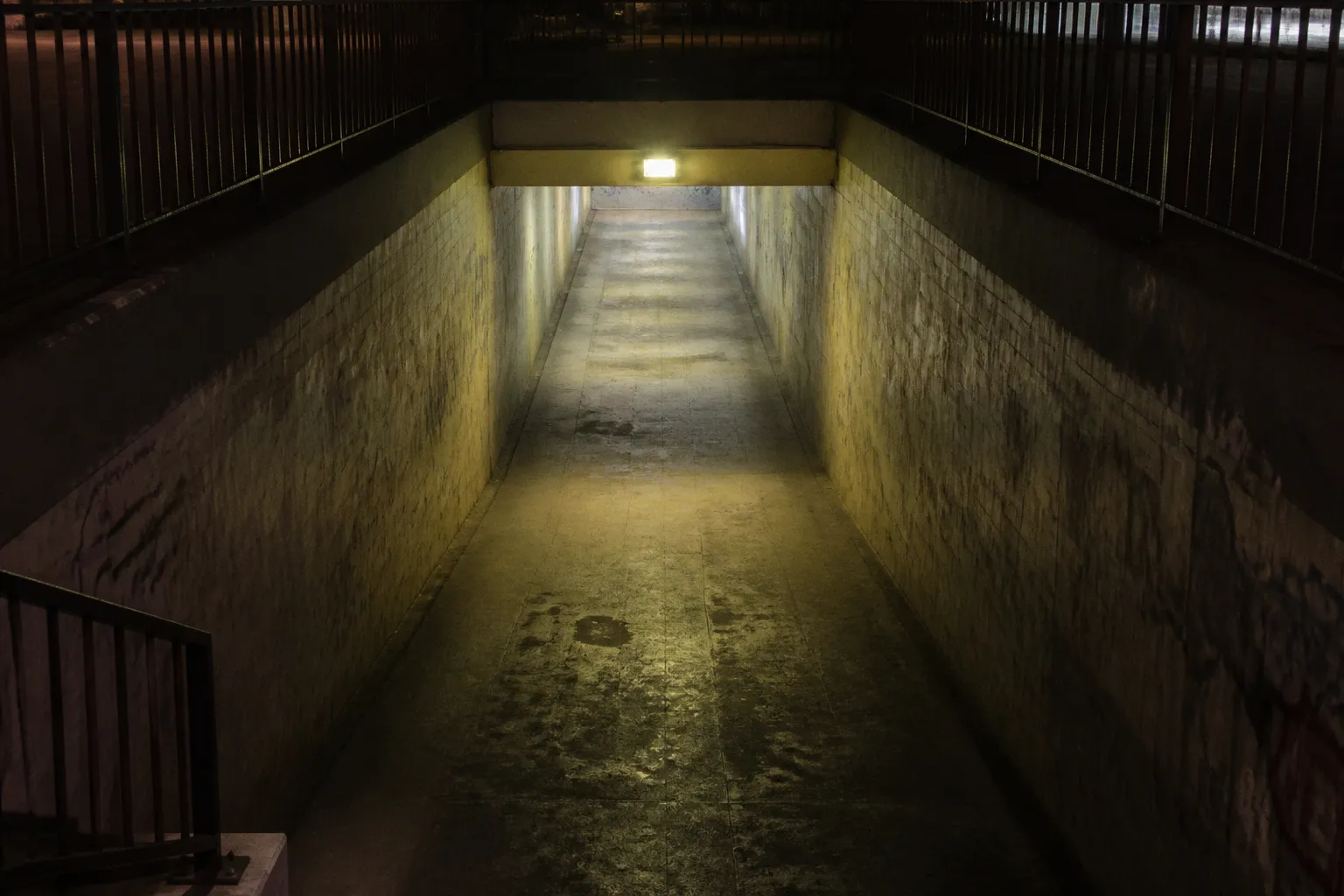
The Safer Streets 5 programme in Grimsby Town Centre was associated with an 88% reduction in alcohol-related anti-social behaviour around St James’ Square. Robbery fell by 43%, while overall crime fell by 11%.
Those are substantial recorded changes. They are also the kind of figures that can make a complicated programme look deceptively simple. A percentage appears at the end of a report, and the argument quickly becomes: the patrols worked, or the cameras worked, or the education worked.
But the available local evidence does not tell us which individual element made the decisive difference. Safer Streets 5 combined visible street patrols, CCTV investment, work with businesses, educational activity and wider community-safety measures. The results describe the programme as a whole. They do not provide a controlled comparison between wardens and education, or prove that one intervention would have produced the same result on its own.
That distinction matters when Grimsby is considering what should be protected, expanded or funded next. Immediate reassurance on a Friday night is not the same thing as changing the behaviour that creates fear in the first place. Both belong in the conversation, but they do different jobs.
The Role of Safer Streets Ambassadors in Night-Time Patrols
Strip away the branding and the Safer Streets Ambassadors are a visible, late-night presence in the town centre. They work from late afternoon into the early hours on Thursday, Friday and Saturday, covering the nights when the town centre is busiest.
Their work is practical rather than theatrical. Ambassadors assist vulnerable people who have had too much to drink or become stranded. They provide basic first aid, offer guidance and can escort lone women to their cars or waiting transport. Sometimes the value of that intervention is straightforward: a person who might otherwise be left alone gets support from someone already present in the area.
That matters in the less visible spaces around a night out. A route from a pub to a car park, a walk to a taxi rank, or the wait for a friend to arrive can feel very different when there is a recognisable safety presence nearby. The intervention does not remove every risk, and it does not turn an Ambassador into a police officer. It can, however, make it easier for someone to ask for help before a situation deteriorates.
An Ambassador does not need police powers to change the feel of a journey home. They need to be visible, prepared and present when the streets become quieter.
The Ambassadors also provide a form of community intelligence. They see the town centre as it is being used, not simply as it appears in a report the following morning. They may notice a recurring problem around a particular entrance, a pattern of people being left vulnerable, or a point where poor lighting and crowd movement create anxiety. That knowledge can be useful to police, council teams, businesses and the people responsible for the wider safety infrastructure.
Still, it is important not to oversell the role. A visible patrol can deter some behaviour, reassure some residents and support people who need immediate assistance. It cannot by itself establish whether crime has fallen because of the patrols, because of CCTV, because of changes in the night-time economy, or because several measures operated at the same time.
What a visible patrol can and cannot measure
Patrols are easier to describe than to evaluate. Their activity can be logged: hours worked, locations covered, contacts made and incidents referred onwards. Those records help explain what the team did. They do not automatically show what would have happened without the team.
A useful assessment therefore needs to distinguish between several outcomes:
- Presence: whether Ambassadors were deployed at the times and locations planned.
- Assistance: how many vulnerable people received practical support.
- Reporting: whether concerns were passed to police, council officers or other services.
- Reassurance: whether women and other residents felt more confident using the town centre.
- Prevention: whether the presence was linked to fewer incidents, rather than simply more interventions after problems had begun.
The last point is the hardest to prove. A patrol may prevent an incident that is never recorded, but there is no straightforward way to count an event that did not happen. Equally, a patrol may be valuable even when crime statistics do not move immediately, because it helps people get home safely, identifies repeat problems or supports a person who would otherwise have been left without assistance.
This is why the debate about women’s safety in Grimsby should not reduce the Ambassador service to a question of whether it has produced a particular percentage reduction. Its contribution is partly operational and partly social. The service gives people a point of contact in the environment where the concern is being experienced.
Measuring the Impact of Physical Interventions on Crime Rates
The Safer Streets 5 figures are strong, but they need to be read as programme-level results.
The reported 88% fall in alcohol-related anti-social behaviour around St James’ Square is a dramatic change. The 43% reduction in robbery and the 11% fall in overall crime also suggest that the town-centre environment changed during the period covered by the report. What they do not show is the separate contribution of each measure.
The programme included the Safer Streets Ambassadors, CCTV improvements and a dedicated CCTV officer, alongside the charter and educational work. The physical interventions may have reinforced one another, but the research supplied for this comparison does not isolate their effects. There is no direct local evidence showing what would have happened if wardens had operated without the education programme, or if education had continued without the patrols.
That makes a simple “training or wardens?” verdict impossible to support from the figures alone.
| Intervention | Immediate function | What the available evidence can show |
|---|---|---|
| Safer Streets Ambassadors | Visible presence, practical assistance, escorts and first aid | Deployment times, contacts and recorded interventions can be tracked; the independent effect on crime is not established |
| CCTV system upgrade | Monitoring, intelligence and evidence gathering | The system supported 559 incidents over three months; that figure does not specify the outcome of every incident |
| Women’s Safety Charter | Commitments by businesses and organisations, including staff awareness and safer environments | The framework and participating activity can be documented; a direct effect on crime or harassment has not been quantified |
| College and educational programmes | Work on misogyny, peer harassment and harmful social norms | Participation and programme delivery can be recorded; a local percentage reduction directly attributable to education is not available |
The £2.2 million security-system upgrade is an important part of that picture. Cameras can improve visibility across locations that are difficult to supervise continuously. They can help investigators reconstruct events and can give trained operators information to pass to police or teams on the ground.
But infrastructure is not the same as prevention in every case. A camera may deter some offending, support an intervention in progress, or provide evidence after an incident. The value depends on coverage, monitoring, image quality, staff capacity and what happens after a concern is identified. Treating the existence of cameras as proof that every risk has been addressed would be just as misleading as treating a patrol as proof that every person feels safe.
The 559 incidents supported by CCTV over three months indicate active use of the system. They do not, on their own, establish how many incidents were prevented, how many led to a police response, how many produced evidence, or what happened to the people involved. The responsible conclusion is narrower: CCTV was involved in supporting a substantial number of incidents, and its contribution should be assessed alongside the operational decisions that followed.
Physical safety is more than equipment
There is a temptation in public-safety policy to treat physical interventions as the most concrete part of the solution. Cameras, radios, lighting, patrol hours and dedicated officers can all be counted. That makes them attractive in funding applications and public reports.
Counting is useful, but it does not settle the question of quality. A camera that is poorly positioned is less useful than one covering a genuine problem area. A patrol that is visible but difficult to approach may offer less reassurance than a team that explains its role and builds trust. A business pledge means little if staff are not trained to act on it.
The practical test is whether the elements connect. Can an Ambassador report a concern through an understood route? Can CCTV operators identify the location and share relevant information? Do businesses know what to do when a customer reports harassment? Are residents told what the programme can provide and what remains the responsibility of emergency services?
Those links are less dramatic than a new installation or a headline crime figure, but they determine whether physical investment becomes a functioning safety system rather than a collection of separate projects.
Educational Charters and Changing Misogynistic Attitudes
This is where the argument for education becomes more than an attempt to balance a list of interventions.
A woman may need an Ambassador to help her get home safely tonight. That does not mean the underlying problem is solved. Public harassment, peer pressure, hostility towards women and the normalisation of misogynistic behaviour are not created by a lack of patrols alone. They are also shaped by what people are taught to accept, excuse or ignore.
The North East Lincolnshire Women’s Safety Charter is designed to bring that question into the places where decisions are made every day: businesses, organisations and other community settings. Its pledges and actions ask participants to consider how staff respond to harassment, how safe an environment feels, and what responsibility an organisation is prepared to take rather than leaving women to manage risk alone.
The collaborative workshop scheduled for September 3 at the Holiday Inn on Wellowgate in Grimsby is part of that process. A workshop is not evidence that attitudes have changed. It is an opportunity to turn broad commitments into procedures that staff and organisations can actually use. The difference between a meaningful charter and a piece of public-facing language lies in what happens after people sign up.
A business that participates seriously might review how staff respond when someone says they are being followed. It might make sure workers know where to direct a person who is frightened or intoxicated. It might examine whether its layout, exits and waiting areas create avoidable vulnerability. These are not substitutes for policing, but they can affect whether a concern is recognised early and whether a person is left to deal with it alone.
Alongside the charter, educational initiatives in local colleges address misogyny and peer harassment among young people. That work is necessarily slower than a night-time patrol. It is also harder to summarise in a single statistic. A change in language, confidence, bystander behaviour or willingness to challenge a peer may not appear immediately in crime data.
A warden can interrupt a problem in the street. Education has to challenge the permission people think they have to create that problem.
There is no supplied local percentage showing that a college workshop directly reduced harassment incidents. It would be wrong to invent one. Nor is it possible to claim from the available evidence that educational work has already changed attitudes across the town.
What can be said is that education targets a different point in the chain. Patrols and wardens address immediate conditions. Training and college programmes address knowledge, expectations and behaviour. The effects may overlap, but they should not be measured as if they were the same intervention.
Bystander training versus street wardens
The contrast between bystander training and street wardens is useful only if it remains specific.
Street wardens operate in the public environment where a problem may be unfolding. Their strengths are visibility, accessibility and practical assistance. They can support someone who is vulnerable and pass information to the appropriate service.
Bystander training works through other people. It aims to improve the chances that a friend, colleague, staff member or member of the public recognises an unsafe situation and knows how to respond without escalating it. Its reach can extend beyond the hours when wardens are deployed, but its success depends on people remembering and using what they have learned.
| Question | Bystander training | Street wardens and Ambassadors |
|---|---|---|
| Where does it operate? | In social, educational and workplace settings, and during public encounters | In the town-centre environment, particularly during night-time activity |
| What is the first task? | Recognise concerning behaviour and respond appropriately | Offer visible support and practical help to people already in difficulty |
| Main strength | Builds confidence and shared responsibility over time | Provides an identifiable safety presence in the moment |
| Main limitation | Behaviour change is difficult to measure quickly | Coverage is limited by deployment times, staffing and funding |
| Best evidence to collect | Participation, confidence, knowledge and reported use of training | Patrol logs, contacts, referrals, locations and resident feedback |
Neither column proves that one approach is superior. The local research does not compare them in isolation, and the crime reductions reported for Safer Streets 5 cannot be assigned to either one without stronger evaluation.
Integrating CCTV and Security Infrastructure with Ground Operations
The CCTV investment is the less visible part of Grimsby’s safety system, which may explain why it receives less public discussion than people in high-visibility jackets. Yet cameras and operators can influence what happens before, during and after an incident.
The programme included a £2.2 million security-system upgrade and a dedicated CCTV officer whose role was to monitor feeds and pass intelligence to local police and the Ambassadors on the ground. That role matters because footage is not automatically intelligence. It becomes useful when someone has the capacity to watch it, interpret what is happening and communicate relevant information to the people who can act.
A practical example might involve a developing disturbance in a busy public area. Ground teams may notice the atmosphere changing. A CCTV operator may be able to follow movement across several viewpoints or provide a clearer picture of where people are gathering. Police may then decide what response is appropriate. The point is not that the camera solves the situation. The point is that the system can connect observation from different parts of the town centre.
The 559 incidents supported over three months should be understood in that limited but important way. The figure demonstrates that the infrastructure was being used in operational work. It does not establish that every incident involved an immediate threat to someone’s safety, nor does it tell us whether the outcome was an intervention, a police deployment, evidence collection or another form of assistance.
That information would be needed for a fuller evaluation. Residents should reasonably want to know not only how many incidents the system supported, but also:
- which types of incidents were involved;
- whether the support was preventive, responsive or evidential;
- how information was shared between CCTV staff, police and Ambassadors;
- whether particular locations generated repeated calls for attention;
- and whether people affected by incidents were directed to further support.
These questions are not arguments against CCTV. They are the questions that make a large infrastructure investment accountable.
The limits of surveillance as reassurance
CCTV can make a space feel more monitored, but surveillance is not identical to safety. Some women may feel reassured by cameras; others may remain concerned about harassment, poor lighting, isolation or the behaviour of people around them. A camera does not escort someone across a car park, explain what to do after an incident, or challenge a friend who treats harassment as entertainment.
That is why CCTV should be connected to human activity rather than presented as a replacement for it. The most useful model is not camera versus patrol. It is a system in which each part has a defined role and the handover between them is clear.
The same principle applies to funding. The £2.2 million investment is a serious commitment, but its value depends on maintenance, staffing and continued coordination. Residents and councillors should ask how the system will be sustained when a particular Safer Streets funding cycle ends. A public-safety programme that depends on short-term money needs a plan for what happens when the grant period closes.
Synergy Between Enforcement and Community-Led Prevention
The instinct to ask whether Grimsby should choose training or wardens is understandable. Budgets are limited, public attention is limited and people want to know which intervention deserves priority.
The difficulty is that the available evidence does not support a clean winner. The Safer Streets 5 crime figures cover a combined programme. The 11% overall crime reduction, 43% fall in robbery and 88% reduction in alcohol-related anti-social behaviour around St James’ Square are reported outcomes during that programme, not proof that the combination itself caused every reduction. Other factors may have contributed, and the data does not separate the effect of each measure.
That is not a reason to dismiss the results. It is a reason to describe them honestly.
The programme appears to have brought together several layers of prevention:
1. Immediate support: Ambassadors were present during key night-time periods and could assist vulnerable people.
2. Operational visibility: Patrol teams and CCTV staff created more opportunities to identify and pass on concerns.
3. Evidence and intelligence: CCTV could support incident handling and later investigation.
4. Organisational responsibility: The Women’s Safety Charter asked businesses and organisations to examine their own practices.
5. Longer-term cultural work: College programmes addressed misogyny and peer harassment before those attitudes become further entrenched.
The layers are complementary, but complementarity is not the same as proven causation. It is a sensible programme design principle, not a conclusion that the crime figures have already demonstrated.
| Dimension | Patrols and Ambassadors | Charter and education |
|---|---|---|
| Timeframe | Immediate and tied to scheduled night-time deployment | Longer-term, with effects expected through repeated engagement |
| Primary setting | Town-centre streets and routes used during nights out | Businesses, organisations, colleges and community settings |
| Main contribution | Assistance, visibility, reassurance and referrals | Awareness, expectations, staff practice and attitude change |
| Evaluation challenges | Separating patrol effects from CCTV and other changes | Measuring changes in behaviour and linking them to the programme |
| Funding concern | Staffing and deployment depend on continued resources | Participation and delivery can weaken without ongoing ownership |
| What residents can observe | A visible team and practical responses | Changes in procedures, training and willingness to challenge harmful behaviour |
A good community-safety strategy should therefore resist two opposite mistakes. The first is to assume that more enforcement will eventually solve misogyny. It will not. The second is to treat education as a substitute for support when someone is already vulnerable in the street. It is not.
What Residents Should Ask For Next
The next stage should be less about choosing a slogan and more about improving the evidence.
For the Ambassador service, that means publishing enough information to show where and when the team is deployed, the types of assistance provided and the routes used for referrals. It also means collecting feedback from people who use the service, especially women and vulnerable people whose experiences may not appear in crime statistics.
For the Women’s Safety Charter, the test is delivery. Which businesses and organisations have taken part? What have they changed? Do staff know how to respond to a report of harassment? Are commitments reviewed rather than announced once and forgotten?
For the college programmes, evaluation should look beyond attendance. It should consider whether participants understand the material, whether they feel more confident intervening safely, and whether institutions have noticed changes in reporting, language or peer behaviour. None of those measures is perfect, but they are more informative than claiming a crime reduction that has not been demonstrated.
For CCTV, residents should ask how the 559 supported incidents were classified and what kinds of outcomes followed. They should also ask how the dedicated officer’s role is funded and how information moves between the control room, police, Ambassadors and businesses.
And for the whole programme, the central question is continuity. What remains in place when a funding cycle changes? A short-term patrol can provide short-term reassurance. A long-term reduction in risk requires institutions to keep the useful parts of the work alive.
People who run businesses in Grimsby Town Centre should engage with the Women’s Safety Charter and attend relevant council-led discussions, including the September 3 collaborative workshop at the Holiday Inn on Wellowgate. Residents should continue to raise concerns with councillors and local services, particularly when they see recurring problems in particular streets, routes or venues.
If someone is in immediate danger, call 999. For non-emergency police matters, call 101. Information can also be passed anonymously to Crimestoppers on 0800 555 111. The right reporting route matters: an emergency needs an emergency response, while patterns of anti-social behaviour and other concerns also need to enter the system so they can be understood over time.
Safer streets are built from more than one intervention: people who show up, systems that are maintained and communities prepared to challenge what they have learned to overlook.
The Safer Streets 5 results are encouraging, but they should not be used to settle an argument the data cannot answer. Grimsby does not yet have direct local evidence comparing wardens with education in isolation. What it has is a combined programme with measurable changes, visible operational work and several forms of prevention operating alongside one another.
That is a more modest conclusion, but also a more useful one. Keep the immediate support that helps people navigate the town centre now. Keep testing the infrastructure that makes information and intervention possible. Keep investing in the slower work of changing misogynistic attitudes and organisational habits. Then measure each part honestly, without claiming that a combined result proves more than it does.
Women’s safety is not protected by a percentage on a briefing sheet. It is protected when the street presence, the camera system, the business response and the community’s expectations reinforce one another — and when the people responsible are prepared to show what happened after the funding announcement.