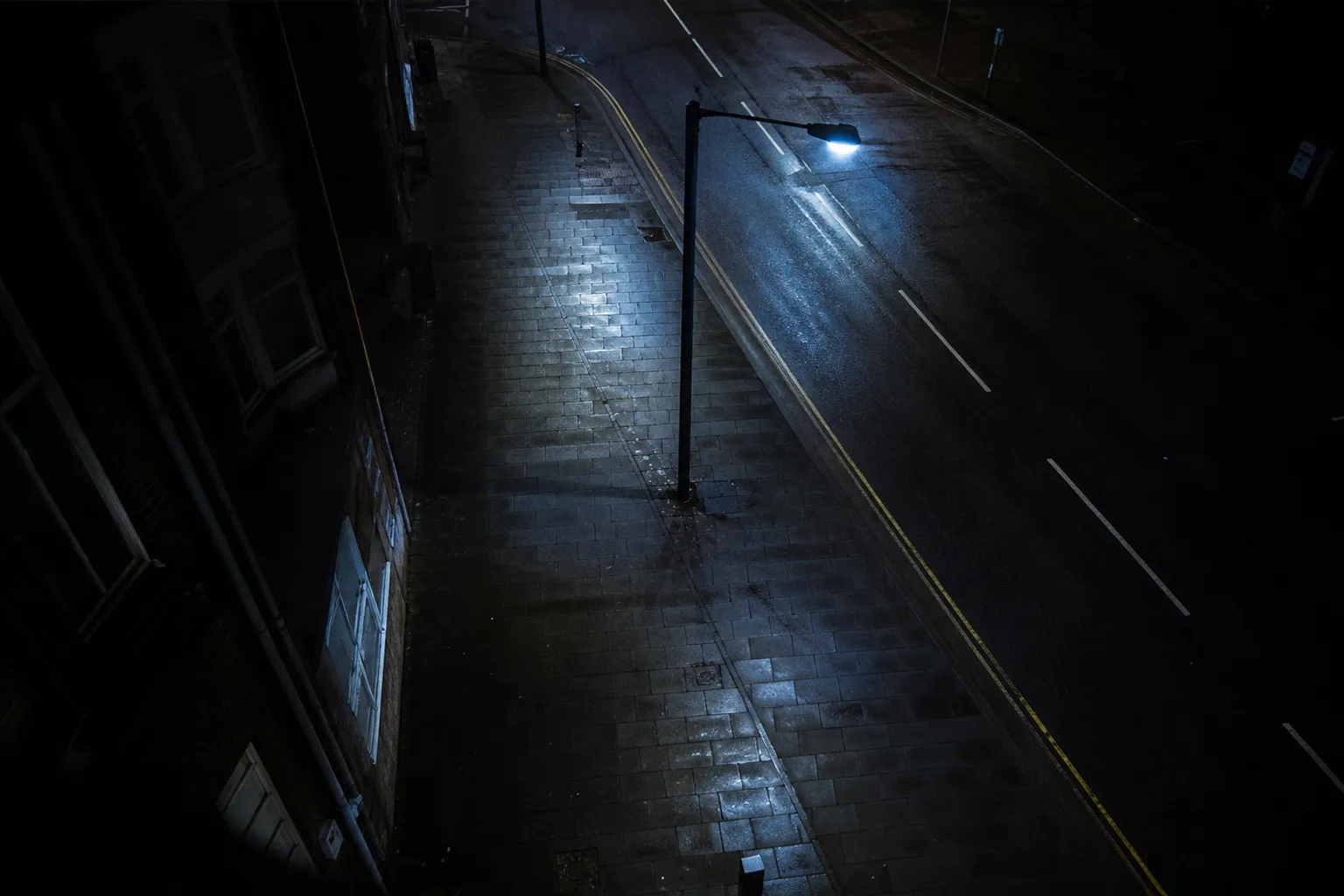
Robbery fell sharply, alcohol-related anti-social behaviour in St. James’ Square dropped substantially, and a new camera system has been used in connection with hundreds of incidents.
But the results are not a verdict that the problem has been solved. They show what targeted investment can achieve in defined areas, at particular times, when physical changes, visible staff and policing work together. The harder question is what happens beyond those zones: on the route home, around transport links, in car parks and on residential streets where the same level of coverage may not exist.
That distinction matters for anyone looking at grimsby night safety initiatives for women. A safer town centre is valuable. It is not the same thing as a safe journey from the town centre to home.
The Scale of the Challenge: VAWG Statistics in North East Lincolnshire
Start with the baseline. In 2023/24, violence against women and girls accounted for 29 per cent of all reported crime across North East Lincolnshire. That is nearly one in three recorded offences, with harassment, assault and stalking among the offences shaping the picture.
The figure should not be treated as a simple measure of how dangerous any one street is. Recorded crime reflects reporting behaviour, police processes and the way incidents are classified. It also cannot capture every experience of intimidation or harassment, particularly where someone decides not to report what happened. Even so, the proportion is large enough to establish the scale of the challenge.
The issue is not limited to one type of incident or one kind of victim. It covers behaviour that can begin as unwanted attention and develop into harassment, threats, assault or persistent pursuit. The settings vary too: licensed premises, streets, transport routes, car parks and the spaces between them. Night-time safety therefore cannot be reduced to more patrols in one busy square.
A practical response has to address several parts of the environment at once:
- Visibility: lighting, open sight lines and the removal or management of places where someone can approach unseen.
- Presence: ambassadors, venue staff, police officers and other people who can notice a developing situation.
- Response: clear ways to ask for help, report an incident and connect a person with immediate support.
- Evidence: CCTV and reporting systems that help establish what happened after an incident.
- Behaviour: bystander training and a culture in which harassment is challenged rather than treated as unavoidable.
This is where the Safer Streets programme becomes relevant. Its value is not only in the individual interventions. It lies in combining measures that are often discussed separately. Better lighting may improve visibility, but it does not replace a person who can intervene. CCTV may assist an investigation, but it does not provide immediate reassurance to someone who is distressed. Training may change how people respond, but it works best when there is a clear support structure around it.
The strongest safety schemes do not rely on one solution. They make it harder to offend, easier to ask for help and more likely that an incident will be noticed.
Measuring Success: What Safer Streets 5 Shows
The Safer Streets 5 initiative in Grimsby Town Centre was designed as a layered operation involving changes to the physical environment, increased human presence during peak periods and targeted enforcement. The audit figures indicate a meaningful improvement within the area covered.
Overall crime in the town centre fell by more than 10 per cent. Theft fell by 8 per cent. Robbery decreased by 43 per cent, while alcohol-related anti-social behaviour in St. James’ Square fell by 88 per cent.
Those numbers need to be read with some care. A percentage reduction does not explain every reason why incidents changed, and it does not show whether the same pressures moved elsewhere. Nor does a town-centre average describe the experience of every street or every person using the area. What the figures do show is that a concentrated package of measures coincided with a substantial reduction in several categories of recorded crime.
The robbery figure is especially significant from a personal-safety perspective. Robbery involves a direct confrontation and the threat or use of force. A reduction of 43 per cent suggests that the conditions for this type of offending changed during the audit period. That may reflect the combined effect of visibility, patrols, surveillance, environmental design and enforcement rather than one isolated intervention.
The St. James’ Square result points to a different lesson. Alcohol-related anti-social behaviour can be heavily influenced by what happens around venues and public spaces: where people gather, how staff respond, how quickly problems are identified and whether there is a visible alternative to simply allowing behaviour to escalate. Treating the square as a specific location with its own patterns is more useful than assuming that a general increase in policing will produce the same result everywhere.
There is also a limitation in how such figures should be used. The audit can demonstrate change in a defined period and area. It cannot, by itself, establish that every measure will have the same impact on a residential street or on a route outside the town-centre boundary. That is why future evaluations should continue to distinguish between:
| What the data can show | What it cannot establish on its own |
|---|---|
| Changes in recorded incidents during the audit period | The experience of every person using the area |
| Differences between specific offence categories | Whether all unreported incidents also fell |
| The performance of a defined intervention area | The same effect in streets outside that area |
| How often CCTV or ambassadors were involved | Which individual measure caused the reduction |
This is not an argument for discounting the results. It is an argument for using them properly. The audit supports targeted, layered intervention. It does not justify treating the town centre as a uniform space or presenting a reduction in recorded crime as a guarantee of safety.
The Role of Safer Streets Ambassadors in Night-Time Public Safety
Infrastructure alone does not provide support to someone who is frightened, unwell or being followed. That is the role the Safer Streets Ambassadors are intended to fill.
The ambassadors operate from 4pm into the early hours on Thursday, Friday and Saturday, covering the period when the night-time economy is most active. Their work includes engaging with people who may be vulnerable, administering first aid and escorting lone women safely to their vehicles. They are not simply a static security presence. Their usefulness comes from being able to move through the environment, identify concerns and offer a direct response.
Between December 2023 and August 2024, ambassadors engaged with 2,812 people and provided direct support in 153 incidents. The figures describe both the scale and the character of the programme. Most contacts did not become recorded support incidents. That does not make them irrelevant. A visible conversation, a request for help or an early intervention may prevent a situation from becoming more serious without producing a reportable incident of its own.
At the same time, the 153 support incidents are not proof that every problem was resolved or that the programme reached everyone who needed it. They are a record of interventions that took place. The number should therefore be seen as an indicator of activity, not a complete account of vulnerability in the town centre.
The ambassador model adds something that cameras cannot: immediate human judgement. An ambassador can listen to what someone says, assess whether they need first aid, help them reach a vehicle or direct them towards another service. That is particularly important in situations where the person involved may not yet want to make a formal police report.
For the scheme to remain credible, the public also needs to understand its practical boundaries. Operating times, locations and the kind of assistance available should be communicated clearly. A safety initiative becomes less useful when residents know that it exists but do not know where to find it, whether it is operating or what happens after they approach it.
The broader lesson is that presence is not only about deterrence. It is also about lowering the threshold for asking for help. Someone who would not immediately contact the police may still approach a trained member of a visible team. That first contact can create a route to medical support, venue staff, transport assistance or formal reporting, depending on the circumstances.
Technological Deterrence: How £2.2 Million in CCTV Upgrades Supports Policing
The investment in a new CCTV and security system across Grimsby cost £2.2 million. Within three months of deployment, the system had supported 559 incidents, and Humberside Police used the footage in connection with 113 crimes.
The wording matters. The available figures establish that the system supported 559 incidents and that police used footage in relation to 113 crimes. They do not establish that every supported incident led to a charge, that every recording identified an offender or that CCTV replaced other forms of evidence. Nor do they show what would have happened in the absence of the footage.
What they do show is operational use. The cameras are not simply an installation completed for public reassurance; footage has been relevant to incidents and has been accessed by police in crime investigations. That makes the network part of the wider policing and evidence process.
CCTV is most useful when it is treated as one part of a response system, not as a substitute for people, reporting or good environmental design.
The value of upgraded cameras can be considered at several stages:
1. During an incident, coverage may help operators or police understand what is taking place and where people are moving.
2. After an incident, footage may help establish a sequence of events, identify locations or support lines of enquiry.
3. Across repeated incidents, recordings may contribute to a clearer picture of patterns in a particular area.
4. For public confidence, the knowledge that a town centre has an active security system may influence how people assess risk, although that effect is difficult to separate from the impact of other measures.
None of this makes CCTV a complete answer to women’s safety. Cameras do not prevent every incident, and they cannot provide the reassurance or immediate assistance that a trained person can offer. Their effectiveness also depends on practical matters such as coverage, image quality, retention, access procedures and the ability of staff and police to act on what is seen.
It is therefore more accurate to describe the £2.2 million system as a policing support tool and a potential deterrent than as an electronic perimeter that makes every covered route safe. The 113 crimes connected with police use of the footage demonstrate relevance, but they should not be expanded into claims the available evidence does not support.
For residents, the sensible conclusion is not to assume that a camera guarantees protection. It is to report incidents and preserve information that may help an investigation. A camera system can only contribute when an incident is known, the relevant footage can be located and the appropriate agencies can use it.
Educational Outreach and the Future of the Women’s Safety Charter
One of the less visible interventions has been bystander intervention training delivered through the North East Lincolnshire Community Safety Partnership. Nearly 1,500 students across Grimsby Institute, HETA and Franklin College have received the training.
The principle is straightforward. A night-time environment is shaped not only by police officers, venue staff and security technology, but also by the people who occupy it. Someone who recognises the early signs of harassment and knows how to respond safely may be able to interrupt a situation, support the person being targeted or get help before the behaviour escalates.
Training does not mean that responsibility for safety is transferred to bystanders. The person experiencing harassment should not have to manage the situation alone, and no one should be encouraged to intervene in a way that puts them at risk. Good training needs to distinguish between direct intervention, seeking assistance, checking in with someone afterwards and reporting what has happened.
The existing programme is a foundation rather than a finished solution. Its delivery through educational institutions gives it a defined reach, but there is a wider question about how similar learning can be made available across the night-time economy and local communities. Licensed venues, workplaces, transport settings and community organisations all have different operating realities. The content and support arrangements may need to reflect those differences.
That question connects directly with the North East Lincolnshire Women’s Safety Charter. A workshop is scheduled for September 3, 2026, at the Holiday Inn on Wellowgate in Grimsby, with the stated purpose of collaboratively shaping and launching the charter. The date and venue establish when and where the event is planned. They do not, on their own, establish that attendance is open to everyone or set out the final arrangements for participation. Anyone interested should check the organiser’s published information before relying on the event as a public drop-in opportunity.
The charter matters because it could move the conversation from individual incidents to shared standards. A meaningful framework would need commitments that can be understood, monitored and revisited. That might involve venue procedures, staff training, reporting routes, transport considerations, lighting and the management of spaces where people wait or leave at night. The precise commitments remain important: broad statements about supporting safety are difficult to assess unless they are connected to actions and accountability.
A charter should also reflect the experiences of women who use the area, not only the priorities of organisations delivering services. That means making space for concerns that may not appear in police data: routes that feel isolated, places where help is difficult to find, inconsistent responses from staff or the practical barriers involved in reporting an incident.
What the Audit Means on the Ground
The audit presents a credible case for targeted safety work in Grimsby Town Centre. The recorded results include a reduction of more than 10 per cent in overall crime, an 8 per cent fall in theft, a 43 per cent reduction in robbery and an 88 per cent fall in alcohol-related anti-social behaviour in St. James’ Square. Alongside those figures, ambassadors engaged with 2,812 people and provided direct support in 153 incidents. The upgraded CCTV system supported 559 incidents in its first three months, with police using footage in connection with 113 crimes.
Together, these facts describe a layered approach rather than a single intervention. The physical environment, human presence, community training and policing technology each contribute something different. The data does not justify claiming that one of them is solely responsible for the improvement. It does support continuing to evaluate the combination.
The main limitation is coverage. A programme designed around defined town-centre areas will not automatically resolve risks on every route connecting those areas with homes, transport or parking. The next phase should therefore ask where the gaps in provision are, rather than assuming that success in one location transfers unchanged to another.
That assessment should be based on evidence from residents, venue staff, ambassadors, police and local organisations. It should also distinguish between a place where an incident has been recorded and a place that people avoid because it feels unsafe. Both matter, but they are not the same measure.
For residents, the practical response is equally specific:
- Plan the journey as well as the destination. A well-managed venue or town-centre square does not guarantee that the route beyond it has the same level of support.
- Use available help. Safer Streets Ambassadors operate during specified periods and can provide support, first aid and escorted assistance within the scope of their role.
- Report incidents and concerns. The recorded figures reflect what reaches the relevant services. Harassment, suspicious behaviour and near-misses may provide useful information even when they do not result in a formal crime report.
- Treat CCTV as supporting infrastructure, not a guarantee. Its documented value is in helping with incidents and investigations; it does not remove the need for personal judgement, venue procedures or timely reporting.
- Follow the Women’s Safety Charter process. The September workshop is scheduled, but participation details should be confirmed through the organisers. The wider charter will be stronger if it reflects practical experiences from the people who use Grimsby at night.
The new audit shows that concentrated, layered intervention can produce measurable change. It also shows why safety policy has to remain honest about its limits. A reduction in recorded crime in the town centre is progress, not a promise that every journey is safe. The next task is to extend the same level of attention to the spaces between the successful schemes: the walk home, the waiting point, the car park and the street where people still have to make their own way after the visible part of the night-time economy ends.