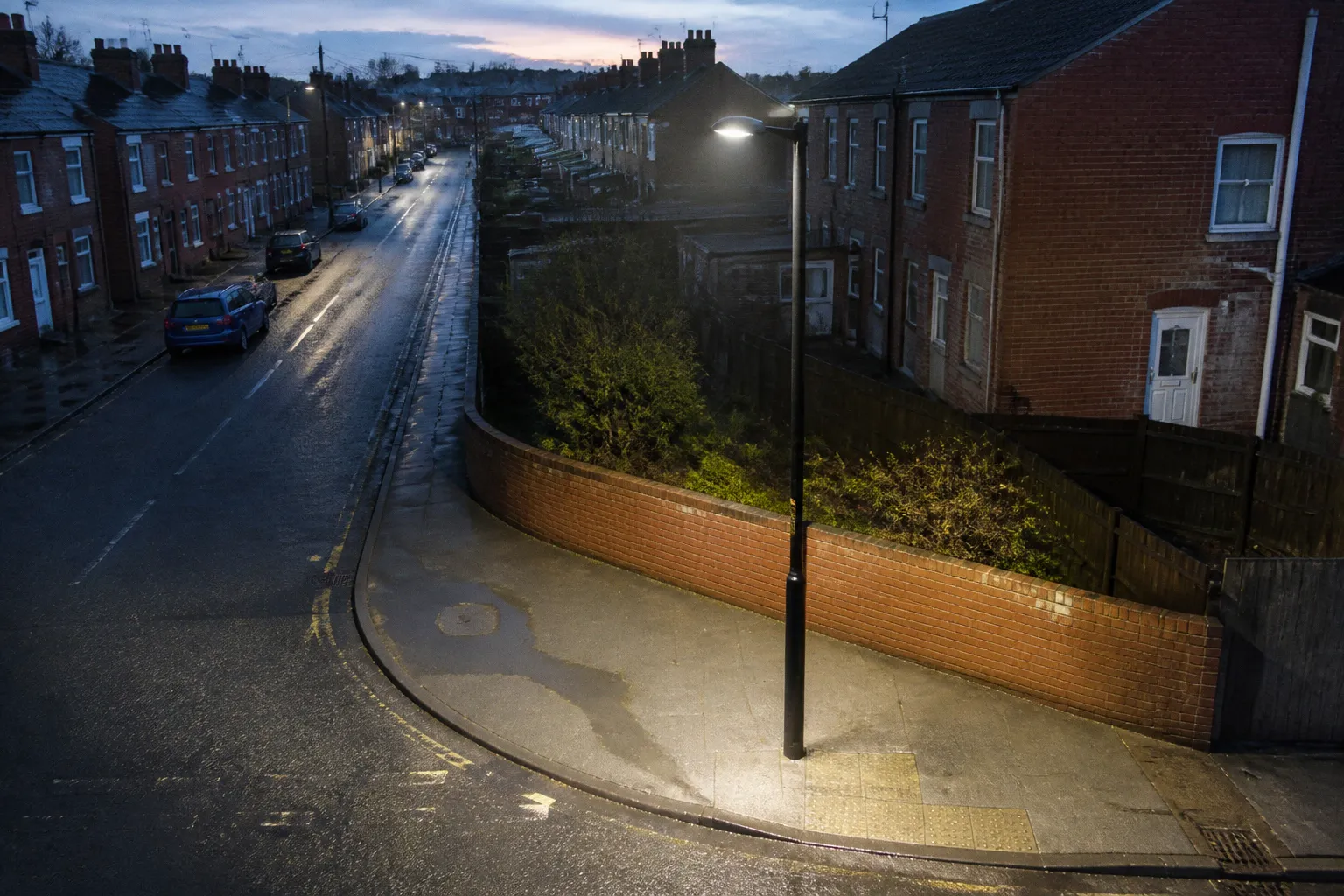
The strongest applications connect a clearly defined place with a specific problem, evidence about why that problem is happening, a practical response, and a credible plan for keeping the work going after the grant period ends.
That is the central point for anyone trying to understand the safer streets fund Grimsby scoring criteria. Whether the proposed work is focused on West Marsh, East Marsh or Grimsby Town Centre, assessors are looking for more than a list of concerns. They want to see a structured local diagnosis, an intervention that matches it, and a partnership capable of delivering what has been promised.
North East Lincolnshire has already secured substantial allocations through successive rounds of the Home Office Safer Streets Fund: £432,000 for West Marsh under Round 2, £750,000 for East Marsh under Round 4, and £300,000 for a dedicated Grimsby Town Centre project under Safer Streets 5. Those figures show the scale of the opportunity, but they also underline why competition is serious. A convincing bid has to demonstrate that public money will be directed towards a defined safety challenge and used in a way residents can feel in everyday life.
The SARA framework: turning a local concern into a fundable problem
Home Office Safer Streets applications follow the SARA problem-solving framework:
1. Scanning identifies the recurring issue, the people affected and the location where it is concentrated.
2. Analysis examines the causes, patterns and conditions that allow the problem to continue.
3. Response sets out the proposed intervention and explains why it should work.
4. Assessment measures whether the response has made a meaningful difference and what will happen next.
This structure is more demanding than describing a neighbourhood as unsafe. A bid needs to show what is happening, where it is happening and how the proposed work addresses the underlying conditions rather than only treating the visible symptoms.
For example, a project in Grimsby Town Centre addressing anti-social behaviour, shop theft and violence against women and girls needs to distinguish between those issues rather than placing them under one broad heading. The relevant evidence, affected groups and suitable responses may overlap, but they are not identical. Better lighting, improved public-space design, town-centre partnerships, staff training, youth provision and reporting routes each solve a different part of the problem.
The SARA model gives assessors a way to test whether those connections have been made. If an application identifies a problem but does not explain its causes, the response can look generic. If it proposes an attractive intervention without showing how success will be measured, the bid may appear difficult to assess. If it describes a strong programme but does not identify who will deliver it, the ambition may not be matched by capacity.
A strong Safer Streets bid is not a wish list for a neighbourhood. It is a local explanation of a problem, followed by a response that can be delivered, measured and sustained.
For community organisations, this is also a useful way to present their own evidence. Residents may know that a route feels poorly overlooked after dark, that young people have nowhere to go in the evening, or that businesses are dealing with repeated shop theft. Those observations become more persuasive when they are connected to a defined location, a pattern of incidents, the experience of affected residents and a practical proposal.
Why LSOA data and Environmental Visual Audits shape eligibility
The geography of a Safer Streets bid is not chosen solely because a ward has a strong public identity or because residents have raised concerns. Target areas are determined using Lower Layer Super Output Areas, or LSOAs, alongside Home Office crime-data benchmarks and Environmental Visual Audits.
An LSOA is a small statistical geography used to compare local conditions. It is not necessarily the same thing as a neighbourhood as residents describe it, and it may not follow the boundaries of a community group’s work. That distinction matters. A bid can be rooted in the lived experience of West Marsh or East Marsh, but its formal evidence still needs to show how the proposed target area fits the fund’s geographical and crime-data requirements.
The assessment is not based on total crime volume alone. Eligibility and prioritisation can involve evidence relating to acquisitive crime, anti-social behaviour and violence against women and girls, as well as the specific benchmarks set for the funding round. This prevents a bid from relying on a single headline figure while overlooking the nature and distribution of the harm.
Environmental Visual Audits add a different layer of evidence. Crime data can show where incidents are recorded; an EVA helps explain what the environment may be contributing to the problem. It can examine features such as:
- lighting and visibility along footways and routes used at night;
- alleyways, vacant spaces or hidden corners that reduce natural surveillance;
- the condition and design of public areas;
- signs of neglect, damage or poor maintenance;
- access points, boundaries and routes through a target area;
- places where residents, visitors or businesses feel exposed.
Taken together, LSOA data and EVAs help move a bid away from generalised language. The question is not simply whether an area has crime. It is whether the application can identify a particular place-based problem and explain how the physical and social environment may be reinforcing it.
That is especially important for projects involving environmental improvements. New lighting, planting, gates, cameras, public-realm work or changes to access can be useful, but their value depends on the problem they are intended to address. A bid should not treat physical works as automatically preventative. It needs to explain why the work is appropriate for that location and how it will operate alongside community activity, enforcement, support services or local partnership arrangements.
The three parts of the assessment
National funding proposals are assessed through three broad components: compliance, technical capability and capacity, and financial forecasting. The precise internal weighting or point breakdown for individual questions is not publicly established in the available local material, so it would be misleading to present a made-up scorecard. The shape of the assessment, however, is clear enough to show what a serious application must demonstrate.
| Assessment area | What it tests | What a convincing bid shows |
|---|---|---|
| Compliance | Whether the application meets the rules and responds to the required questions | An eligible target area, complete information and a proposal aligned with the fund |
| Technical capability and capacity | Whether the partnership can deliver the work and maintain it | Named responsibilities, realistic milestones, relevant experience and a plan for sustainability |
| Financial forecasting | Whether the costs are proportionate and understandable | Clear assumptions, sensible allocations, value for money and any required match funding |
Compliance is more than completing the form
Compliance is the foundation. A bid that does not meet the basic requirements cannot be rescued by an attractive idea or a passionate description of local need.
For local Safer Streets proposals, this means the target area must be supported by the relevant crime-data benchmarks and Environmental Visual Audit work. The application must answer the required questions in the framework provided and show how the project fits the aims of the funding round.
This is where precision helps. A proposal should identify the specific streets, spaces or routes involved rather than describing an entire town in broad terms. It should also separate confirmed evidence from local perception. Residents’ experiences are important, particularly where fear of crime or under-reporting affects daily life, but they should sit alongside recorded data and place-based observation rather than replacing them.
A compliant application also needs to recognise the boundaries of the fund. The primary bids to the Home Office are submitted by Police and Crime Commissioners or local authorities. A grassroots organisation in Grimsby does not normally apply directly to the central Home Office fund as though it were a small community grant scheme. Its role is more likely to be as a delivery partner, contributor to the local evidence base, or recipient of a sub-fund managed within the area.
Capacity determines whether the plan feels real
Technical capability and capacity are where the application has to prove that the partnership can turn an approved budget into visible work.
A good proposal makes responsibilities legible. It identifies who will lead the project, who will manage the finances, who will engage residents, who will oversee safeguarding, who will maintain physical improvements and who will collect evidence of progress. Partnership is not demonstrated by listing several organisations in a paragraph. It is demonstrated by showing how those organisations will work together when the project is under pressure.
This matters particularly in community-led safety projects, where the strength of the idea may come from a small voluntary organisation but delivery may depend on collaboration with the council, the police, schools, businesses, housing providers or established voluntary-sector infrastructure.
The delivery plan should be proportionate to the project. A modest environmental improvement may require permissions, procurement and maintenance arrangements. A youth-focused programme may need safeguarding policies, trained staff and a reliable venue. A town-centre initiative may depend on communication between retailers, local services and people using the area at different times of day.
Sustainability is part of the same test. Assessors want to understand what remains when the funded period ends. That does not mean every project must become permanently self-financing. It does mean the bid should explain whether the benefit will continue through maintained equipment, volunteer ownership, a new local partnership, mainstream service support, future fundraising or a change in how public space is managed.
Financial forecasting must tell the story of the intervention
The financial section should make it possible to understand the relationship between the problem, the activity and the cost.
A budget that simply assigns large amounts to broad headings is difficult to assess. A stronger forecast explains what each cost buys and why that expenditure is necessary in the target location. This is particularly important for projects combining physical works with outreach, training or community activity. The financial plan should not treat those elements as unrelated purchases; it should show how they reinforce one another.
Value for money is also about suitability, not just the lowest price. The cheapest equipment may not be the most durable. A low-cost activity may have limited reach if the venue, staffing or timing is wrong. Conversely, a carefully designed grassroots project can represent strong value when it uses local knowledge, existing relationships and volunteer energy to reach people who would not engage with a formal service.
Round 4 included a mandatory 50% matched-funding requirement for Police and Crime Commissioners and local authorities, while the maximum bid limit per project was up to £750,000. Match funding can make a proposal more resilient, but it needs to be described clearly. A contribution may be financial, in-kind or provided through another confirmed source, depending on the rules of the particular round. It should not be presented as guaranteed if it has not been secured.
What the Grimsby allocations reveal
The successful allocations in West Marsh, East Marsh and Grimsby Town Centre provide a useful local sequence, even though each funding round had its own requirements and priorities.
West Marsh: a defined neighbourhood response
North East Lincolnshire Council and the Office of the Police and Crime Commissioner for Humberside secured £432,000 for West Marsh under Safer Streets Round 2. The programme was launched in 2021 and completed in March 2022.
The lesson from a neighbourhood-scale allocation is that a bid must make the local geography meaningful. West Marsh is not just a label attached to a funding application. The case for investment has to show which routes, spaces and communities are affected, what evidence supports the concern, and how the programme can strengthen safety through a combination of prevention and local participation.
This is where grassroots knowledge becomes particularly valuable. Residents, voluntary groups and local organisations often understand the rhythm of an area: when a park empties, which route children use to get home, where poor visibility becomes a concern, or which community space could support constructive activity. Their contribution can help translate statistical evidence into a response that fits the neighbourhood rather than importing a generic model.
East Marsh: scale and partnership
In July 2022, East Marsh received £750,000 through Safer Streets Round 4. The size of the allocation reflects the need for a substantial, coordinated programme rather than a single isolated intervention.
Large grants create opportunity, but they also increase the burden of delivery. The application needs to show how separate strands fit together, how progress will be monitored and how partners will avoid duplication. A programme may include environmental improvements, support for community organisations, activities for young people and measures aimed at reducing anti-social behaviour, but the bid must still explain the logic joining those elements.
A large budget does not remove the need for local ownership. In practice, it makes the partnership more important. Community organisations can help ensure that the programme remains connected to residents, while statutory partners may bring data, procurement capacity, enforcement knowledge and long-term responsibility for public assets.
Grimsby Town Centre: a different kind of safety landscape
Safer Streets 5 allocated £300,000 for a dedicated Grimsby Town Centre project addressing anti-social behaviour, shop theft and violence against women and girls. A town centre has a different operating pattern from a residential ward. The population changes throughout the day, businesses and visitors share the same spaces, and concerns may intensify around transport routes, night-time activity, retail areas and public venues.
That requires a response built around the town centre’s particular use. The relevant partnership may extend beyond the council and police to retailers, security teams, transport operators, hospitality venues, community organisations and services supporting people at risk.
The focus on violence against women and girls also requires care in the design of the response. A project should not place the burden of safety solely on women and girls by telling them to change their behaviour. A credible bid needs to consider the behaviour and environments that create risk, the responsibilities of venues and bystanders, reporting routes, staff confidence and the availability of support.
The practical difference between a Safer Streets bid and a community wallet application
Local community wallet schemes sit close to the neighbourhood but operate differently from the national Safer Streets Fund. The West Marsh Wallet and East Marsh Community Wallet are local sub-funds that re-grant smaller allocations to grassroots projects, with partners such as VANEL involved in local management.
This distinction is essential for community groups considering community wallet funding in NEL. They are not expected to reproduce the full structure of a Home Office bid, nor should they assume that a small local application is assessed through the same process as a major PCC or local-authority proposal. The precise scoring rubrics used by local wallet managers are not established in the available evidence, so applicants should avoid relying on claims about a fixed points system.
The underlying discipline remains helpful, however. Even a small request becomes stronger when it answers four straightforward questions:
- What is the local issue, and who has helped identify it?
- What will the grant pay for in practical terms?
- How will the activity make the area safer, more connected or more resilient?
- What will remain after the money has been spent?
A residents’ group seeking support for a community activity in East Marsh might not need an LSOA analysis or a full Environmental Visual Audit. It can still describe the particular space, the people it intends to reach, the relationships already in place and the change it expects to see. A youth club seeking local safety grants in East Marsh can explain how regular provision creates a constructive evening space, builds trusted relationships and gives young people a stronger connection to their area. A neighbourhood improvement project can show how volunteers, businesses and local services will share responsibility for the work.
This is the point at which national strategy and local action meet. A major Safer Streets allocation may provide the wider framework, but a community wallet can help residents act on the smaller opportunities that larger programmes cannot always reach. A neglected corner, an underused hall, a gap in evening provision or a lack of trusted communication can all require modest, locally controlled investment.
The best community wallet applications do not imitate a council strategy. They show what local people can do with a manageable amount of support, in a place they know well.
How community groups can make their evidence stronger
For organisations preparing an application, the most useful preparation is often completed before the form opens. A group can begin by recording the practical detail that is easy to lose when a deadline arrives.
1. Define the place before defining the project
Name the street, estate, hall, park, route or cluster of premises involved. Explain how people use it and when the concern is most visible. A sharply defined location gives the proposal shape and makes the requested expenditure easier to understand.
2. Combine formal evidence with lived experience
Crime data can demonstrate patterns, while residents can explain how those patterns affect daily life. Local businesses may identify repeated shop theft or damage; young people may describe a lack of safe spaces; older residents may identify routes they avoid after dark. These perspectives are not interchangeable, but together they create a more complete account.
3. Match every activity to a problem
If the issue is poor visibility, explain the environmental response and the maintenance plan. If the issue is a lack of safe evening provision, show the timetable, venue, staffing and safeguarding arrangements. If the concern is weak communication between residents and services, describe the channel, the people responsible for it and how information will be acted upon.
4. Build the partnership around delivery
Invite partners because they have a practical role, not merely because their logos look reassuring on an application. A school, housing provider, voluntary group, business association or police team should be connected to a task, a contribution or a route into the community.
5. Decide how success will be recognised
Assessment does not always require an elaborate research design. It does require a meaningful way to judge progress. Depending on the project, that might include participation, use of a venue, changes to the condition of a space, feedback from residents, reports from partner organisations or evidence that the intervention has been maintained.
6. Plan beyond the grant
A community project has greater resilience when it knows who will look after the work afterwards. That might be a constituted group, a venue committee, a business partnership, a council service or a network of volunteers. The arrangement should be realistic and agreed early.
A local funding process built on trust and evidence
The scoring criteria for Safer Streets bids can appear technical because they have to protect public money and compare proposals from different places. SARA, LSOA benchmarks, EVAs, delivery capacity and financial forecasting are not bureaucratic decorations. They are ways of asking whether a proposed response is rooted in reality.
But the process should not obscure the most valuable asset in North East Lincolnshire: the knowledge held by people already working for their neighbourhoods. The strongest partnerships are those in which local residents are not brought in at the end to endorse a finished plan. They help define the problem, shape the response and decide what improvement should look like.
For major bids, that local knowledge must be translated into the formal language of evidence, geography, delivery and value for money. For community wallet applications, it can remain more direct, provided the proposal clearly explains the need and the practical change the funding will support.
Grimsby’s Safer Streets allocations show that significant investment can reach different parts of the town, from a residential ward to the centre where businesses, visitors and residents meet. The next stage is making sure that investment continues to connect with the grassroots projects that give safety work its everyday meaning: a better-used community space, a trusted youth activity, a well-supported volunteer network or a route that feels cared for rather than forgotten.
That is how a grant becomes more than a budget line. Through partnership, careful assessment and the collective effort of residents, it becomes part of the long-term revitalization and resilience of Grimsby, East Marsh, West Marsh and the wider North East Lincolnshire community.