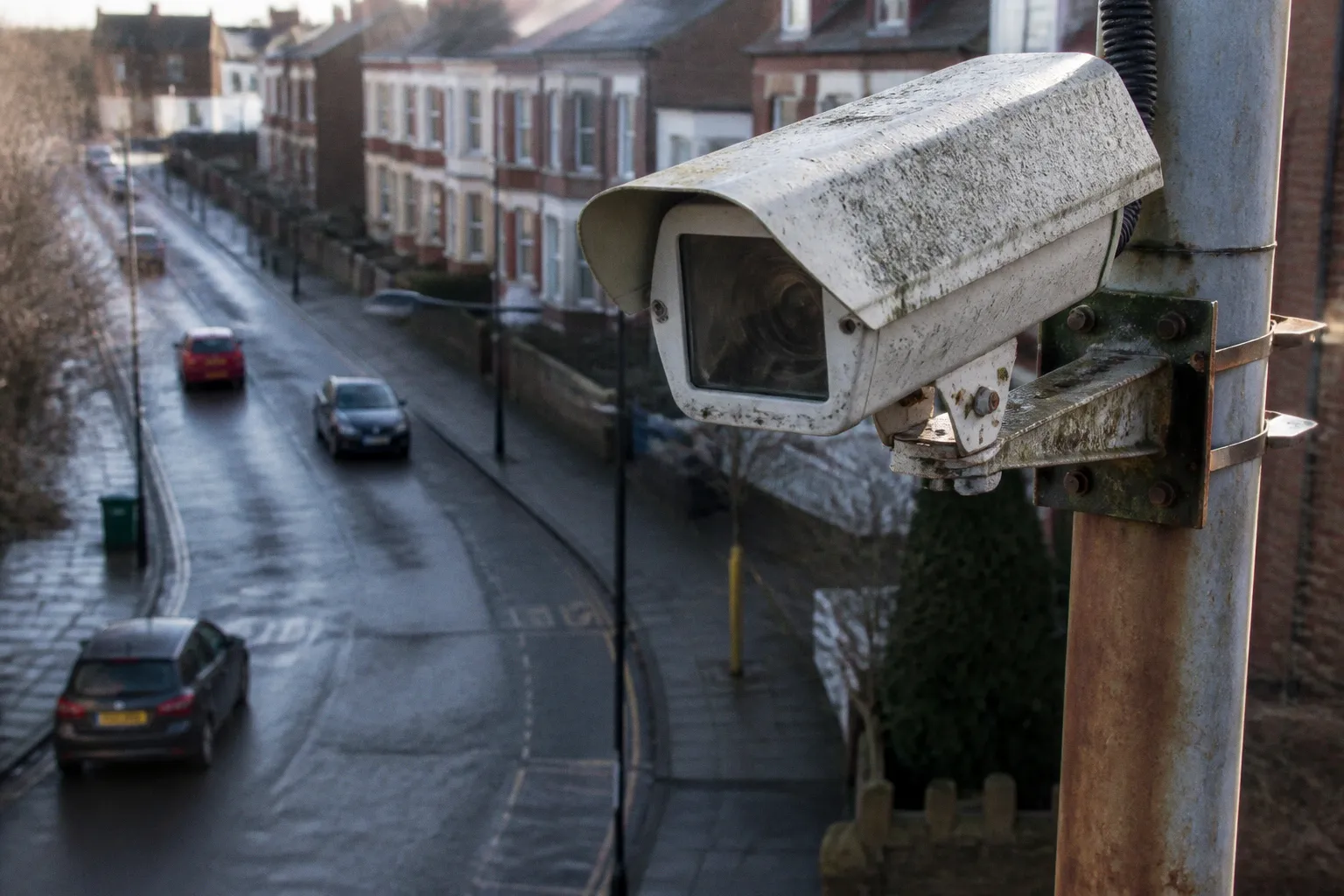
Across all rounds to date, the fund has channelled an impressive £159 million into communities up and down the country — paying for new CCTV cameras, upgraded street lighting, better home security, and the kind of physical infrastructure that makes people feel safer walking home after dark. Here in North East Lincolnshire, we've seen the tangible difference that sort of investment can make: new camera units appearing on street corners in East Marsh, improved lighting along routes in Grimsby, visible proof that someone is paying attention.
But there's a question that surfaces quietly, almost inevitably, once the scaffolding comes down and the new cameras start blinking their steady red lights: who actually pays to keep all of this running? Not next month, but next year, and the year after that? The answer reveals something important about how community safety funding really works — and it's a conversation worth having openly, because the sustainability of these projects depends on residents understanding the full picture.
The Capital vs. Revenue Funding Divide
The first thing to grasp about Safer Streets grants is what they are designed to cover — and, just as crucially, what they are not. The fund operates as a capital grant scheme, which in plain terms means it pays for the physical stuff: the cameras themselves, the mounting poles, the cabling, the lighting columns, the hardware that gets bolted into place and transforms a dark alleyway into a monitored public space. Think of it as the difference between buying a car and paying for its insurance, MOT, fuel, and servicing every year thereafter. The grant hands you the keys, but the running costs are a different budget entirely.
This isn't a quirk of one particular funding round or an oversight that might be corrected next time. It's a structural feature of how the Home Office has designed the scheme from the outset. Capital spending — one-off investments in tangible assets — sits in a fundamentally different category from revenue spending, which covers the ongoing operational costs of keeping those assets functional. When a council installs a new network of redeployable CCTV cameras using Safer Streets money, the grant covers the purchase and installation. What it doesn't touch is the salary of the person watching those feeds at two in the morning, the electricity powering the monitors, the software licences, the maintenance contracts, or the engineer who gets called out when a camera lens fogs up in February.
The Safer Streets Fund hands communities the tools to feel safer — but the long-term responsibility for keeping those tools sharp falls squarely on local shoulders.
For residents who've campaigned for months, attended consultation meetings, written to their councillors, and finally seen cameras go up on their street, this distinction can feel jarring. You fought for this investment, you watched it arrive, and now you're learning that its future depends on a completely separate pot of money — one that faces competing demands from every other service the council provides.
Why Safer Streets Grants Exclude Operational Costs
It's tempting to frame this as a flaw in the system, but doing so misses the deliberate logic behind it. The Home Office has structured Safer Streets as a pump-priming mechanism — a way to inject significant one-off investment into communities that need physical infrastructure upgrades, without creating an open-ended financial commitment from central government for every camera, every light, and every sensor installed across hundreds of local authority areas.
Consider the arithmetic for a moment. If the government committed to funding not just the installation but also the perpetual operation of every piece of equipment purchased through the scheme, the financial exposure would be enormous and essentially uncapped. A camera installed in 2023 might need monitoring, maintenance, and eventual replacement for a decade or more. Multiply that across every Safer Streets project in every participating force area, and you're looking at a recurring revenue commitment that would dwarf the original capital investment many times over.
The scheme's design reflects a pragmatic calculation: central government provides the significant upfront capital that local areas often struggle to find, and local partners — councils, police and crime commissioners, town and parish councils — commit to sustaining what's been built. It's a partnership model, and like all partnerships, it works best when both sides understand their roles from the outset rather than discovering them after the cameras are already mounted.
This is why the application process for Safer Streets funding requires bidders to demonstrate not just what they'll install, but how they'll sustain it. The Home Office wants to see evidence that local partners have thought through the revenue implications before a single camera goes up. In theory, this prevents the scenario everyone drows about: gleaming new equipment that falls into disrepair eighteen months later because nobody budgeted for its upkeep.
The Role of Local Authorities in Sustaining Surveillance
Once a Safer Streets project reaches completion and the grant-funded installation period ends, the cameras — whether fixed units on poles or redeployable systems that can be moved to respond to emerging hotspots — become the operational responsibility of the local authority. This is the moment when the baton passes from one-off investment to ongoing stewardship, and it's where the real resilience of a community safety project gets tested.
In most UK towns and cities, including those across North East Lincolnshire, public space CCTV networks sit within the council's remit. The local authority owns or controls the camera units, employs or contracts the staff who monitor the feeds, and carries the revenue budget for electricity, maintenance, software updates, and eventual hardware replacement. This arrangement isn't unique to Safer Streets-funded equipment — it applies to the broader CCTV infrastructure that councils have been building and managing for decades.
What makes this arrangement significant is a particular feature of UK local government finance: providing public space CCTV is a discretionary service, not a statutory one. Unlike social care, education, or waste collection — services that councils are legally required to provide — CCTV monitoring is something councils choose to fund because they believe it serves their communities. There's no legal obligation to keep the cameras running, no statutory minimum standard to meet, and no ring-fenced central funding stream dedicated to it.
| Aspect | Safer Streets Grant (Capital) | Local Authority Budget (Revenue) |
|---|---|---|
| What it covers | Camera hardware, installation, lighting, physical infrastructure | Monitoring staff, electricity, maintenance, software, repairs |
| Funding source | Home Office via Police and Crime Commissioner | Council tax, business rates, local budgets |
| Duration | One-off, project-based (typically 18–24 months) | Ongoing, annual budget cycle |
| Decision-maker | Home Office sets criteria; PCCs and partners bid | Elected councillors set priorities each budget year |
| Legal status | Competitive grant — not guaranteed | Discretionary service — not statutory |
This table tells a story that every resident invested in community safety should understand. The grant is a sprint — a focused, time-limited injection of resources with a clear beginning and end. The council's commitment is a marathon — an annual negotiation within a budget that has to stretch across everything from potholes to libraries to children's services.
Transitioning from Grant Installation to Council Ownership
The handover period between grant-funded installation and full council operational control is one of the most critical — and least discussed — phases of any Safer Streets project. It's the moment when a community initiative transitions into a permanent piece of local infrastructure, and how smoothly that transition goes can determine whether the investment delivers lasting value or slowly fades into irrelevance.
During the delivery period of a Safer Streets project, the partnership between the Police and Crime Commissioner's office, the Home Office, and the local authority is typically at its most intensive. There are project boards, progress reports, installation schedules, and regular communication between all parties. Everyone knows their role because the grant framework makes it explicit. But when the formal project period ends — when the last camera is installed, the final report is filed, and the grant funding is fully spent — that structured collaboration can loosen.
What happens next varies from area to area, but the general pattern is consistent: the council formally takes ownership of the installed equipment, incorporating it into its existing CCTV network and assuming responsibility for its ongoing operation. For councils that already run a well-resourced surveillance centre, this can be relatively seamless — the new cameras simply join the existing portfolio. For areas where the council's CCTV infrastructure is more limited, or where the Safer Streets investment represented a significant expansion of capability, the transition can be more challenging.
The practical steps involved in this handover are worth understanding:
1. Asset registration — The council formally registers the new cameras and associated equipment as council-owned assets, adding them to maintenance schedules and asset management systems.
2. Operational integration — Camera feeds are connected to the council's monitoring infrastructure, whether that's an in-house control room or a contracted monitoring service, and staff are trained on any new equipment.
3. Maintenance planning — The council incorporates the new equipment into its preventive maintenance programme, scheduling regular inspections, cleaning, and software updates to extend the working life of the hardware.
4. Budget allocation — Elected members and finance officers agree on the annual revenue budget needed to cover monitoring, maintenance, electricity, and eventual replacement — competing for this allocation against every other discretionary service.
5. Redeployment protocols — For redeployable camera units specifically, the council establishes clear criteria and processes for moving equipment in response to changing community needs and emerging crime patterns.
Each of these steps represents a decision point where the long-term viability of the Safer Streets investment can be strengthened or weakened. A council that integrates new cameras thoughtfully, budgets realistically for their upkeep, and maintains clear redeployment protocols will extract far more community safety value from the same initial investment than one that treats the handover as a bureaucratic formality.
Navigating Discretionary Service Status for Public Safety
Here's where the conversation gets uncomfortable but necessary. If CCTV monitoring is a discretionary service — something councils choose to fund rather than something they're required to provide — then its future is always, to some degree, contingent. It depends on the priorities of the elected members setting the budget, the financial pressures facing the authority in any given year, and the strength of the case made for continued investment.
This isn't a hypothetical concern. Across the country, councils facing severe financial pressures have had to make difficult choices about which discretionary services they can continue to afford. When budgets tighten, services that aren't legally mandated are naturally more vulnerable to reduction or reconfiguration. A council might choose to reduce monitoring hours, defer camera maintenance, or delay the replacement of ageing equipment — none of which represent a deliberate decision to make communities less safe, but all of which can gradually erode the effectiveness of a CCTV network that residents relied upon.
Community safety infrastructure doesn't end at installation — it lives or dies in the annual budget negotiations that most residents never see.
So what can communities do? The answer lies partly in the very grassroots energy that made Safer Streets projects happen in the first place. The residents who campaigned for cameras, who attended consultations, who made the case for investment — that collective voice doesn't become irrelevant once the equipment is installed. If anything, it becomes more important.
Staying engaged with local council budget consultations, making representations to ward councillors about the value of continued CCTV investment, participating in community safety partnerships, and keeping the conversation visible — these are the mechanisms through which communities can advocate for the sustained funding of the infrastructure they fought to secure. It's the same collaborative spirit that drives every successful community safety initiative: people working together, shoulder to shoulder, to make their neighbourhoods better and safer places to live.
The Safer Streets Fund has given communities across North East Lincolnshire and beyond a remarkable opportunity to invest in visible, tangible safety infrastructure. The cameras are up, the lights are on, and the difference is real. But the story doesn't end with installation. Understanding who pays for the ongoing maintenance — and why that responsibility falls where it does — is the first step toward ensuring these investments deliver lasting protection for the communities they were built to serve. The grant plants the seed. Keeping it alive is a shared responsibility, and it starts with knowing exactly what that means.