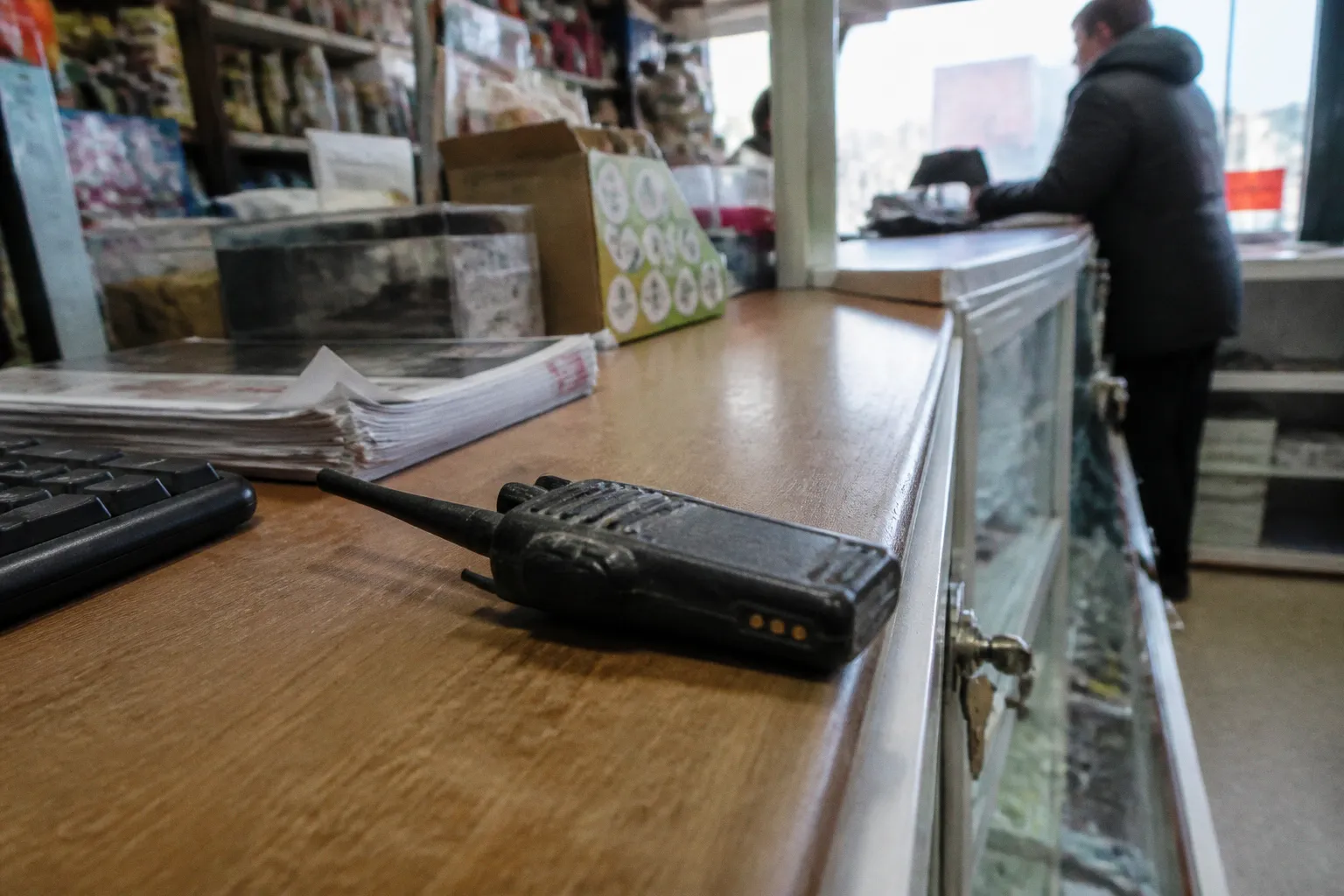
The partnership between Humberside Police, North East Lincolnshire Council's CCTV operators, and the retailers organised through the GRIP architecture gives Grimsby's independent shops one of the strongest retail-security radio networks in the region. The variable is operational discipline.
In a high-street environment where a single opportunist can cost a small independent several hundred pounds in a single morning, the radio is meant to be the fastest possible link between a shop floor and a 24/7 CCTV control room. When that link is abused - when descriptions are wrong, when calls are never closed out, when one shop transmits on top of another - the network stops being a deterrent and starts being background noise. The pattern of mistakes is predictable. Each one is fixable.
The anatomy of a failed alert
Every Shop Watch radio alert follows the same operational rhythm: a shop assistant sees something, transmits a description, the CCTV operator picks it up and tracks the suspect across the camera network, the Neighbourhood Policing Team responds if needed, and the call is closed out. When the rhythm holds, the system works. When it breaks, it almost always breaks at the first step.
The most common failure isn't malice or incompetence - it is speed. A shop assistant sees someone pocket a tin of mackerel or walk out without scanning a bottle, and their hand goes to the handset before their brain has assembled a useful description. They transmit male, dark jacket, just left the shop heading toward Freeman Street. That is not information. It is a guess. No height, no build, no age bracket, no footwear, nothing distinguishing. The CCTV operator has to scroll through twelve cameras looking for a man in a dark jacket, and by the time they isolate him on Frederick Ward Way he is already three streets away. The whole point of the network - stitching the shop-floor view to the camera view in real time - is lost in the first three seconds.
Verified details make the difference. Direction of travel, distinguishing items, time elapsed since the subject entered the shop, whether they arrived alone or with a partner, whether a vehicle was waiting outside - these are the components that turn a guess into a trackable profile. Retailers who train their staff to assemble those details before transmitting report a much faster response from the CCTV control room and a noticeably higher rate of suspect apprehension. The audit is simple: count how many of your last ten radio alerts contained at least four of those verifiable elements. If the answer is fewer than seven, the network is being underused.
The radio isn't there to confirm decisions - it's there to provide the first ten seconds of a moving picture.
The opposite failure is silence. Some shops see an incident, debate internally whether to bother the channel, and by the time they decide the suspect is gone. The Shop Watch radio exists for that ten-second window. Hesitation is as costly as haste, and the network is built to absorb some false alarms - a missed opportunity to transmit cannot be recovered later from CCTV footage alone, because by then the operator has nothing to track.
Bridging the gap between shop floor handsets and the 24/7 CCTV control room
The architecture of the GRIP radio network in Grimsby was built around a single principle: the person behind the till and the person watching the screens need to be on the same operational clock. Humberside Police, the council's CCTV control room, and the local retailers through the VANEL-supported partnership all sit inside a shared radio environment. That structure is what makes the West Marsh Shop Watch radio scheme different from a simple shop-to-shop tannoy - it is a shared instrument, not a private line.
When a verified description hits the channel, the CCTV operator at the council control room can shift cameras in real time - pulling the relevant street, tracking the suspect across the network, and either confirming or correcting the visual the shop assistant originally saw. That confirmation matters. The shop assistant saw the suspect for perhaps four seconds under bad fluorescent lighting while they were shelving stock; the operator has a clean line of sight across a thirty-metre stretch of pavement. Together, those two viewpoints build a picture that a single shop could never assemble on its own.
Where the architecture falls apart is when a retailer bypasses the link. Broadcasting a description onto a general business channel - hoping a neighbouring shop will pick it up - cuts the CCTV operator out of the loop entirely. The whole point of the partnership is that the camera operator is on the same channel, hearing the same description at the same moment, and able to act on it. Skip that link and you are back to shouting into a void. It is also why the Safer Streets West Marsh programme - secured through a £432,000 Home Office bid led by NELC and the Office of the Police and Crime Commissioner for Humberside - invested in upgraded CCTV coverage alongside the radio architecture. One without the other is half a system, and the West Marsh bid deliberately funded both.
The hidden vulnerability of analog transmissions in retail security
A radio channel that can be heard by the people it is meant to deter is a deterrent that has already failed.
This is where the hardware question becomes decisive, and where a lot of independent retailers in NEL quietly get exposed. The analogue handhelds that many small shops still use - the kind bought off the shelf years ago as a cheap access point into staff communication - are easy to listen to. A basic scanner, a smartphone app, or a modified handheld receiver can pick up those transmissions from a hundred metres away, sometimes further. Anyone with a stake in the outcome of a retail theft - including the people planning one - can sit in a parked car on a side street and hear every description broadcast across the channel in real time.
The Shop Watch and GRIP networks that operate through VANEL and the council partnership increasingly run on SIM-card-based or encrypted digital systems precisely because of this. A digital encrypted channel does not just scramble the audio - it makes the radio effectively silent to anyone not provisioned onto the network. For a retailer transmitting the description of a serial offender, or alerting colleagues to a suspected distraction crew working the perimeter of the town centre, that confidentiality is the difference between the message arriving and the message tipping off the very people it is meant to catch.
The practical instruction is straightforward. If your shop is still running on hardware you bought yourself, off the shelf, with no encryption and no central provisioning, assume the channel is compromised. Replace it, or move onto the shared GRIP infrastructure through the partnership - whatever the local authority and policing teams in NEL have provisioned. The cost of moving to encrypted digital is a fraction of what one successful coordinated theft can extract from a small retailer in a single morning.
Beyond the hardware: why isolated radio use leads to operational blind spots
Even with the right equipment, the West Marsh Shop Watch radio scheme collapses into a series of isolated conversations if shops use it as a one-to-one hotline rather than a shared channel. The temptation is understandable - a shop assistant with a theft unfolding at the counter wants to talk to their manager, or to the one neighbouring shop they trust, not to the whole network. But that is a peer-to-peer call dressed up as a security alert, and it leaves the CCTV control room and the Neighbourhood Policing Team out of the loop.
The blind spots show up in the pattern of incidents rather than in any single event. A series of thefts across different shops on the same street, by the same offender, but reported by each shop in isolation, looks like coincidence in the data. The CCTV operator never gets to thread the events together because each shop only transmits to itself. The policing team never sees the cumulative picture because each report sits in a separate file. The offender keeps working the same patch because nobody has stitched the timeline. This is the operational cost of business security initiatives in West Marsh when they are run piecemeal.
The remedy is procedural, not technical. Train every staff member with a handset to default to the open channel, to state the location and the time as a header before any description, and to assume that everything they say is being heard by both the control room and other participating shops. The Shop Watch radio network is a shared instrument. Treating it as a private phone line starves it of the very data that makes it work.
A secondary blind spot is the closure of calls. A shop transmits a description, the operator picks it up, the suspect is tracked or lost, and then nothing comes back down the channel. Other shops on the network are left wondering whether the threat is still active. Closing the loop - even with a brief no further action, suspect lost near the bus station, channel clear - keeps the network synchronised and prevents duplicate transmissions about the same incident from clogging the frequency.
Quantifying the cost of poor coordination in North East Lincolnshire
The headline figures on retail crime in the UK are national rather than local, and it is important not to misattribute them to West Marsh specifically. UK retailers absorb hundreds of millions of pounds in direct losses from retail crime each year, with a further large sum spent on prevention and detection measures. A clear majority of UK retailers report an increase in organised retail crime in recent industry surveys. None of those numbers belong to a single neighbourhood - they describe the operating environment every Grimsby, Cleethorpes and Immingham retailer is working inside, and the same vulnerabilities apply at the local scale.
What can be talked about locally is the impact of the Safer Streets West Marsh programme, secured through the £432,000 Home Office bid led by NELC and the OPCC for Humberside. That programme ran alongside the radio and CCTV architecture and included measures like alleygating and upgraded camera coverage. In Cleethorpes, the GRIP Shop Watch radio patrols around the Christmas 2024 period were followed by a reported 76% drop in shop thefts during the window covered. That single figure is the cleanest demonstration available of what the network can deliver when it is used properly and supported by visible, coordinated presence. The same architecture, applied across West Marsh, is the reason the West Marsh Shop Watch radio scheme is worth the operational discipline it demands, and is the foundation of local business crime reduction in NEL going forward.
The cost of poor coordination isn't hypothetical. A single incident where a shop transmits an unverified description, the CCTV operator chases the wrong person, and the actual offender escapes unrecorded, costs more than the price of the radio hardware that should have prevented it. Multiply that across a quarter, across a year, across the dozens of independent retailers along Freeman Street, Pasture Street, and the approaches to the town centre, and the cost becomes meaningful even before any stock loss is counted. The £432,000 that funded the Safer Streets West Marsh cycle represented an investment in exactly the kind of joined-up architecture that prevents those costs. Maintaining it requires ongoing operational discipline from every shop with a handset.
| Operational habit | What it costs the West Marsh Shop Watch radio scheme |
|---|---|
| Transmitting before assembling a verified description | CCTV operator chases the wrong subject; the actual offender leaves the area unrecorded |
| Broadcasting on a peer-to-peer channel instead of the shared network | Control room and Neighbourhood Policing Team never see the alert; cumulative offending pattern stays invisible |
| Using unencrypted analogue hardware | Anyone with a scanner hears the description in real time and can adapt their route |
| Failing to close out calls | Other shops don't know whether the threat is still active; duplicate transmissions clog the channel |
| Hesitating before transmitting | First ten seconds of tracking are lost; suspect is already out of camera range |
The radio is the easy part
The architecture is in place. The funding came through. The partnership between Humberside Police, the NELC CCTV operators, the OPCC for Humberside, and the retailers organised through VANEL has produced one of the most functional Shop Watch radio networks on the east coast. What determines whether the West Marsh Shop Watch radio scheme keeps delivering - or quietly drifts back into being an expensive piece of kit sitting on a counter - is the operational discipline of every person with a handset.
If you run a shop on the West Marsh patch, the question isn't whether you can afford to use the radio properly. It is whether you can afford not to. Train the staff. Default to the shared channel. Verify the description before you transmit. Close the call when it is resolved. Assume the wrong people might be listening if your hardware isn't encrypted. The scheme is built to catch opportunists in the act. It only works if you give it the information it needs, in the form it needs, on the channel it is designed to receive it on.
For an emergency in progress - an active assault, an injury, a violent incident in the shop - the radio is an adjunct to a 999 call, never a replacement. For everything else - the watch, the warning, the early alert - it is the single most useful piece of security hardware a Grimsby retailer can hold. Use it like one.