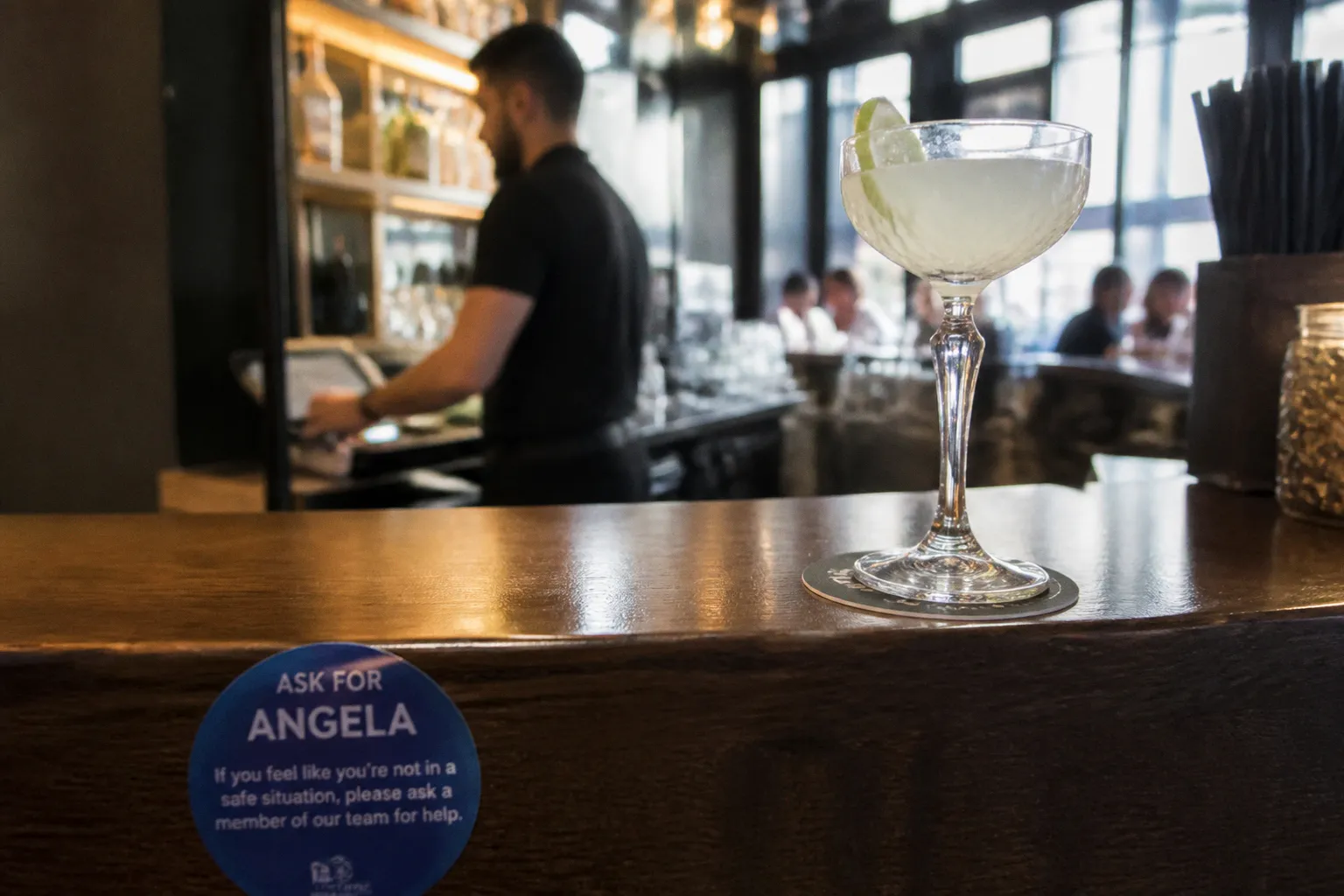
Rather than forcing someone to explain their circumstances across a crowded bar, the scheme uses a familiar phrase as a quiet request for help.
That simplicity is its strength, but it is also where misunderstandings begin. A poster behind the bar is not a safeguarding system. The scheme works only when staff recognise the request, respond without drawing attention, move the customer to somewhere safer, and help them decide what should happen next. This is why ask for angela scheme venue training matters as much as the sign itself.
For communities across North East Lincolnshire, including Grimsby, Cleethorpes, and Immingham, that distinction is part of a wider conversation about venue safety initiatives: how licensed premises can reduce vulnerability, support women and girls, and make an evening out feel safer without turning hospitality spaces into places of suspicion.
The origins and purpose of the Ask for Angela protocol
The initiative was developed by Lincolnshire County Council in 2016 and adopted by the Metropolitan Police in the same year. Its purpose was not to create a dramatic intervention or an automatic route to police involvement. It was designed to give a person an unobtrusive way to alert venue staff that they needed assistance.
The request might be made by someone who has been followed, feels threatened by a date or acquaintance, believes they have been drugged, cannot safely leave with the person they arrived with, or simply needs help getting away from an escalating situation. Staff do not need to diagnose what has happened before offering support. Their first responsibility is to create space and safety.
The wording is deliberately ordinary. A customer can ask for Angela at the bar, in a restaurant, at a club, or in another participating licensed venue without announcing that they are in danger. In a noisy environment, that discretion can make the difference between asking for assistance and saying nothing.
The wider need is clear. Data cited by the Ask for Angela initiative indicates that 53% of women report experiencing sexual harassment in pubs, clubs, or bars. UN Women UK data cited by Tayl reports that 97% of women aged 18–24 and 80% of women overall have experienced sexual harassment in public spaces.
Those figures do not mean that every venue is unsafe, nor that every uncomfortable interaction becomes a criminal offence. They do show why safety has to be treated as part of the customer experience rather than as an occasional response to an emergency.
A venue that takes vulnerability seriously can help prevent a situation becoming more serious. That may involve arranging a taxi, contacting a friend, asking another person to leave, or making a police call if there is immediate danger. The customer should be listened to and supported, not pushed into a response they have not requested unless urgent safety concerns require it.
The phrase is simple, but the protection comes from what trained staff do next.
The scheme also reflects an important shift in public safety work. Crime prevention is not only about patrols, enforcement, or physical security. It includes the small, human interventions that help people regain control of a situation before it reaches the point of crisis.
Why WAVE training is the backbone of effective venue safety
Welfare and Vulnerability Engagement, usually known as WAVE, training was introduced in 2017 to support the delivery of the Ask for Angela initiative in venues. It gives staff the practical understanding needed to respond to a request discreetly and appropriately.
That training matters because hospitality work often involves pressure, noise, intoxication, queues, conflicting demands, and limited information. A member of staff may have only a few seconds to decide whether a customer is asking for help or making an ordinary request. If the team has never discussed the protocol, the response may be hesitant, public, or inconsistent.
WAVE training helps establish a shared response. Staff should understand:
- what the request means and why it must be taken seriously;
- how to move the customer away from the person causing distress;
- how to ask what support is wanted without interrogating them;
- when to involve a manager, colleague, security staff, transport provider, or emergency service;
- how to avoid escalating the situation in front of other customers;
- how to record or communicate the incident through the venue’s safeguarding process.
This is not the same as asking bar staff to become investigators, counsellors, or police officers. Their role is more focused: create a safe pause, listen, establish the immediate need, and connect the customer with the right next step.
A venue’s internal arrangements will depend on its size and layout. In a small bar, the safest place may be a staff room or another area away from the public. In a larger club, the response may involve a welfare room, a duty manager, trained door staff, and a transport plan. The precise setting can vary, but the principles remain consistent: privacy, calm communication, and a clear route out of the situation.
Training should also address the risk of accidental confrontation. If a customer asks for Angela because they are afraid of someone nearby, announcing the request loudly or immediately approaching that person may make matters worse. Staff need to think about sightlines, exits, colleagues who can provide discreet support, and the safest way to separate the people involved.
The scheme does not automatically mean that the police will be called. Emergency services should be contacted if there is immediate danger or if the customer asks for that support. In other circumstances, the customer may want help arranging transport, contacting a friend, or leaving without being noticed.
That distinction is central to respectful safeguarding. A person who asks for assistance should not lose all control over what happens next. At the same time, staff must not ignore a serious and immediate threat simply because the customer is reluctant to make a formal report.
What good training changes behind the bar
The practical value of the ask for angela protocol for staff can be seen in the difference between recognition and readiness.
Recognition means a team knows the phrase. Readiness means every relevant member of staff knows where to take the customer, who to alert, how to keep the conversation private, and how to handle the person causing concern.
That difference is not theoretical. A BBC investigation cited by ProFM Group visited 25 London venues and found that 13 failed to respond appropriately or declined the request altogether. The findings underline a straightforward point: participation without active training can create false reassurance.
The presence of a poster may lead customers to believe that help is available. If staff are unaware of the scheme, the customer can be left more exposed than before, having taken a risk by asking and received no meaningful support.
The standard response when a customer asks for Angela
The Ask for Angela process should be familiar enough to follow under pressure, while leaving room for staff judgement. A useful response generally moves through several practical stages.
1. Recognise the request without making it public
The staff member should respond calmly and avoid repeating the phrase loudly. There is no need to demand an explanation at the bar or ask the customer to prove that something is wrong.
A neutral acknowledgement allows the situation to move forward without alerting the person who may be causing distress. If the customer is visibly frightened, intoxicated, injured, or being watched closely, staff should treat those signs as part of the safeguarding picture.
2. Move the customer to a safer area
The guidance for the scheme directs staff to move the customer somewhere out of sight of the distress-causing individual. Depending on the venue, that might be a staff room, kitchen, toilet area, office, welfare room, or another controlled space.
The aim is not to isolate the customer in a way that feels threatening. It is to create privacy and reduce the immediate pressure. Ideally, a trained colleague or manager should know where the customer has been taken, particularly if there are concerns about assault, coercion, drugging, or stalking.
3. Ask what support they need
Once away from the immediate situation, staff can ask open and practical questions. They may need help leaving, contacting a friend, arranging safe transport, speaking to security staff, or contacting emergency services.
The customer may not want to describe everything that happened. They should not be pressed for a detailed account before receiving basic support. Staff can establish enough to understand the immediate risk and the person’s preferred next step.
This is where empathy matters. Someone who has asked for help may already feel embarrassed, disbelieved, or worried about causing trouble. A calm response can reduce that burden. The customer does not need to justify why they feel unsafe in order to be treated with care.
4. Separate the parties safely
The venue may need to ask the distressing person to leave, prevent them from following the customer, or arrange for the customer to exit through a different route. Any intervention should be planned with the safety of staff and the customer in mind.
If the person causing concern is aggressive, intoxicated, or known to be carrying a weapon, staff should not attempt a solo confrontation. Managers, trained security personnel, and emergency services may need to become involved.
Again, the scheme is not a substitute for emergency response. It is a way of opening a safe conversation and enabling a proportionate response.
5. Help the customer leave safely
A customer may need transport, a trusted contact, or time to wait away from the entrance. Simply pointing towards the door may not be enough if the person causing distress is outside or waiting nearby.
The venue can help by arranging a taxi, contacting a friend, using a different exit, or asking staff to remain nearby while the customer gets away. The appropriate step depends on what the customer wants and what risks are present.
The most important detail is that staff should not disclose where the customer has gone or allow the distressing person to obtain that information through casual conversation.
A poster is an invitation, not proof of preparedness
Ask for Angela posters have a valuable role. They tell customers that a venue recognises vulnerability and offers a discreet route to support. They also contribute to a broader culture in which women, young people, and other customers can ask for help without feeling that they are overreacting.
But a poster cannot assess risk, protect privacy, or arrange a safe journey home. It is the visible part of a system whose most important work happens out of public view.
| Approach | What the customer sees | What happens in practice | Main weakness |
|---|---|---|---|
| Poster only | A sign suggests that support is available | Staff may know the phrase, but not the response | The customer can be left without help or given a public, improvised response |
| Basic staff awareness | Some employees recognise the request | A manager may be called, but the response varies by shift | Support depends on which staff members are working |
| WAVE-informed venue response | Staff recognise the request and follow a shared approach | The customer is moved to safety, listened to, and supported with an agreed next step | The system still needs regular refreshers and management oversight |
| Whole-venue safeguarding culture | Staff, managers, security, and transport arrangements work together | The venue can respond discreetly to different levels of vulnerability and danger | It requires sustained partnership rather than a one-off campaign |
The difference between these models is particularly important in evening economies, where staff turnover can be high and casual employees may not have received the same induction as permanent managers. A venue that introduced the scheme several years ago cannot assume that every current team member understands it.
Refresher training, short shift briefings, and clear internal guidance can keep the response alive. Managers should also consider what happens when the usual welfare lead is absent, whether door staff understand their role, and whether staff know how to escalate an urgent concern.
This is where local partnership becomes practical rather than ceremonial. Licensed venues, councils, police teams, business groups, transport providers, and community organisations can all contribute to a safer night-time environment. No single poster, venue, or agency can carry the whole responsibility.
What this means for venues in North East Lincolnshire
The exact venue-level compliance rate for North East Lincolnshire is not established in the available evidence, so it would be misleading to suggest that every venue displaying the scheme has the same level of preparation. Grimsby, Cleethorpes, and Immingham have different venue patterns, town-centre pressures, transport arrangements, and community networks.
That local variation is not a reason to dismiss the scheme. It is a reason to approach it as a grassroots safety measure that needs to be embedded in the realities of each place.
A small independent bar may need a simple written procedure, two trained duty staff on busy nights, and a reliable taxi contact. A larger venue may need a welfare space, radio procedures for security teams, incident recording, and a clear relationship with local safeguarding partners. A town-centre partnership might coordinate awareness materials and encourage venues to share learning when a response has not worked.
The best venue safety initiatives in Grimsby and elsewhere will be judged by what happens during an ordinary busy shift, not by how polished the campaign materials look. Staff need to know where the safe area is. They need to know who can make decisions. They need to understand that a vulnerable customer may appear calm, angry, intoxicated, confused, or reluctant to speak.
The scheme can also sit alongside other prevention work:
- staff awareness of drink spiking concerns and signs of distress;
- clear arrangements for supporting someone who has lost contact with friends;
- safe transport information at the end of the night;
- training on harassment, stalking, and coercive behaviour;
- youth diversionary and public awareness programmes;
- cooperation with local campaigns addressing violence against women and girls;
- responsible retail and door-staff practice where alcohol-related incidents are a concern.
None of these measures should be treated as a substitute for criminal investigation or specialist support. They are layers of prevention and early intervention, helping staff respond before a vulnerable person is left alone with a problem.
A safety scheme earns trust through the quiet consistency of its response, not through the brightness of its poster.
For customers, knowing how the scheme works can make it easier to decide whether to use it. Asking for Angela does not commit someone to reporting a crime, speaking to the police, or explaining every detail. It is a request for support. Staff should help clarify the available options, while urgent danger must be treated urgently.
For venue owners and managers, the question is more demanding: would every person on tonight’s shift know what to do? If the answer is uncertain, the work is not finished.
The social and commercial value of taking vulnerability seriously
There is a strong public safety case for training, but there is also a practical one for venues. According to YouGov data cited by the Ask for Angela initiative, 49% of people, including nearly two-thirds of women, say they are more likely to visit venues that have safety protocols to protect women and girls.
That does not turn safeguarding into a marketing slogan. It shows that customers notice whether a venue appears prepared to care for them. People choose where to spend their evenings based not only on music, food, or drinks, but also on whether they feel respected and able to seek help.
A reliable response can strengthen the relationship between a venue and its neighbourhood. Residents are more likely to support a lively night-time economy when businesses demonstrate that they take harassment and vulnerability seriously. Staff may also feel more confident when they have a plan rather than being expected to improvise during a difficult incident.
The benefits spread through partnership. A venue that responds well can help a customer reach a friend or transport safely. A council can support consistent public messaging. Police and safeguarding teams can clarify escalation routes. Community groups can help ensure that prevention campaigns reflect the experiences of local residents rather than relying on generic language.
This collective effort is especially important because safety is not experienced equally. Women and girls may plan journeys around lighting, transport, doorways, and the behaviour of strangers. Young people may hesitate to approach staff because they fear being blamed for drinking or being in the wrong place. A person who is intoxicated, disabled, neurodivergent, or unfamiliar with the area may need a more patient explanation of what help is available.
An effective protocol leaves room for those differences. It does not assume that everyone will ask for help in the same way or want the same outcome.
How other neighbourhood venues can strengthen their response
Any venue considering the scheme can start with a few grounded actions rather than treating it as a branding exercise:
1. Train the whole team, not only managers. Bar staff, floor staff, door staff, cleaners, supervisors, and temporary workers may all be the first person a customer approaches.
2. Agree the safe location in advance. Staff should know where a customer can go, how privacy will be protected, and how colleagues can provide support without creating a crowd.
3. Write down the response in plain language. A short procedure should cover recognition, discreet movement, support options, transport, escalation, and what to do if the distressing person follows.
4. Practise the difficult moments. Training should include a customer who does not want police involvement, a person who is too distressed to explain, and a situation where the alleged harasser is still inside the venue.
5. Refresh knowledge when staff change. A scheme is only as reliable as the least-prepared shift. New starters need an induction, and established teams benefit from occasional reminders.
6. Build local relationships. Venues should know how to contact relevant safeguarding partners, transport providers, security colleagues, and emergency services when the situation demands it.
7. Learn from incidents without exposing customers. Managers can review what worked, where communication failed, and whether the physical layout made safety harder, while protecting personal information.
These steps are modest, but together they turn an idea into a functioning safeguard. They also make it easier for venues to contribute to wider crime prevention and anti-social behaviour reduction across North East Lincolnshire.
A scheme that depends on people
Ask for Angela has travelled far beyond its Lincolnshire origins because the underlying need is widely understood. People want a discreet way to say that something is wrong. They want to be believed without being put on display. They want the next step to be safe, proportionate, and theirs wherever possible.
The protocol for staff is not complicated, but it is not automatic. Effective delivery depends on WAVE-informed training, clear venue procedures, thoughtful management, and a willingness to treat vulnerability as part of everyday public safety.
For customers in Grimsby, Cleethorpes, Immingham, and beyond, a poster can be a reassuring sign. The real measure comes when someone quietly asks for Angela and a trained member of staff knows how to stand beside them, move them out of danger, and help them get home safely.
That is the essence of community safety: not a promise that nothing difficult will happen, but a collective effort to make sure people are not left to face it alone.