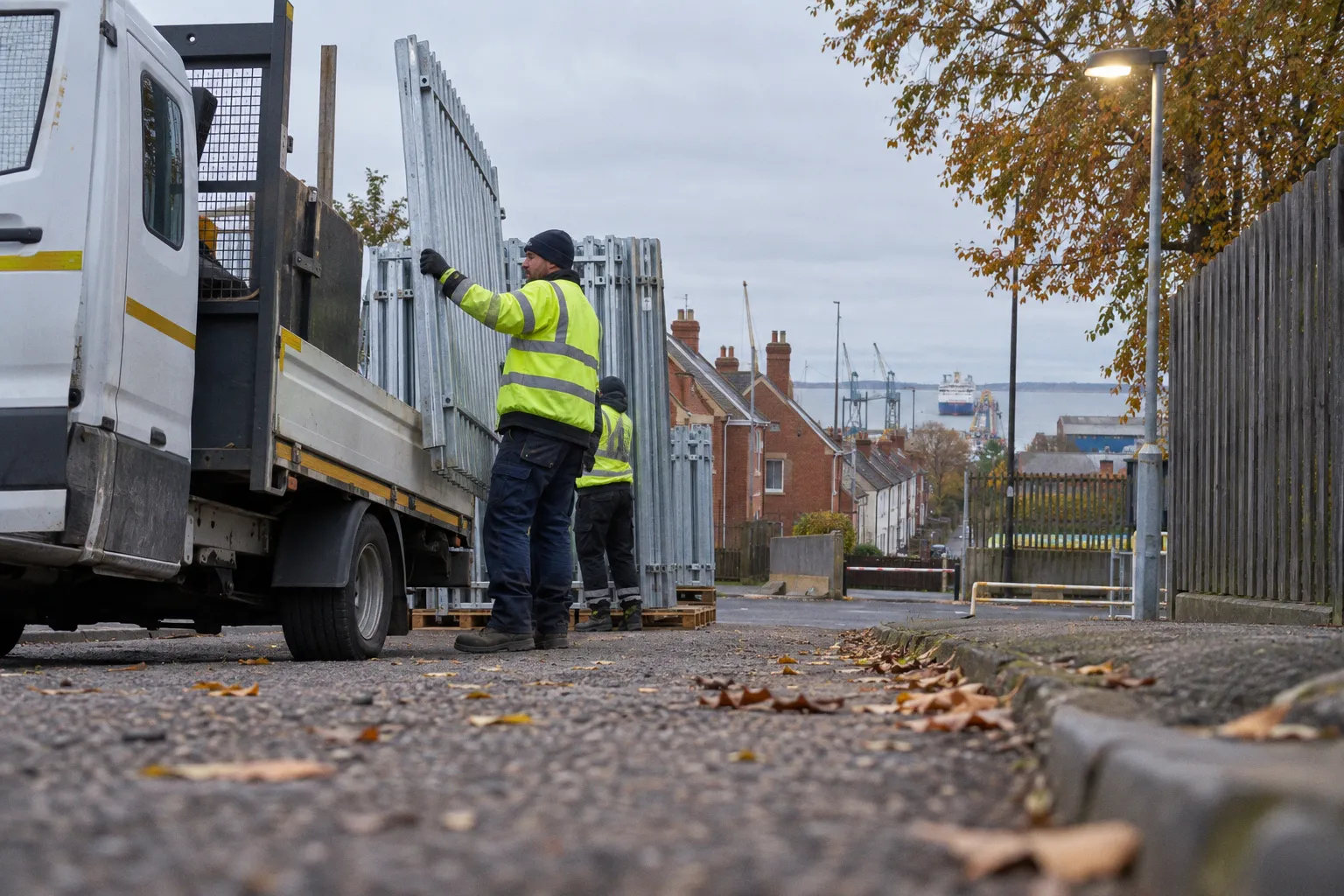
In East Marsh, the Home Office allocation reached £749,500, with a separate £50,000 wallet offering grants of up to £7,500 per project.
Those figures show what a government-backed community safety grant can make possible: environmental improvements, alleyway clearance, home security equipment, target hardening and locally led projects delivered at a scale that is difficult to reach through collection tins, sponsored events or small business donations alone.
But scale is not the same as freedom. Public funding arrives with geographic boundaries, application rules, delivery deadlines and reporting responsibilities. Local fundraising is usually smaller and less predictable, yet it can be quicker to organise, more responsive to a particular street and less tied to a fixed programme.
For neighbourhoods across North East Lincolnshire, the real question is not simply whether grants are better than fundraising. It is which route fits the work in front of residents — and whether a partnership between the two can build something stronger than either approach on its own.
What government safety grants have made possible in West and East Marsh
The West Marsh and East Marsh programmes offer a useful local comparison because they combined significant public investment with grassroots decision-making.
The West Marsh programme was secured by the Office of the Police and Crime Commissioner for Humberside and North East Lincolnshire Council through the Home Office Safer Streets 2 Fund. Announced in June 2021, it carried £432,000 for the wider initiative. Part of that investment was channelled through the West Marsh Wallet, administered by Voluntary Action North East Lincolnshire, or VANEL.
The wallet was designed to support community and voluntary sector activity aimed at reducing crime on specific ward streets. Its total pot was £20,000, with individual allocations available up to £20,000. That unusually high ceiling meant the scheme could support a substantial single project rather than only a series of small purchases, although the relevant streets and eligible activity still mattered.
East Marsh received a larger Safer Streets allocation of £749,500. The programme supported practical changes such as clearing alleyways, improving the local environment, installing home security equipment and strengthening the physical protection of properties. It also included grant distribution for community-led work.
The East Marsh Wallet, launched on 31 October 2022, carried a total fund of £50,000. Local community and voluntary groups could apply for up to £7,500 per project, with funded activity required to be completed by 31 August 2023.
That combination is important. A public safety programme does not have to mean that every decision is made at a distance from the neighbourhood. The strongest model is often layered: public money pays for infrastructure and coordinated delivery, while residents and voluntary organisations shape smaller projects around the places and behaviours they know best.
A local group may understand why one alley feels unsafe after dark, why a youth space is not being used, or why residents are reluctant to report repeated anti-social behaviour. A grant programme can provide the resources to act on that knowledge, but it cannot manufacture the knowledge itself.
The most useful public funding is not only money brought into a neighbourhood; it is money that leaves room for the neighbourhood to recognise its own priorities.
Community safety grant vs local fundraising: what each route does well
The difference between a community safety grant and local fundraising is easiest to see in the kind of work each can support.
Public grants are suited to projects with a defined objective, a clear delivery period and a connection to a wider safety strategy. They can support improvements that require professional contractors, coordinated procurement or a level of investment beyond the reach of a small resident group. Alleyway clearance, security equipment and environmental revitalisation all sit more comfortably within a funded programme than within a weekly community collection.
Local fundraising has a different strength. It can follow the pace of residents rather than the pace of a funding round. A group might raise money for lighting around a community venue, equipment for a youth session, planters that reclaim a neglected corner or activities that build trust between younger residents and local volunteers. These may be modest interventions, but their value can lie in how quickly they appear and how closely they reflect local relationships.
| Consideration | Government safety grant | Local fundraising |
|---|---|---|
| Scale of investment | Can bring substantial capital into a defined area, as seen in the £432,000 West Marsh and £749,500 East Marsh allocations. | Usually grows in smaller increments and depends on local capacity, donors and events. |
| Geographic reach | Often restricted to named wards, streets or census output areas. | Can respond to a particular street, venue or shared local concern, provided supporters agree. |
| Speed | Requires an application, assessment and formal delivery period. | Can begin as soon as a group has a clear purpose and access to funds. |
| Type of work | Well suited to infrastructure, security upgrades, coordinated services and planned programmes. | Well suited to small equipment purchases, activities, communications and quick local responses. |
| Administration | Usually involves eligibility rules, budgets, monitoring and evidence of delivery. | Less formal in some cases, but still requires responsible handling and transparent records. |
| Long-term security | Creates opportunities but is time-limited; it does not guarantee ongoing funding. | Can build a continuing supporter base, though income may vary from year to year. |
| Community ownership | Strong when residents help design and deliver the project; weaker if the process is overly centralised. | Often highly personal and visible because the money comes directly from local effort. |
For voluntary sector organisations in North East Lincolnshire, the practical choice may therefore be a matter of matching the funding source to the intervention. A grant application can finance a programme that needs a proper budget and measurable outcomes. Fundraising can keep a smaller activity alive while the group waits for a suitable grant round, or help pay for costs that a particular grant cannot cover.
The two routes can also reinforce each other. Public funding can establish a safer, more welcoming physical setting. Local fundraising can then support the regular activity that makes people use that setting: a youth club, residents’ group, community café, gardening session or evening meeting.
The hidden workload behind public money
The headline amount of a safety grant is easy to remember. The administrative work is less visible, but it can determine whether a small group is ready to apply.
A public grant normally begins with eligibility. The project may need to be based in a specific ward, serve particular streets or fall within defined census output areas. West Marsh and East Marsh were not open-ended pots for any safety idea anywhere in Grimsby. Their geographic boundaries were part of the programme design.
That is why an otherwise strong project can be unsuitable for a particular funding round. A group may have a well-supported proposal for an area just outside the eligible boundary, but public money attached to a place-based safety scheme cannot simply be moved to wherever the need appears most compelling.
The second consideration is the delivery window. The West Marsh Safer Streets project had a completion deadline of 31 March 2022. East Marsh Wallet recipients had to complete their projects by 31 August 2023. These dates belong to completed funding cycles, but they illustrate the nature of the commitment: the money is connected to a timetable, not offered as a permanent neighbourhood budget.
For a grassroots organisation, that timetable affects everything from volunteer availability to supplier quotes and venue bookings. A project that sounds straightforward on paper may need to coordinate permissions, purchases, contractors, safeguarding arrangements, publicity and evidence of what changed.
The application itself also asks a group to turn local concern into a workable plan. It is not enough to say that residents feel unsafe. A persuasive proposal explains what will happen, who will take part, where the activity will be delivered and how the group will know whether it helped.
That does not mean reducing community life to a collection of performance indicators. It means showing that the proposed spending is connected to a real local problem. A residents’ group might describe repeated damage around a passageway, low use of a public space after dusk or a lack of constructive provision for young people. The grant application then needs to show how its proposed response addresses that problem rather than simply adding another activity to an already crowded list.
A small partnership can make this work more manageable. Residents bring lived knowledge, a voluntary organisation may have experience with budgets and safeguarding, and a council or policing partner can help connect the proposal to wider safety priorities. The most resilient applications are rarely the work of one person typing late into the evening; they are built through shared understanding before the form is submitted.
When local fundraising is the better tool
There are moments when a local campaign should not wait for a grant round.
If a community space needs a small piece of equipment, if volunteers want to start a weekly activity or if residents have identified a practical improvement that can be delivered quickly, fundraising may be the more proportionate route. It avoids spending months preparing a proposal for a grant whose scale and timetable do not fit the work.
Fundraising also allows a community to test an idea. A modest campaign can show whether residents attend, whether local businesses are willing to contribute and whether volunteers can sustain the activity. That experience becomes useful evidence if the group later applies for a larger community safety grant.
The strongest local fundraising is not simply a request for money. It is an invitation to participate in revitalisation. A shopkeeper may offer a venue, a residents’ association may provide volunteers, a local business may donate materials and a youth organisation may bring knowledge of what young people will actually use. The financial contribution matters, but the partnership around it can be just as valuable.
There are limits, of course. Fundraising cannot reliably replace large public investment in security infrastructure or major environmental work. It can also place considerable pressure on the same small group of volunteers, particularly in neighbourhoods where residents are already giving their time to food support, youth work, tenants’ activity and community events.
A fundraising campaign may bring in enough for one immediate improvement without creating the ongoing income needed to maintain it. A new piece of equipment still needs storage, insurance, repair or supervision. A public grant may pay for the launch of a project, while local fundraising and volunteer commitment determine whether it remains active afterwards.
This is the central challenge in sustainable funding for neighbourhood safety: a successful project can create new expectations. Residents may reasonably ask what happens when the grant period ends. If the answer depends entirely on another grant, the group may be rebuilding its case from the beginning each time.
That is why a funding plan should include the period after delivery. The question is not only how to spend the award, but who will look after the project, what running costs will remain and which partners can share responsibility.
Measuring whether the investment changed daily life
North East Lincolnshire’s Safer Streets evaluations provide evidence that place-based investment can be associated with substantial improvements. In West Marsh, the initiatives recorded a 21% reduction in crime and a 29% reduction in anti-social behaviour. In East Marsh, the recorded reductions were 23% for crime and 27% for anti-social behaviour.
These figures matter because they move the discussion beyond the assumption that community safety work is simply well intentioned. They indicate that coordinated interventions — environmental improvements, security measures, local grants and partnership delivery — can coincide with measurable change.
They should not, however, be used to promise that every small project will produce the same result. A community garden, youth session or residents’ meeting may contribute to safety without being capable of explaining a neighbourhood-wide change in crime on its own. Local safety is shaped by policing, housing conditions, transport, employment, public space, reporting patterns and many other factors.
The most useful evaluation therefore works at more than one level.
At programme level, communities and funders may look at crime and anti-social behaviour trends across the target area. At project level, a group can track more immediate signs of progress:
1. Participation: whether residents attend, return and begin to take ownership rather than leaving the work to the original organisers.
2. Use of space: whether an alley, venue or public area becomes more active, cared for and welcoming at the times residents previously avoided it.
3. Local confidence: whether people report feeling more able to use shared spaces, raise concerns and work with neighbours.
4. Partnership strength: whether the project creates practical links between residents, voluntary organisations, schools, housing partners and local services.
5. Continuation: whether there is a realistic plan for activity, maintenance and communication after the funded period ends.
Local fundraising may be particularly good at capturing these smaller changes because the people collecting the money are often the same people noticing what happens afterwards. Government grants bring stronger resources and a formal framework; grassroots work can provide the close observation that shows whether the investment has settled into everyday community life.
The legal position for small community groups
Funding decisions are also organisational decisions. A group may be enthusiastic, trusted locally and entirely capable of delivering an activity, but its legal structure still affects how it can receive money and accept responsibility.
An unincorporated community group earning under £5,000 a year is not required to register with the Charity Commission. That does not mean the group has no legal responsibilities. Its trustees can remain personally liable for contracts entered into on the group’s behalf.
This distinction matters when a project involves suppliers, premises, equipment or formal agreements with a council or other public body. The people who sign may carry the liability personally if the organisation is not structured as a separate legal entity.
A recognised structure such as a Community Interest Company can provide a different framework, although setting one up brings its own responsibilities and is not a decision to make merely because a single small grant is available. A community group may need support to understand whether it should remain informal, work through an established voluntary organisation or develop its own incorporated structure.
This is one area where partnership can prevent unnecessary risk. A grassroots project does not have to become a stand-alone organisation overnight. It may be possible to work with an existing voluntary sector body that can administer funding, manage contracts and support compliance while residents lead the activity itself.
The right structure should serve the project, not bury it under paperwork. At the same time, warm community spirit is not a substitute for clear responsibility when public money, personal liability and safeguarding are involved.
A good funding application starts with a local idea, but a safe and lasting project also needs a clear home, a responsible budget and people who know what happens when the first grant ends.
Building a stronger route for future projects
For groups considering funding community safety projects in North East Lincolnshire, the most realistic approach is often a sequence rather than a single choice.
Begin with the local concern and define the smallest useful intervention. If the answer involves major infrastructure, a defined ward programme or a wider set of safety measures, a government grant may be the natural route. If it is a quick, modest improvement that residents can organise together, fundraising may deliver the benefit sooner.
Then bring the right partners into the conversation. Residents should not be treated as an audience for a finished proposal; they are part of the evidence, the design and the delivery. Voluntary organisations can contribute governance and experience. Local authorities and policing partners can help clarify priorities and boundaries. Housing providers, schools and businesses may offer access to spaces, communication channels or practical support.
A group preparing for a grant application can strengthen its position by having the following ready:
- a precise description of the streets, venue or community space involved;
- a clear account of the safety concern, based on residents’ experience and available local information;
- an explanation of who will benefit and who will deliver the work;
- a realistic budget that separates one-off costs from ongoing maintenance;
- a delivery timetable that fits the funding conditions;
- an agreed way to record participation, use of space and other signs of progress;
- a plan for legal responsibility, safeguarding and financial management;
- an honest account of what will happen when the funded period closes.
For a fundraising campaign, the same discipline is useful even when no formal application is required. Publishing the purpose of the appeal, recording income and expenditure, and reporting back to supporters creates confidence. It also turns a one-off campaign into a foundation for the next partnership.
The West Marsh and East Marsh examples show what can happen when public investment and local action meet in the same place. The figures are significant, but so is the architecture around them: councils, policing bodies, VANEL, voluntary groups and residents each contributing something different.
A community safety grant can bring resources that local fundraising could not reach on its own. Local fundraising can bring flexibility, trust and immediate ownership that a formal programme may struggle to create. Neither route guarantees lasting safety, and neither should be treated as a replacement for the other.
The strongest community-led safety project financing is likely to be collaborative: public grants for the work that needs scale, local effort for the relationships that make improvements lived-in and lasting, and a clear plan for what follows after the funding cycle has finished. In Grimsby, Cleethorpes and Immingham, that collective effort is not an abstract principle. It is the practical work of residents standing alongside one another, turning a neglected corner, a quiet venue or an underused street into a place people feel able to claim again.