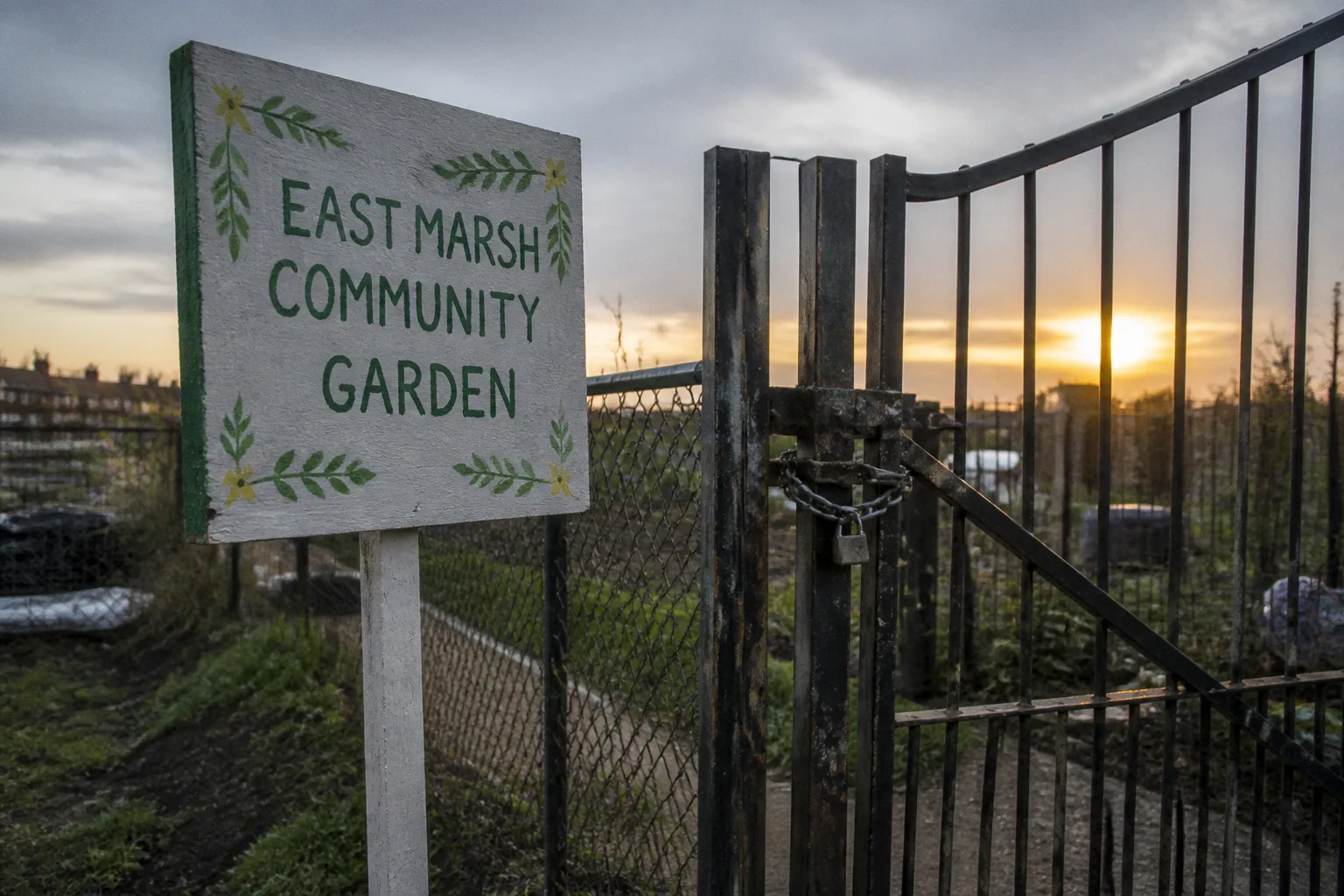
West Marsh previously received £432,000 through Safer Streets 2 for measures including CCTV, alley gating, street lighting and target hardening. Community Safety Wallet grants have offered up to £20,000 for a local project.
Those figures tell us what can be launched. They do not tell us what can still be running two years later.
That is the uncomfortable part of community safety grant work. A project can open strongly, install equipment, pay for activities and produce an impressive end-of-programme report, yet still be left with maintenance bills, volunteer fatigue and no clear owner once the grant window closes. The difference between initial project funding and genuine community safety grant sustainability is not a matter of good intentions. It is a matter of planning, governance and straight answers.
The sustainability gap starts before the money arrives
A grant is often treated as the beginning of a project. In practical terms, it should also be treated as the beginning of its financial afterlife.
This is where many bids become vulnerable. The application explains the local problem, proposes a visible response and sets out what the grant will buy. It may describe new lighting, CCTV, youth provision, environmental improvements or a community engagement programme. But it gives less attention to what happens when the funded delivery period ends.
Assessors recognise that weakness. Short-term safety bids are frequently rejected because of a sustainability gap, incomplete governance arrangements or no credible plan for ongoing maintenance. That is not bureaucratic fussiness. A broken camera, an unstaffed youth session or a neglected alleyway does not become less relevant because the grant period has ended.
The first question should therefore not be, “What can we afford to launch?” It should be, “What can this partnership responsibly continue to operate?”
That changes the shape of the bid. Instead of treating funding as a shopping list, the group has to separate the project into three layers:
1. The launch layer — consultation, design, equipment, initial staffing, publicity and setup.
2. The operating layer — staffing, monitoring, insurance, room hire, data handling, repairs and routine activity.
3. The continuation layer — who pays, who manages and who is accountable after the original award has been spent.
The first layer is usually the easiest to explain. It has a start date, a budget and a visible result. The second and third layers are where the serious work sits.
A grant can pay for a visible presence. It cannot, by itself, guarantee that the presence will still be there next year.
The distinction matters across the local funding landscape. Safer Streets funding can support substantial interventions, but its delivery window is still limited. Safer Streets 4 funding for East Marsh covered 18 months. Round Five of the Home Office Safer Streets Fund allowed police force areas across England and Wales to access up to £820,000 per area. That is meaningful launch capital. It is not a permanent operating settlement.
Community Wallet funding has a different scale and purpose. Up to £20,000 can support a neighbourhood project through Voluntary Action North East Lincolnshire. That may be enough to establish a local activity, improve a neglected space or test a community-led approach. It should not be mistaken for a guarantee that the group can pay for the same work indefinitely.
Initial funding and long-term funding are different decisions
A well-prepared budget does not simply total the equipment and activities. It shows which costs disappear after launch, which costs reduce, and which costs continue every month.
This is particularly important for projects that create a visible physical asset. CCTV, lighting, alley gates and target hardening can make a real difference on the beat. They can improve residents’ confidence and reduce opportunities for offending. But each asset carries obligations. Equipment needs inspection. Faults need reporting. Access to footage needs clear rules. Lighting needs repairs. Gates and locks need attention. Physical improvements need someone to notice when they stop working.
The original capital cost is only one part of the financial picture.
| Cost area | Usually concentrated during launch | Likely to continue after the grant |
|---|---|---|
| Consultation and design | Resident meetings, site assessments and project planning | Occasional review when local conditions change |
| CCTV and monitoring | Purchase, installation and initial configuration | Repairs, replacement, connectivity, data management and monitoring arrangements |
| Lighting and alley improvements | Installation, surveys and construction work | Electricity, faults, damage, inspections and replacement |
| Youth or diversionary activity | Recruitment, programme design and initial delivery | Session leaders, venue costs, safeguarding, equipment and volunteer support |
| Community engagement | Launch events, publicity and outreach | Regular communication, reporting and resident feedback |
| Governance | Setting up the partnership and procedures | Meetings, insurance, financial controls, records and accountability |
The table is not glamorous, but it is the part residents eventually feel. A new camera that is not operating is not a visible presence. A youth club that cannot cover its room hire is not a diversionary offer. A newly improved route that becomes dark again is not a finished safety intervention.
This is why community grant budget planning should show a cost profile over time, rather than one figure for the whole programme. A project may need more money at the start and less later, but “less” does not mean “nothing”. It also does not mean that the same organisation should automatically carry every cost.
The responsible approach is to identify each recurring cost and attach it to a named decision-maker or funding route. If that cannot be done, the proposal is not yet sustainable. It may still be worth piloting, but it should be described honestly as a pilot.
Capital purchases can create long-term liabilities
The words “one-off purchase” can hide an ongoing commitment.
CCTV is the clearest example. Installing cameras may be covered under a safety grant, while future monitoring, connectivity, data storage, servicing or replacement may sit elsewhere. The exact long-term maintenance cost share between North East Lincolnshire Council and police funding after a Safer Streets grant expires is not established in the available information. That uncertainty should not be glossed over in a local proposal.
A group does not need to know every future penny before applying. It does need to know which questions must be answered before equipment is installed:
- Who owns the asset?
- Who is responsible for checking that it works?
- Who receives reports of faults?
- Who controls access to recorded material?
- What happens when the equipment reaches the end of its useful life?
- Which organisation has agreed to fund or manage the next stage?
These are not technical footnotes. They are the difference between an intervention and a stranded asset.
Governance is not paperwork added at the end
A community project can have strong local support and still lack the structure needed to manage public money. That does not make the residents unreliable. It means enthusiasm and governance are different things.
A grant-funded safety initiative needs a clear operating arrangement. Someone must hold the funds, approve spending, manage contracts, record decisions, deal with safeguarding and report progress. Where the project involves children, vulnerable residents, personal information or CCTV, the governance burden is higher again.
The most durable projects usually bring the relevant partners in early. Depending on the intervention, that may include:
- a constituted residents’ group or voluntary organisation;
- North East Lincolnshire Council;
- Humberside Police and local neighbourhood teams;
- ward councillors;
- schools, youth providers or community centres;
- housing associations and landlords;
- local businesses and traders;
- residents who can provide community intelligence from the area.
The point is not to create a large committee for its own sake. It is to make sure that the project is not dependent on one energetic organiser who may move away, become unwell or simply run out of hours.
A basic governance arrangement should answer four practical questions.
Who has authority?
Residents should know who can approve expenditure, change the activity and speak publicly for the project. If several organisations are involved, their responsibilities should not be left to assumption.
Who carries the risk?
Insurance, safeguarding, procurement, data protection and public liability cannot be assigned to “the community” as if that were a legal entity. A named body needs to accept the relevant responsibilities.
Who reports performance?
A project should report more than money spent. It should show whether the intervention is being used, whether residents feel safer, whether problems are being identified earlier and whether the local policing picture has changed.
Who decides what happens next?
A grant-funded programme needs a decision point before its final months. Is the activity continuing, changing, transferring to another organisation or closing? Leaving that decision until the final week is how maintenance gaps become emergencies.
The strongest community projects do not merely ask who will fund the next year. They decide who will own the next decision.
This is where the relationship between residents and authorities matters. Police and council teams bring expertise, powers and access to wider systems. Residents bring local knowledge: which route is avoided after dark, where lighting fails repeatedly, which empty space attracts nuisance behaviour and which groups are not attending formal meetings. Good planning uses both.
But partnership should not become a polite word for unclear accountability. If a police briefing describes a partnership response, residents are entitled to understand which part is being delivered by officers, which part by the council, which part by voluntary organisations and which part depends on future funding. That is what straight answers look like.
Community intelligence should shape the budget
Funding applications are stronger when they connect spending to a precise local problem. They are stronger still when they show how residents will know whether the response is working.
A request for youth club funding in East Marsh, for example, should not rely only on a general statement that young people need positive activities. It should explain the gap the project is filling, the times and places where provision is needed, how safeguarding will work and what will happen when the initial award ends.
The same applies to neighbourhood improvement funds. A lighting project should identify the route, the defect, the responsible asset owner and the plan for reporting future failures. An alley-gating proposal should explain access arrangements, key ownership, repairs and the consequences if the gates are damaged. A community-led safety project should say how residents will feed information back to the people able to act on it.
That is community intelligence translated into operational planning.
It also stops projects from measuring only activity. Counting meetings, leaflets or installed devices is easy. It is less useful than asking whether the project has improved the particular conditions that created concern.
Useful measures might include:
- whether agreed equipment remains operational;
- whether residents know how to report faults or concerns;
- whether the intended users attend activities consistently;
- whether partner organisations meet and record decisions;
- whether referrals or reports are reaching the right service;
- whether the project has secured a continuation arrangement before funding ends.
Not every outcome can be reduced to a neat number. Confidence, trust and willingness to report matter. Still, a project needs enough evidence to show whether it has created a working safety mechanism rather than a temporary burst of activity.
Moving beyond one-off Community Wallet awards
Community Wallet funding can be valuable precisely because it is close to the ground. A neighbourhood group can respond to a local concern without waiting for a large regional programme. Up to £20,000 can provide room to test an idea, establish a service or make a tangible improvement.
The risk comes when a small grant is treated as a miniature version of a permanent budget.
A group might use the money for a short programme of evening activities. That may demonstrate demand and build trust. It does not automatically create the income needed to pay staff next year. A project may purchase equipment for a public space. That does not settle who will repair it. A volunteer network may become active during a campaign. That does not mean volunteers can absorb unlimited administration and safeguarding responsibilities.
Long-term funding for NEL community projects is more likely to emerge when the first grant is used as evidence, not as a substitute for a funding strategy.
A sensible progression could look like this:
1. Use the initial award to test the need. Record attendance, resident feedback, incidents raised and operational problems.
2. Build a credible delivery record. Keep financial records, meeting notes, risk assessments and evidence of what was actually delivered.
3. Bring in organisations with a continuing stake. A school, housing provider, council service, local business group or established voluntary organisation may have a reason to support the next stage.
4. Separate the service from the original grant. Describe what the project does, who benefits and what it costs to operate, rather than simply asking to renew the previous award.
5. Secure more than one route to continuation. That might include a mixture of local authority support, charitable grants, local sponsorship, room contributions, fundraising or in-kind support.
6. Set a review date before the money runs out. Funding applications take time. So do partnership agreements and procurement.
This does not mean every project must become self-financing. That is not realistic for many safety initiatives, particularly those serving residents who cannot pay. It means the funding model should match the public value of the work. If an activity is a public responsibility, the relevant public body should not quietly expect volunteers to provide it forever.
There is also a difference between sponsorship and control. Local businesses may be willing to support a visible improvement, but their contribution should not compromise the project’s purpose or create unequal access. A residents’ group should be clear about what support buys, what it does not buy and who retains decision-making authority.
The 18-month question needs to be asked at month one
The Safer Streets 4 award for East Marsh came with an 18-month delivery period. That should be understood as a planning deadline, not merely an end date.
By the early stages of delivery, the project should already know which parts are temporary and which parts are intended to remain. If equipment is being installed, the ownership and maintenance route should be documented. If activity is being delivered by a voluntary organisation, the staffing and safeguarding position should be reviewed before the final quarter. If a council or police team is expected to absorb work, that expectation should be agreed rather than assumed.
A useful internal timetable is not complicated:
- At inception: identify recurring costs, owners, risks and possible continuation partners.
- During the first delivery phase: check whether the design is creating costs that were not visible in the bid.
- At the midpoint: review demand, performance, partner commitment and the likely post-grant budget.
- Several months before expiry: secure agreements, submit follow-on bids and communicate honestly with residents.
- At closure or transition: publish what will continue, what will change and where residents should report problems.
This is also where authorities need to communicate properly. Residents should not discover through a failed light, a locked venue or a silent social media page that a project has ended. A safety initiative may change form, but the public deserves to know what has happened to the commitment.
The same discipline applies to future funding rounds. The November 2023 announcement of Safer Streets 5 funding by the Humberside Police and Crime Commissioner shows that new opportunities can arise. But a new round should not be used to conceal weaknesses in an older project. New money may support the next intervention; it does not erase an unresolved maintenance agreement.
Designing a project that can survive scrutiny
The best bids are not the ones with the longest wish list. They are the ones that can explain the chain from problem to intervention to long-term responsibility.
For a local safety group preparing an application, the following questions should be answered in plain English:
- What specific concern is the project addressing?
- Which residents have helped define that concern?
- What will the grant pay for, and what will it not pay for?
- Which costs continue after the award?
- Who owns each physical asset?
- Who will maintain, insure and monitor it?
- Which partner has agreed to take responsibility?
- What evidence will show whether the work is helping?
- What is the fallback if expected funding does not arrive?
- How will residents be told if the project changes or ends?
The answers do not need to promise certainty. They do need to show that uncertainty has been noticed.
A strong application might say that a project will begin with a funded pilot and then move to a mixed model involving a council contribution, venue support and a further charitable application. It might state that equipment will not be installed until the responsible asset owner has confirmed the maintenance route. It might decide that a small group cannot safely manage CCTV and will instead focus on lighting, outreach and reporting routes.
That last decision can be a sign of maturity. Community safety work is not improved by taking on responsibilities that nobody is equipped to carry.
Funding should leave behind capacity, not just equipment
Initial grants are most valuable when they build something that remains after the final payment: a functioning partnership, a trained volunteer base, a trusted reporting route, better use of local spaces or a clear understanding of what residents need.
Equipment may be part of that legacy. It should not be the whole legacy.
A project that spends every penny on installation but leaves no maintenance agreement has created an obligation without a plan. A project that funds a short burst of activity but does not document how it works may leave future organisers starting from zero. A project that gathers community intelligence but never feeds it into policing, council services or local decision-making will eventually lose residents’ confidence.
The test is simple enough. If the grant disappeared tomorrow, what would still exist?
If the answer is a partnership that meets, a reporting route residents use, a service with a realistic operating budget and an organisation willing to take responsibility, the project has a foundation. If the answer is only a set of purchased items and a closing report, the work is not finished.
North East Lincolnshire has secured serious community safety investment, from the £432,000 West Marsh Safer Streets 2 programme to the £750,000 East Marsh Safer Streets 4 award, alongside smaller Community Wallet grants that allow neighbourhood ideas to get moving. That investment deserves more than a successful launch. It deserves a clear account of what happens afterwards.
Residents should ask for that account early, while there is still time to act. Ask who owns the equipment. Ask who pays for the repairs. Ask which partner remains on the beat. Ask what the visible presence will look like when the grant logo has gone.
And when a local problem is emerging, report it through the proper route and share it with the organisations responsible for the area. Community intelligence is not background noise. It is part of the evidence that determines whether the next project is designed properly, funded realistically and kept alive after the first cheque is spent.