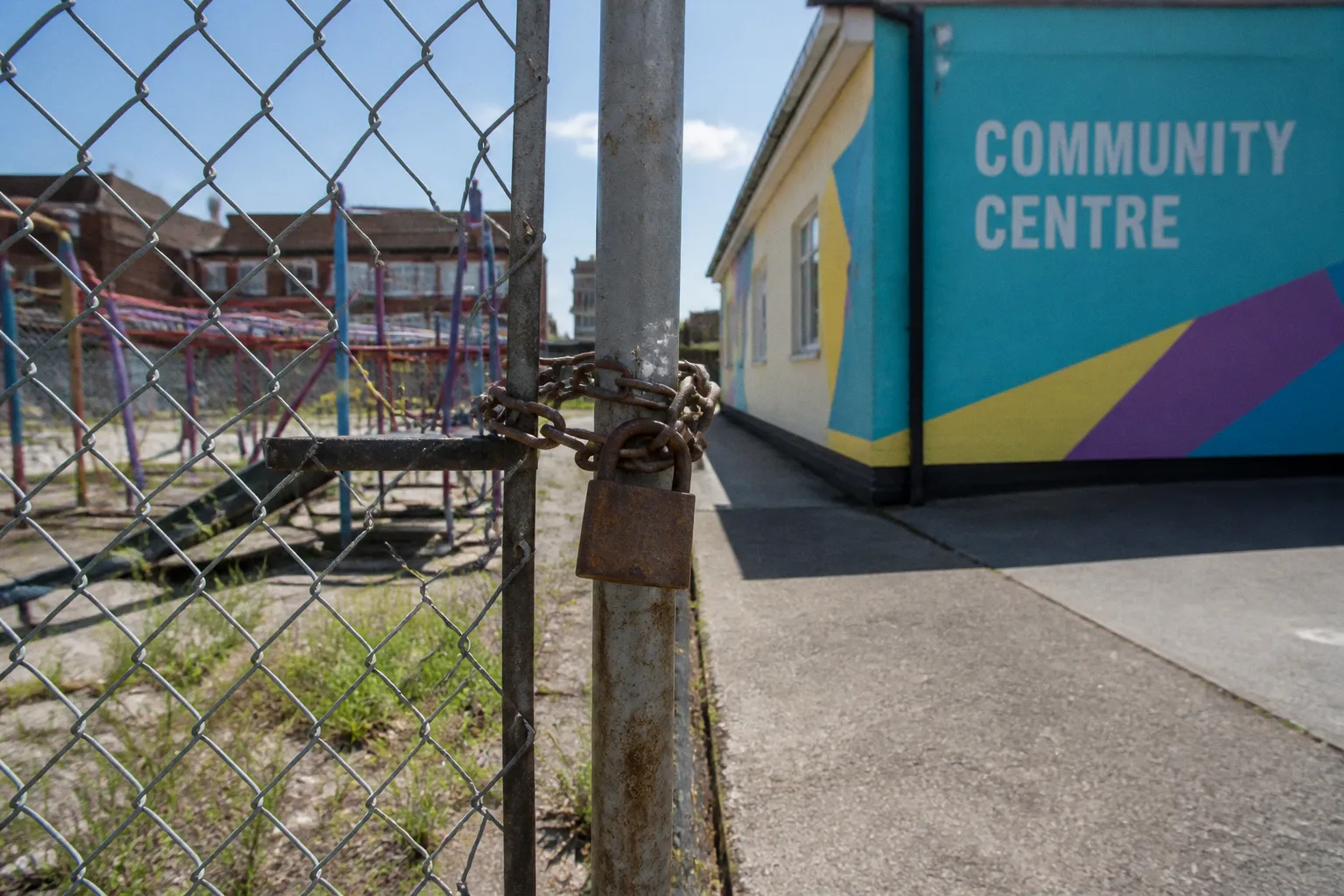
On the other, residents want money decided closer to the ground, through small grants and community-led projects.
That is the wrong fight.
In North East Lincolnshire, both approaches are already being used. West Marsh received £432,000 through Safer Streets Round 2. East Marsh was allocated £749,500, often rounded to £750,000, under Round 4. Grimsby Town Centre received £300,000 through Round 5. Alongside those larger programmes, the Community Wallet model has offered smaller grants shaped by local resident panels, including an East Marsh fund of £50,000 with grants of up to £7,500 per project.
The real question is not simply council vs community safety grants. It is whether the two sides are connected properly: strategic funding that responds to verified crime problems, and local decision-making that understands what those problems feel like on the beat.
The architecture of Safer Streets funding
Large Safer Streets awards are built for problems that cannot be solved by one residents’ group, one youth club or one street-level intervention. They require a wider plan, formal administration and evidence that a proposed response matches an identifiable safety problem.
In North East Lincolnshire, major Safer Streets funding has been administered through North East Lincolnshire Council and the Office of the Police and Crime Commissioner for Humberside. That structure brings capacity. It also brings responsibility.
The figures show the scale:
| Funding route | Local example | Scale | What it is designed to support |
|---|---|---|---|
| Safer Streets Round 2 | West Marsh | £432,000 | A larger area-based programme responding to identified safety issues |
| Safer Streets Round 4 | East Marsh | £749,500, commonly described as £750,000 | Ward-level investment connected to a broader crime and safety strategy |
| Safer Streets Round 5 | Grimsby Town Centre | £300,000 | A town-centre programme requiring coordinated action across a defined area |
| Community Wallet | East Marsh, 2022–2023 round | £50,000 total | Smaller voluntary and community projects within specified target areas |
| Individual Community Wallet grant | East Marsh, 2022–2023 round | Up to £7,500 | A local project delivered by an eligible voluntary or community group |
These are not interchangeable pots of money. A £750,000 ward-wide programme is not merely a larger version of a £7,500 neighbourhood grant. It has a different purpose, a different level of scrutiny and a different burden of proof.
Safer Streets applications use the SARA framework: Scanning, Analysis, Response and Assessment. In plain English, that means identifying the problem, understanding what is driving it, choosing an intervention and then assessing whether the intervention worked.
That sounds straightforward. It is not always so in practice.
A proper SARA approach should prevent a familiar mistake in community safety work: funding the most visible idea rather than the most suitable one. New lighting may be useful in one location. In another, the evidence may point towards youth provision, better reporting routes, environmental improvements or targeted work with people at risk of offending. The grant should follow the problem, not the other way round.
Big funding can change an area. It can also miss the detail if nobody close to the problem is heard before the plan is written.
The council-led model is strongest when it can join up the pieces. Police data, council intelligence, environmental information, local service knowledge and residents’ reports should form one picture. The North East Lincolnshire Community Safety Partnership’s annual Joint Strategic Intelligence Assessment, or JSIA, is intended to help inform the Partnership Plan by reviewing local crime and safety issues.
That is the strategic side of the arrangement. It tells decision-makers where pressure is concentrated and what kinds of harm are being reported.
But intelligence gathered at partnership level has limits. A dataset can identify a location. It does not always explain why residents avoid it after dark, why a particular group has stopped using a facility, or why people are reluctant to report repeated nuisance behaviour. Those details sit with residents and frontline organisations.
What grassroots control adds
The Community Wallet model was designed to bring part of the funding decision closer to residents. In North East Lincolnshire, Voluntary Action North East Lincolnshire, known as VANEL, has acted as administrator for eligibility checks, while panels of local residents reviewed bids and helped decide which projects should be prioritised.
That arrangement matters because it avoids two opposite failures.
The first is a grant process that is so centralised that residents are consulted only after the important decisions have already been made. The second is a process that treats community preference as enough on its own, without checks on eligibility, delivery or public value.
The Community Wallet model sits between those positions. Residents have a role in judging what should be prioritised. VANEL provides administration and eligibility checks. The council and wider public bodies are not simply removed from the picture.
That is not a weakness. It is a necessary safeguard.
A resident panel should not be expected to carry all the legal, financial and safeguarding responsibilities attached to public funding. Nor should a voluntary group have to navigate an opaque process with no clear explanation of why its bid succeeded or failed. Local control only works when the route into the money is understandable and the decisions can be accounted for.
The East Marsh Wallet scheme illustrates the scale of this approach. The round launched on 31 October 2022, made £50,000 available for specific target areas within the East Marsh Ward and offered grants of up to £7,500 to voluntary and community groups. Projects had a completion deadline of 31 August 2023.
A fund of that size will not redesign an entire ward. It can, however, support a youth activity, a local improvement project, a community event with a safety purpose, or practical work that larger programmes may overlook. It can give a group with local credibility the means to act before a problem becomes another line in a strategic assessment.
That is the value of small grants. They are close to the ground, relatively focused and capable of supporting organisations that would struggle to manage a major public contract.
There is also a less obvious benefit. Residents who help shape funding decisions are more likely to understand how those decisions are made. That does not guarantee agreement. It does make the process less remote.
Council control and community control are not mirror images
The comparison becomes clearer when the two models are placed side by side.
| Issue | Council-led Safer Streets funding | Community Wallet and grassroots funding |
|---|---|---|
| Main scale | Hundreds of thousands of pounds for defined areas | Smaller grants, including awards up to £7,500 in the East Marsh example |
| Decision structure | Managed through formal public-sector and policing arrangements | Resident panels help prioritise bids, with VANEL handling eligibility and administration |
| Evidence base | Uses structured analysis, including the SARA framework | Draws more directly on resident knowledge and local organisations, within scheme rules |
| Typical reach | Ward-wide, town-centre or other strategic geographic programmes | Specific target areas and local communities |
| Strength | Coordination, scale and the ability to connect several agencies | Speed of local insight, accessibility and support for smaller groups |
| Main risk | A plan can become too distant from everyday experience | Popular projects may not address the most significant measured harm |
| Accountability need | Clear outcomes, spending records and assessment of impact | Transparent eligibility, panel decisions, delivery evidence and feedback to residents |
The council-led route has the advantage when a response requires several agencies to work together. Town-centre safety, for example, may involve policing, council services, environmental action, businesses, transport and community organisations. A small grant cannot coordinate that by itself.
The grassroots route has the advantage when the issue is specific and the people affected already know what a workable response would look like. A local organisation may have trusted relationships that a large programme cannot build quickly. It may know which residents will attend, which venue is usable and which proposed activity will fail because it does not fit the area.
Neither side should pretend to be the complete answer.
A council can spend heavily and still produce a scheme that residents barely recognise as relevant. A resident panel can select projects that are popular but too narrow to shift the underlying pattern of crime or antisocial behaviour. The first failure is usually described as bureaucracy. The second is often described as community empowerment. Both are failures of design if the money does not produce a clear public benefit.
The quiet importance of boundaries
One detail in local grant schemes deserves more attention than it usually gets: geography.
Community Wallet funding rounds in North East Lincolnshire have used restricted boundaries, including specific Lower Super Output Areas. The West Marsh example refers to a defined area identified by the code E01013221. That sort of boundary may look administrative, but it determines who can apply, who can benefit and which residents are represented in the process.
There is a practical reason for this. Safety funding is often awarded because a particular area has been identified as needing intervention. If the boundary is allowed to drift, the money can become too thinly spread. A group may have a strong idea, but if its project sits outside the eligible zone, it may not meet the purpose of that round.
This is where straight answers matter.
Grant information should tell residents:
- Which streets, neighbourhoods or statistical areas are eligible.
- Whether applicants must be constituted voluntary or community organisations.
- Whether informal groups can apply through a lead organisation.
- What activity the fund is intended to support.
- How resident panels contribute to prioritisation.
- Who completes eligibility and financial checks.
- What delivery deadline applies.
- How successful projects will report what they achieved.
Without that information, community funding becomes a rumour network. People hear that money is available, but not whether their group qualifies or how a decision will be reached. That favours organisations already familiar with public funding and leaves newer groups standing outside the process.
The administrative role of VANEL is therefore important. Eligibility checks are not an insult to community groups. They are part of ensuring that public money reaches organisations able to deliver what they promise. But administration should not become a locked door. The process needs to explain what evidence is required in ordinary language and offer a sensible route for groups that have local credibility but limited grant-writing experience.
From community intelligence to funded action
The strongest local safety programmes use resident knowledge before, during and after funding decisions.
Before a bid is written, residents can describe patterns that do not appear neatly in recorded crime data. They may know that a route is poorly lit, that a public space is being avoided, that young people have nowhere safe to go, or that repeated incidents are not being reported because people have lost confidence that anything will change.
That is community intelligence. It is not a substitute for police data or professional assessment. It is another part of the picture.
During the funding process, residents can test whether a proposal is realistic. Does the organisation know the people it says it will reach? Is the activity likely to be used? Does the timetable fit local life? Is the project addressing a safety issue, or has it simply attached the language of safety to an unrelated activity?
After delivery, residents can provide the first indication of whether anything changed. That feedback should not be treated as a popularity contest. A project can be well run and still not reduce crime. Equally, a project can produce a meaningful improvement in confidence, use of public space or engagement even if the effect is not immediately visible in recorded incidents.
This is where the SARA framework should continue beyond the application stage. Assessment cannot mean counting how many sessions took place and then closing the file. It should ask whether the intervention matched the original problem and whether the result justifies repeating, changing or ending it.
The same principle applies to large Safer Streets allocations. Funding announcements are not outcomes. A sum awarded in West Marsh, East Marsh or Grimsby Town Centre tells residents what was committed, not what was achieved.
Residents deserve to know what happened next: which projects were funded, what was delivered, what the evidence showed and what will be done differently if the first response did not work.
Community control is not a licence to spend without scrutiny. It is a demand that scrutiny includes the people who live with the consequences.
Where the two models should meet
The council-versus-community argument becomes unhelpful when it treats control as a winner-takes-all question. The better test is whether each level of decision-making is doing the job it is equipped to do.
The council, police and Office of the Police and Crime Commissioner are better placed to manage major allocations, coordinate agencies and connect funding to wider crime and safety priorities. They can commission analysis, set formal outcomes and oversee spending across a programme.
Residents and local groups are better placed to identify practical barriers, challenge assumptions and propose interventions that can work in a particular place. They can spot when a scheme looks impressive on paper but has no natural audience.
A sound funding system should therefore have several connecting points:
1. Strategic intelligence should shape the broad priority.
The JSIA and related partnership analysis should help identify the issues that require attention, rather than relying on the loudest individual campaign.
2. Residents should influence the local response.
Consultation should happen early enough to change the proposal. A meeting held after the budget and project design are fixed is not meaningful local control.
3. Small grants should be accessible to credible groups.
The process needs checks, but the paperwork should not be designed only for organisations with dedicated bid writers.
4. Large programmes should leave room for local variation.
A ward-wide plan may need different responses on different streets. A single intervention applied everywhere is rarely a sign of careful assessment.
5. Every funded project should report back plainly.
Residents do not need a glossy success story. They need to know what was attempted, what it cost, what changed and what did not.
6. Unsuccessful applicants should receive straight answers.
If a project was outside the boundary, ineligible, poorly evidenced or simply ranked below another bid, the explanation should say so. Silence damages trust faster than a refusal.
This is also why the question of remaining funding cannot be answered with guesswork. The exact amount of unallocated community safety funding for 2026/2027 is not established in the available information. Residents should be wary of confident claims about a current pot of money unless the active scheme rules and published allocation confirm them.
The same caution applies to older funding rounds. The East Marsh Wallet scheme had a defined launch date, target area and completion deadline. It should not be presented as if the same terms automatically remain open today. Funding programmes change. Eligibility changes. Deadlines pass. Good communication makes that clear.
What residents should ask for now
Residents who want to support community-led safety projects should not have to choose between enthusiasm and scepticism. Bring both.
Ask what problem the money is intended to address. Ask which area is eligible. Ask who makes the decision and what role the resident panel has. Ask how the project will demonstrate delivery. Ask when the results will be published.
For larger Safer Streets programmes, ask how the SARA process shaped the intervention. What was identified during scanning and analysis? What response was selected? What assessment will show whether it worked?
For local safety grants in East Marsh or elsewhere in North East Lincolnshire, ask whether the application route is open to smaller organisations and whether support is available for groups unfamiliar with grant administration. A scheme cannot claim to be grassroots if only established institutions can get through the door.
And when something is not working, report it through the proper channels. Report crime and immediate risks to the police through the appropriate route. Raise environmental problems with the council. Tell local groups and grant administrators when a funded activity is inaccessible, poorly communicated or not reaching the people it was meant to serve. That information is part of the evidence base.
On the beat, the distinction between a major programme and a small community grant can look less important than the outcome. Residents want safer routes, usable public spaces, trusted youth provision and a visible presence where it is needed. They do not want a funding label to become a substitute for results.
North East Lincolnshire has the basic ingredients for a stronger model: strategic funding, local panels, voluntary-sector administration and community intelligence. The test is whether those ingredients are joined together with enough discipline to produce more than announcements.
The council must be willing to explain its decisions. Resident panels must be supported to make informed ones. Funded groups must show what they delivered. Police and public bodies must be held to the outcomes they promised.
That is the sensible position between central control and local preference. Keep the scale where scale is needed. Put decisions closer to residents where local knowledge can improve them. Then report back, plainly and without PR spin, on whether the money made the area safer.