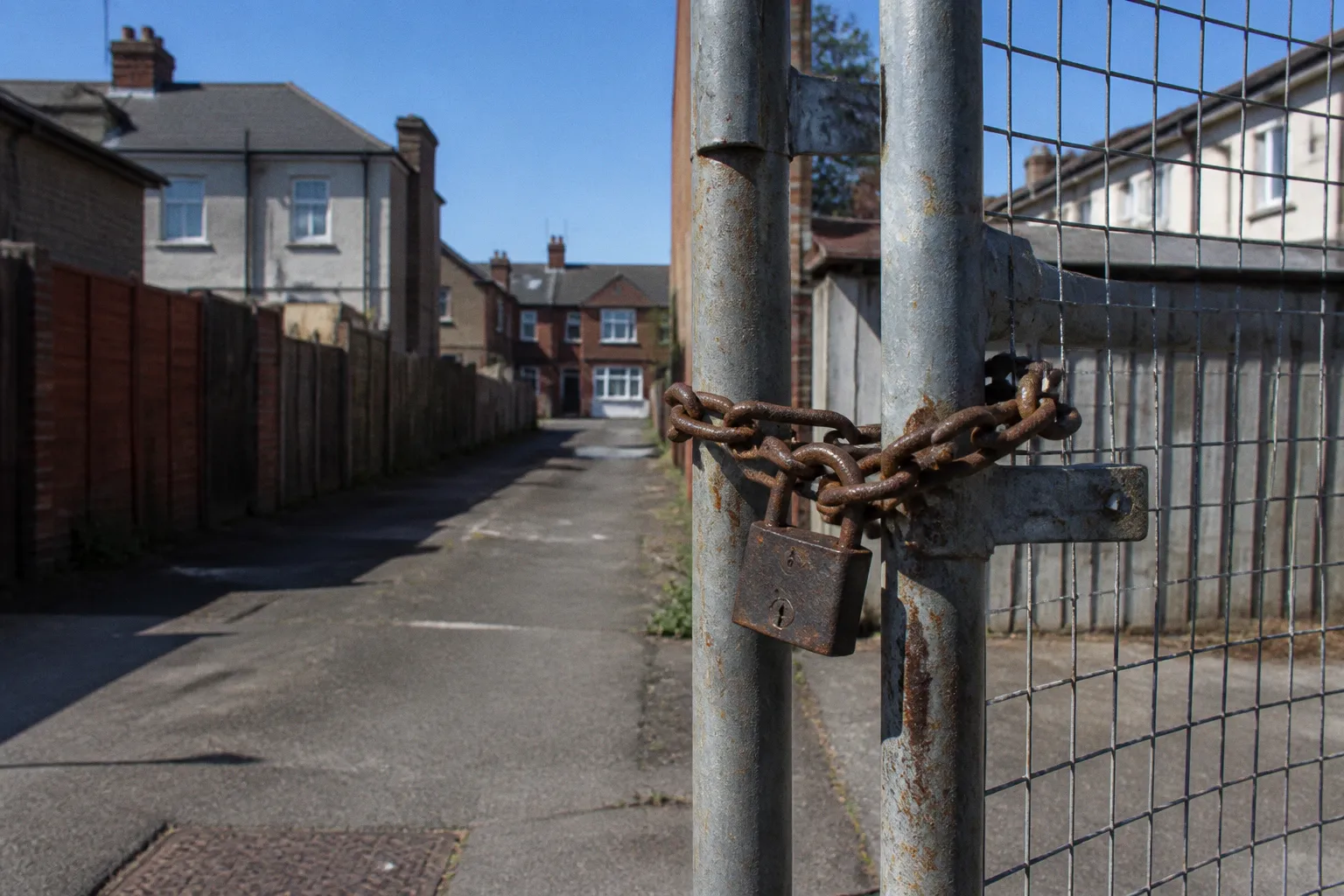
Not violent crime. Not burglary. Not retail theft. ASB — the sprawling, often underreported category that covers everything from persistent noise nuisance to intimidation near residential properties. Against that backdrop, a procedural mechanism exists that most residents either do not know about or fundamentally misunderstand: the ASB Case Review, formerly branded the Community Trigger.
The distinction matters. When local agencies fail to resolve repeated incidents of anti-social behaviour, residents are not limited to lodging yet another routine complaint that disappears into a processing queue. The ASB Case Review creates a statutory right to demand a formal, multi-agency examination of how those incidents were handled — and whether the response was adequate. It is a structural escalation pathway written into primary legislation, and its activation threshold is more precise than most people assume.
Defining the ASB Case Review: Beyond Formal Complaints
The first and most persistent misconception to clear from the metrics: the ASB Case Review is not a complaints procedure. It does not replace, override, or function as a higher tier of the council's standard complaints mechanism, nor does it serve the same purpose as a formal complaint against Humberside Police. Its operational remit is fundamentally different.
The Case Review is a problem-solving mechanism. When triggered, it compels the relevant multi-agency partners — North East Lincolnshire Council, Humberside Police, registered social housing providers, and other bodies within the Safer Neighbourhoods Partnership — to sit down and collectively reassess whether the response to a specific pattern of anti-social behaviour has been proportionate, coordinated, and effective. The output is not a disciplinary finding against any single agency. It is an action plan: a set of revised measures, resource allocations, and inter-agency commitments designed to resolve the underlying issue.
This distinction has structural implications. A resident who is frustrated by the pace of police response to a persistent noise problem and a resident who believes three separate agencies have collectively failed to address a pattern of intimidation are dealing with two different types of systemic failure. The complaints process addresses the former. The ASB Case Review addresses the latter. Conflating them wastes time and delays the appropriate intervention.
The legislative foundation is the Anti-social Behaviour, Crime and Policing Act 2014, which defines anti-social behaviour as conduct that causes or is likely to cause harassment, alarm, or distress — or conduct capable of causing nuisance or annoyance in relation to residential premises. That statutory definition is broad by design, and the Case Review mechanism exists precisely because broad categories of harm, when repeated and inadequately addressed, accumulate into significant community-level damage.
The ASB Case Review does not ask whether agencies acted in good faith. It asks whether their combined output actually solved the problem.
Navigating the Threshold: The 3-Report Rule Explained
The activation threshold is specific, and it operates on a simple quantitative basis: an applicant must have reported three or more qualifying incidents of anti-social behaviour within the preceding six months. No more. No less.
Three reports. Six months. That is the qualifying grid.
The arithmetic is worth pausing on, because it defines the operational scope of the mechanism. A single persistent source of anti-social behaviour — one neighbour, one group, one location — that generates three separate reports across half a year is precisely the pattern the threshold is calibrated to detect. It is not designed for one-off incidents, however serious. It is not designed for historical grievances dating back years. It is designed for the unresolved middle ground: situations where agencies have been notified, where some form of response has presumably been initiated, and where the problem has nonetheless continued at a frequency that makes the aggregate incidence rate a measurable burden on the affected individual or community.
Three qualifying reports within six months. That is the trigger.
The threshold is not punitive. It is informational. Meeting it tells the multi-agency panel that the existing response framework — however many agencies were involved, however many visits were made, however many warnings were issued — has not produced a resolution. The data point is the failure of cumulative effort, not the behaviour of any single party.
The 30-Day Window and Qualifying Incident Criteria
Here is where the procedural detail sharpens considerably, and where many prospective applicants would benefit from understanding the reporting discipline the mechanism requires.
Each of the three qualifying reports must generally be submitted within 30 days — one calendar month — of the incident occurring. A report filed six weeks after the event does not count toward the threshold. A report filed at the time of the incident, recorded by the appropriate agency, and left without adequate resolution for months afterward does count. The clock runs from the date of the incident to the date of the report, not from the date of the report to the date of any subsequent inaction.
This 30-day window has practical resource-allocation implications. It requires residents to engage with reporting systems consistently and promptly — not as a retrospective exercise once frustration has reached a breaking point, but as a contemporaneous documentation practice. Each qualifying complaint needs to be logged through the appropriate channels: the council's ASB reporting mechanisms, Humberside Police's non-emergency contact points, or the relevant housing provider's reporting system, depending on the nature of the behaviour and the jurisdiction of the responsible agency.
The following criteria structure whether an incident qualifies toward the threshold:
1. Timeliness: The report must be filed within 30 days of the incident date. Retroactive reporting outside this window does not contribute to the qualifying count.
2. Agency receipt: The incident must be reported to a relevant body with a remit to address it — the council, the police, or a registered social housing provider, depending on the nature of the conduct.
3. Distinct incidents: Each qualifying report must relate to a separate occurrence of anti-social behaviour. Reporting the same single incident to three different agencies simultaneously does not constitute three qualifying reports.
4. Unresolved outcome: The threshold is met when no effective resolution has been achieved after the cumulative reports — meaning the incidents have continued or the response has demonstrably failed to address the underlying pattern.
The logic is cumulative. The system does not require each individual incident to rise to the level of a criminal offence. It requires a pattern — three documented instances within a defined timeframe — that collectively demonstrates a sustained failure of the existing preventative framework to deliver results.
Multi-Agency Collaboration: How the Review Process Functions
When the threshold is met and an application is accepted, the process moves into a structured multi-agency review. This is not a meeting with a single caseworker. It is a coordinated assessment involving representatives from the principal agencies responsible for community safety across North East Lincolnshire.
The operational partners typically include:
- North East Lincolnshire Council: Housing, environmental services, licensing, and community safety teams whose remit covers noise, nuisance, and environmental ASB.
- Humberside Police: Neighbourhood policing teams and specialist units responsible for criminal ASB, intimidation, and public order.
- Registered social housing providers: Where the behaviour involves tenants of housing association or council-owned properties, the relevant landlord has both a direct interest and enforcement tools (including tenancy action) that sit outside the police and council's jurisdiction.
- Other Safer Neighbourhoods Partnership members: Depending on the case, this may extend to substance misuse services, youth offending teams, or mental health crisis teams — any partner whose intervention could contribute to a resolution.
The review examines the full incident history, assesses whether the response from each agency was appropriate to the severity and persistence of the behaviour, and identifies gaps in coordination. The output is a formal set of recommendations and an action plan with assigned responsibilities. Critically, the applicant is informed of the outcome and the proposed next steps.
The value of the Case Review lies not in the finding but in the forcing function: it compels agencies to coordinate their response in a single documented process rather than operating in isolated silos.
The mechanism's effectiveness depends on the quality of inter-agency data sharing and the willingness of each partner to commit resources to the resulting action plan. In principle, the review process exists to eliminate the most common operational failure in ASB management: the gap between what Agency A knows, what Agency B has done, and what neither has communicated to the other. In practice, its impact scales with the institutional discipline of the participating bodies.
Who Can Initiate a Review: Victim Rights and Representation
The right to apply for an ASB Case Review belongs to the victim of the anti-social behaviour — but the mechanism's accessibility provisions extend that right to a defined set of representatives.
An application can be submitted by:
- The victim directly: The individual who has experienced the qualifying incidents and made the corresponding reports.
- A family member or carer: Where the victim is unable or unwilling to make the application themselves, a relative or designated carer can act on their behalf.
- A Member of Parliament or local councillor: Elected representatives who are aware of a constituent's persistent ASB issues can submit an application in that person's name.
- Any other representative: The framework permits broader third-party representation, provided the application is made with the victim's knowledge and consent.
This flexibility in standing is operationally significant. Anti-social behaviour disproportionately affects individuals who lack the capacity, confidence, or resources to navigate bureaucratic escalation pathways independently — elderly residents, people with disabilities, individuals experiencing coercive control, and those for whom repeated engagement with reporting systems has become a source of exhaustion rather than resolution. The representative provision exists to ensure that the threshold mechanism does not inadvertently exclude the populations most likely to need it.
A Metric That Points Forward
The ASB Case Review is not a panacea. It is a structural escalation tool with a defined activation threshold, a clear reporting discipline, and a multi-agency review process that produces action plans rather than sanctions. Its value proposition is straightforward: when individual agency responses have failed to resolve a documented pattern of anti-social behaviour, the Case Review forces a coordinated reassessment.
The 3-in-6-months threshold, combined with the 30-day reporting window, creates a clear metric. Residents who understand these parameters can document incidents with the precision the system requires — and activate the mechanism before frustration turns to disengagement. The public consultation data from 2023 confirms that anti-social behaviour remains the dominant community concern in North East Lincolnshire. The Case Review exists as one of the few tools that translates that concern into a formal, documented demand for coordinated action.
Whether the mechanism's operational output — the quality of the resulting action plans, the follow-through of participating agencies, the measurable reduction in subsequent incidence rates — delivers on its structural promise is a question the borough's community safety architecture will continue to answer incrementally. What the threshold clarifies is the point of entry. Three reports. Six months. Thirty days per incident. The arithmetic is precise. The rest depends on what happens when agencies are required to sit in the same room and account for what did not work.