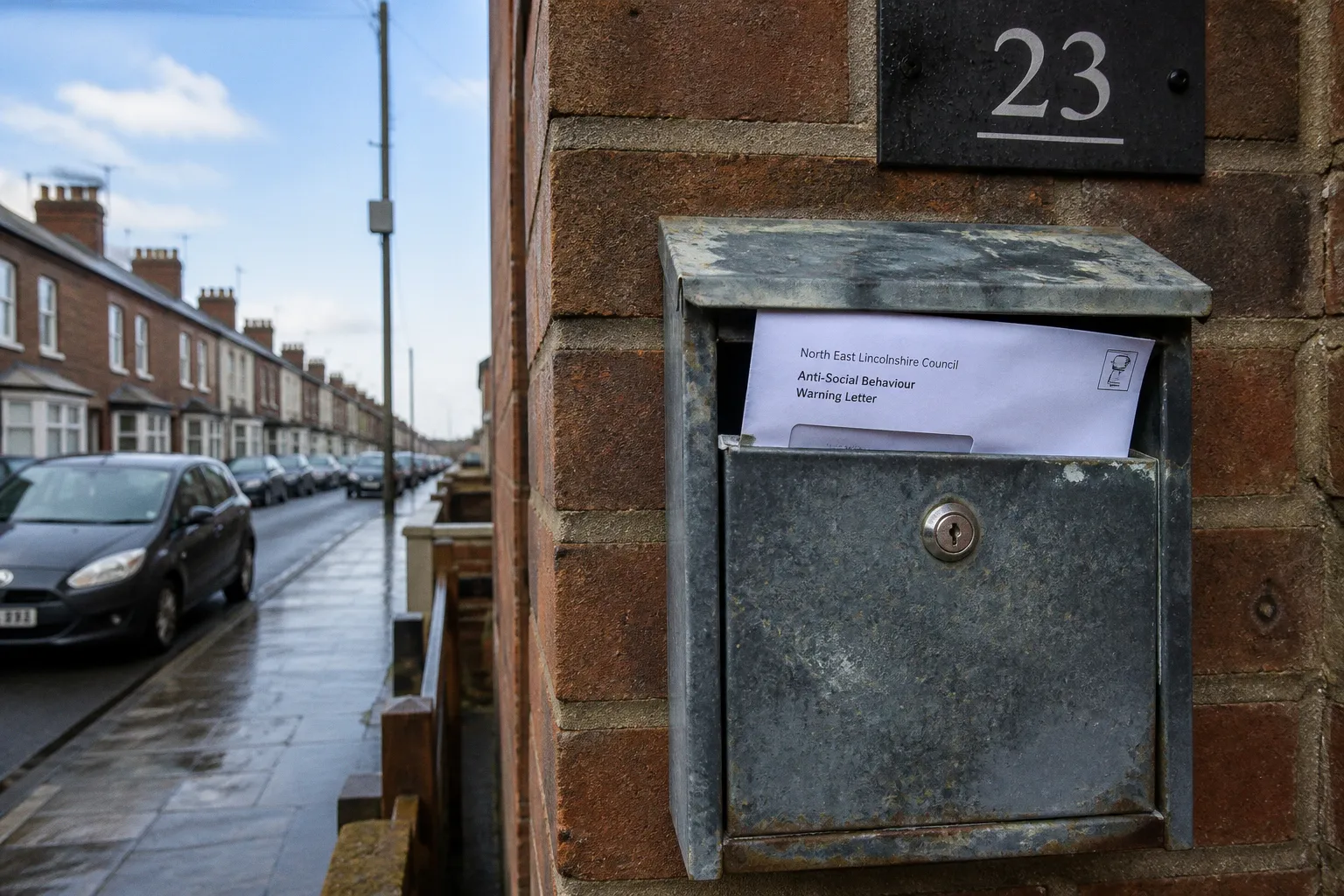
But it should not be dismissed as a piece of council paperwork either. It records that a pattern of conduct has been reported, explains what behaviour is causing concern, and puts the person on notice that the matter can move further if it continues.
In North East Lincolnshire, the escalation process may involve warning letters, an Acceptable Behaviour Contract, youth services, a Community Protection Notice, or an ASB Case Review known as the Community Trigger. The route depends on the seriousness of the behaviour, the evidence available, the agencies involved and whether the conduct continues after intervention. There is no responsible version of this process that treats every complaint as identical.
That is the first straight answer residents need. A warning letter is neither meaningless nor the final word.
What counts as anti-social behaviour?
The legal framework comes from the Anti-social Behaviour, Crime and Policing Act 2014. In broad terms, anti-social behaviour is conduct that has caused, or is likely to cause, harassment, alarm or distress to another person. It can also include conduct capable of causing nuisance or annoyance in relation to residential premises.
That definition covers more than the familiar image of late-night noise. It may involve persistent intimidation, abusive behaviour, repeated nuisance around homes, threatening conduct, damage, or activity that makes residents feel unable to use their own street or property normally. The pattern matters. So does the effect on the people affected.
A single incident can still be serious. Severe cases may move directly towards formal action rather than following every informal stage. But many complaints begin with a record of repeated conduct: noise, harassment, groups gathering, aggressive behaviour, damage, or ongoing nuisance that has not stopped after residents have tried to resolve matters.
This is where community intelligence matters. One report may be treated as an isolated event. Several consistent reports, supported by dates, descriptions, recordings or other evidence, can show a pattern that is much harder to ignore.
Residents should not assume that an incident is too minor to report simply because no immediate enforcement action follows. Reporting creates a record. A record helps agencies assess whether conduct is isolated, escalating or connected to other reports in the area.
At the same time, reporting is not the same as proving a case. A council, police force or housing provider still has to assess what has happened and decide which powers are appropriate. That assessment can feel slow from the doorstep, particularly when the behaviour is continuing. It is one reason clear communication from the responsible agency matters so much.
A warning letter is not a conviction. It is a formal line in the sand — and the quality of the evidence behind it will determine whether that line holds.
What an ASB warning letter is designed to do
The informal warning stage is intended to stop behaviour before the situation reaches more serious legal measures. An individual may receive two or three warning letters describing the alleged anti-social behaviour. The exact route is not fixed in every case, and serious incidents can bypass warning letters altogether.
A warning letter should make the concern understandable. It will generally identify the type of behaviour reported, explain why it is causing concern and set out what must stop. It may also warn that continued conduct could lead to further intervention.
That does not make the letter a legally binding court order. It does not, on its own, impose the same restrictions as a court injunction or other formal legal measure. Nor does it mean that three letters must always be issued before an authority can act. Treating the process as a rigid three-strikes system gives residents the wrong expectation and can create a dangerous delay in serious cases.
The practical purpose is earlier intervention. A warning can give someone the opportunity to stop before a contract, notice or legal action becomes necessary. In some cases the recipient may not understand how their conduct is affecting neighbours. In others, they may understand perfectly well and choose to continue. The next stage depends heavily on that difference, as well as on the available evidence.
For residents, the letter should answer several basic questions:
- What conduct has been reported?
- When and where was it said to have happened?
- Which agency is managing the matter?
- What should stop or change?
- What may happen if the conduct continues?
- How can the recipient challenge an inaccurate account or provide relevant information?
If a resident is affected by the behaviour but receives only vague reassurance, that is not enough. Authorities cannot always disclose every detail, particularly where personal information or an ongoing investigation is involved. They can, however, explain the process, identify the agency responsible and say what kind of action is being considered.
That distinction — between confidentiality and silence — is important.
Why warning letters can be difficult to see from the outside
A person who reports repeated nuisance may expect to see an officer arrive on the beat, speak to the people involved and return with a clear update. Often, the work is less visible. Agencies may be checking reports, speaking to other witnesses, reviewing housing information, assessing vulnerability or deciding whether the conduct meets the threshold for a particular power.
That hidden work does not excuse poor communication. A visible presence is not only about patrols. It is also about residents knowing that their reports have been logged, linked where appropriate and assessed by someone with responsibility for the case.
The recipient of a warning letter may also feel that the process is unfair, especially if the letter contains allegations they dispute. A fair process must allow relevant information to be considered. But disagreement with the allegation does not make the letter irrelevant. The appropriate response is to raise the dispute through the contact route provided, not to treat the warning as something that can simply be ignored.
From warning letters to Acceptable Behaviour Contracts
If the reported conduct continues, or if warning letters are breached, the matter may move to an Acceptable Behaviour Contract, commonly called an ABC.
An ABC is a formal agreement signed by the person displaying the behaviour. Where the person is a minor, a trusted adult may also sign. The agreement remains active for six months. It sets out the behaviour that must stop and the expectations the person is being asked to meet.
Despite the word “contract”, an ABC is not the same as a criminal conviction or a court order. It is an administrative intervention designed to secure a change in behaviour. Its strength comes from making the expectations explicit and creating a clearer record if the conduct continues.
For a young person, the agreement may be part of a wider support and intervention plan. If a young person fails to comply with an intervention agreement or ABC, the case can be referred to Youth Offending Services for further formal interventions.
That is a point sometimes lost in public discussion. Youth diversion is not the same as doing nothing. A good intervention may address the reasons behind the behaviour, including peer pressure, substance misuse, conflict, school exclusion or instability at home. It should still be clear about consequences. Support without boundaries is not a prevention strategy; it is simply postponement.
The same applies to adults. An ABC will only have value if the person understands the conduct covered by it and the agencies involved monitor what happens next. Residents should not expect confidential details about another person’s support plan, but they should be able to ask whether their reports are being taken into account and whether the case remains active.
| Stage | What it is for | What residents should understand |
|---|---|---|
| Warning letter | Early formal notice that reported conduct must stop | It is not a court order, and serious cases may skip this stage |
| Acceptable Behaviour Contract | A written agreement setting out behaviour that must change | It normally remains active for six months and may involve a trusted adult where the person is a minor |
| Youth Offending Services referral | Further formal intervention where a young person fails to comply | It is an escalation, but the details of the intervention may remain confidential |
| Community Protection Notice | A possible formal measure where continuing conduct meets the relevant threshold | It should not be confused with an informal warning letter |
| ASB Case Review / Community Trigger | A review of whether agencies responded adequately to repeated reported incidents | In North East Lincolnshire, the threshold is three or more separate incidents within six months |
The table is deliberately straightforward because the language around ASB can become needlessly blurred. A warning letter, an ABC and a formal notice do not carry the same weight. Residents deserve to know which one is being discussed.
Where Community Protection Notices fit
A Community Protection Notice, or CPN, is a more formal tool than an informal warning letter. It may be considered where conduct is continuing and the relevant legal threshold is met. It should not be described as an automatic next step after a set number of letters.
The authority must assess the behaviour and the circumstances of the case. The existence of complaints alone does not answer every legal or evidential question. Equally, the absence of a CPN does not prove that residents’ concerns are being ignored. It may mean the agency is using another intervention, gathering evidence, dealing with a different legal route or concluding that the threshold has not been met.
This is where residents need precise language from officials. “The matter is being dealt with” is not a useful update unless it is accompanied by enough information to explain what that means. Is the case at the warning stage? Has an ABC been offered or signed? Is the matter being handled by the council, the police or a housing provider? Is further evidence needed? Has the case been closed, and if so, on what basis?
There are limits to what can be disclosed. The public is not entitled to another person’s private records. But residents are entitled to a proper explanation of the process affecting their street and to a sensible route for supplying additional information.
A formal notice is not a substitute for prevention. If the same problems return after an intervention, agencies should look at why. Perhaps the original action addressed one person but not the wider group. Perhaps reports were sent to different bodies and never joined up. Perhaps the location requires better lighting, guardianship, youth provision or a more visible presence on the beat. Enforcement is one part of the answer. It is not the whole answer.
The ASB Case Review and Community Trigger in North East Lincolnshire
The Community Trigger exists for cases where residents believe repeated anti-social behaviour has not been dealt with adequately. In North East Lincolnshire, a resident can request an ASB Case Review if they have reported three or more separate ASB incidents within six months to Humberside Police, North East Lincolnshire Council or a registered housing provider.
The trigger is not a guarantee that enforcement action will follow. It is a request for agencies to review the reports and their response. That difference matters. The review examines whether the problem has been properly considered and whether a more joined-up response is needed.
A resident may reach this point after reporting incidents that appear disconnected on paper but feel like one continuing problem on the ground. A noisy gathering, threatening language, damage to communal property and repeated harassment may be recorded by different services. If the reports are not linked, the pattern can disappear inside separate case numbers.
That is why residents should keep a clear record. Not because people should have to become amateur investigators, but because dates and details help agencies identify repetition.
A useful incident log can include:
- The date and approximate time of each event.
- The location, including the particular entrance, road, alleyway or communal area.
- A plain description of what happened, without speculation about motives.
- The names or descriptions of people involved, if known and if it is safe to record them.
- Any damage, threats, injuries or immediate risks.
- The agency contacted and the reference number provided.
- The effect on residents, such as being unable to sleep, use a shared entrance or feel safe returning home.
- Any photographs, video or other material collected lawfully and without putting anyone at risk.
A log should not become a reason to delay an emergency call. If there is an immediate threat to life or serious danger, residents should use the appropriate emergency route. The Community Trigger is for reviewing repeated reported incidents, not for replacing an urgent response.
The threshold is based on three or more separate reported incidents within six months. That does not mean a resident must endure a fixed number of incidents before asking for help in a serious case. It means that where the threshold is reached and the response appears inadequate, there is a defined route for requesting a wider review.
The quality of the request matters. State what was reported, when it was reported, which agencies were contacted and why the response appears insufficient. Avoid turning the application into a catalogue of rumours. Community intelligence is strongest when it is specific, attributable and connected to observed events.
The Community Trigger is not a magic wand. It is a way of making agencies sit around the same table and account for what has — and has not — been done.
What residents should expect from a proper escalation process
A resident does not need to know every internal procedure to ask reasonable questions. The process should be understandable enough for an ordinary person to follow after a difficult evening, a damaged property or months of nuisance.
At a minimum, the responsible agency should make clear:
1. Who owns the case.
North East Lincolnshire Council, Humberside Police and a registered housing provider may all have roles, but residents should not be sent endlessly from one organisation to another without an explanation of responsibility.
2. What has been recorded.
Reports should not vanish because they were made through different channels. Where appropriate, agencies should consider whether separate complaints form part of one pattern.
3. What stage the matter has reached.
Residents may not be told personal details, but they can be told whether the case is at an early warning stage, being considered for a formal intervention, under review or closed.
4. What evidence would help.
If witnesses, dates, recordings, damage reports or housing information are needed, officers should say so clearly. Vague requests for residents to “keep reporting” are not enough without explaining what should be reported and where.
5. What happens next.
An update should include a next contact point or a clear reason why the agency cannot give a timetable. Silence breeds frustration, and frustration damages trust in otherwise legitimate action.
Accountability does not mean demanding that officers disclose confidential information or take a particular legal step. It means asking whether the chosen response is proportionate, joined up and producing a safer outcome.
Police respect is not the same as police deference. Councils and housing providers also deserve fair scrutiny. Residents are often the people who see the pattern first. They know which passage is being used, when a group gathers, which properties are repeatedly targeted and whether a previous intervention changed anything. That local knowledge should be treated as community intelligence, not dismissed as anecdote.
Why escalation can fail even when the rules exist
A process can be legally available and still fail in practice. The usual weakness is not always a lack of powers. It can be poor information flow.
A resident reports to the council. Another reports to the police. A third contacts their housing provider. Each body holds a fragment of the picture. The conduct then appears less serious in each individual system than it is across the street.
Another problem is a mismatch between the intervention and the behaviour. A warning letter sent to one individual will not resolve a wider problem involving several people. An ABC may be suitable for a young person who is willing to engage, but less effective where intimidation is deliberate and ongoing. A formal notice may address a specific nuisance while leaving the conditions that keep drawing people to the location untouched.
Prevention work needs to ask what is making the behaviour possible. That may involve a poorly managed communal space, limited youth diversionary activity, substance misuse, conflict between households, lack of guardianship or a recurring hotspot around local premises. The answer will not always be another letter.
This is also why public awareness campaigns matter. Residents need to know how to report, what information is useful and when an issue belongs with the police, council or housing provider. Retailers, schools, landlords and community groups may each see different parts of the same problem. A safer streets initiative succeeds when those observations are connected rather than kept in separate folders.
There is no virtue in promising instant results. Some cases are complicated. Some evidence is difficult to obtain. Some people stop offending in one location and reappear in another. But a complicated case still deserves a plain explanation of what is being attempted.
How to report without putting yourself at risk
The most valuable report is not the most dramatic one. It is the clearest one.
Describe what you saw or heard. Separate observation from assumption. If a person was shouting, say that. If you do not know why they were there, do not present a guess as fact. If a vehicle was involved, record what can be safely observed rather than approaching it. If you have video, keep the original file and note when it was made.
Do not confront people to obtain evidence. Do not follow them. Do not publish names, faces or accusations on local social media as a substitute for reporting. Public posts can inflame a situation, expose residents to retaliation and make later assessment more difficult.
When reporting repeated incidents, use the same identifying details where possible. Explain that the matter is part of an ongoing pattern and provide earlier reference numbers. If the issue involves a housing tenancy, communal area or building management, report it to the registered housing provider as well as any other relevant agency.
A report should also explain the impact. Anti-social behaviour is not measured only by the number of minutes an incident lasts. Repeated conduct can affect sleep, mobility, work, children’s routines and a person’s willingness to leave or return to their home. Those consequences help agencies understand why the matter is serious.
Keep copies of correspondence. If a warning letter has been issued and the behaviour continues, report the breach promptly and identify the relevant wording if you can. If you believe agencies have not responded adequately after three or more separate reports within six months, consider whether an ASB Case Review is appropriate.
The goal is not to build a case through anger. It is to create an accurate record that agencies can act on.
A measured process still needs a visible result
There is a temptation in public debate to demand the most severe action immediately. That can sound decisive, but it is not always effective. An early warning, a properly managed ABC or a youth intervention may stop behaviour before it becomes more entrenched. Formal action may be necessary in other cases, particularly where conduct is serious, persistent or threatening.
The test should be whether the response matches the risk and whether it changes what residents experience on the ground.
That brings us back to the warning letter. It should mark the beginning of accountable intervention, not the end of communication. If the behaviour stops, the process may have worked. If it continues, the next step should be explainable. If residents keep reporting the same conduct without a meaningful review, the Community Trigger exists for a reason.
North East Lincolnshire residents should report anti-social behaviour, keep the details straight and ask for straight answers in return. Agencies need the public’s information to see what is happening on the beat. The public needs agencies to show that information is being joined up and acted on.
A safer street is not created by a letter alone. It is created when warnings are taken seriously, escalation is proportionate, support and enforcement are used where each is appropriate, and residents can see that their reports have led somewhere.