The Architecture of Deterrence: Understanding Oscar Newman’s Theory
It begins not with a lock or an alarm, but with a line of sight. Here in North East Lincolnshire, where community resilience is woven into the very fabric of our streets, the most powerful security upgrade for your home might just be the thoughtful arrangement of your front garden. This is the core of defensible space, a concept born from the groundbreaking work of architect Oscar Newman in the 1970s. It’s a philosophy that moves beyond fortifying walls to designing the space around them, transforming your property from a passive target into an active participant in its own protection. The idea is elegantly simple: by shaping our immediate environment, we can naturally discourage criminal behaviour and foster a collective sense of ownership and watchfulness.
Newman’s theory, part of the broader Crime Prevention Through Environmental Design (CPTED) movement, argues that crime is not random. It follows opportunities. A poorly lit alley, an overgrown hedge blocking a window, a confusing layout that blurs the line between public and private space—these are the silent invitations. Defensible space redesigns the invitation. It’s about creating a landscape that communicates, clearly and constantly, that this home is observed, cared for, and defended by the people who live there. It’s a grassroots approach to safety that starts right at your doorstep.
Defensible space isn't about building higher walls; it's about designing smarter sightlines and clearer boundaries that invite community vigilance.
Defining Spatial Zones: From Public Sidewalks to Private Sanctuaries
The first principle of defensible space is establishing clear territorial boundaries. Your property isn’t one uniform area; it’s a series of zones, each with its own implied rules of access. Understanding and defining these zones is the foundation of environmental deterrence.
Think of it as a gradient of privacy. The public zone is the street, the pavement, the space everyone uses. The semi-private zone might be your front path, porch, or a communal garden area shared with immediate neighbours. Finally, the private zone is your home, your back garden, the space exclusively for your family. The goal is to make the transitions between these zones unmistakable.
| Zone | Typical Location | Design Cues & Purpose |
|---|---|---|
| Public | Pavement, street | Open, well-lit, maintained by the council. Encourages casual surveillance. |
| Semi-Private | Front path, driveway, porch | Defined by low fences, changes in paving, or flower beds. Signals a transition; visitors are now "on your property." |
| Private | Rear garden, interior of home | Clearly demarcated by solid fencing, gates, and dense planting. A clear message: access is by invitation only. |
When these zones are ambiguous, so are the rules. A undefined front garden can feel like a shortcut for passers-by. A clear boundary, even a symbolic one like a low hedge or a change from concrete to gravel, psychologically marks the start of your domain. This clarity is the first step in territorial reinforcement, making it intuitively obvious where public space ends and your private sanctuary begins.
Natural Surveillance: Managing Sightlines and Shrubbery Height
This is where the practical magic happens. Natural surveillance is the principle of designing your property so that you, your neighbours, and even those passing by can easily see what’s happening. It’s about eliminating hiding spots and maximising visibility. The most common oversight? Landscaping.
That beautiful, bushy hedge beneath your front window might feel private, but if it’s over three feet tall, it’s creating a perfect blind spot for someone trying to force a window. The CPTED guideline is specific: keep shrubs and bushes near windows and entry points to a maximum height of three feet. This maintains clear sightlines from the street and from inside your home. Trees should be pruned up from the ground to remove lower cover, allowing light and views to pass through.
It’s not about sacrificing greenery for paranoia. It’s about strategic planting. Low-growing flowers, ornamental grasses, or ground cover can provide beauty without compromising security. The aim is to create a landscape that is both welcoming to friends and transparent to strangers. Good lighting is its partner—ensure your porch and front path are well-lit after dark, turning night-time into an ally rather than a cover.
Territorial Reinforcement: Symbolic Barriers and Property Identity
Beyond physical sightlines, defensible space uses symbolic cues to reinforce ownership. These are the subtle signals that say, "This property is actively cared for and monitored." They build perceived risk for a potential offender, increasing the chance they’ll be seen or challenged.
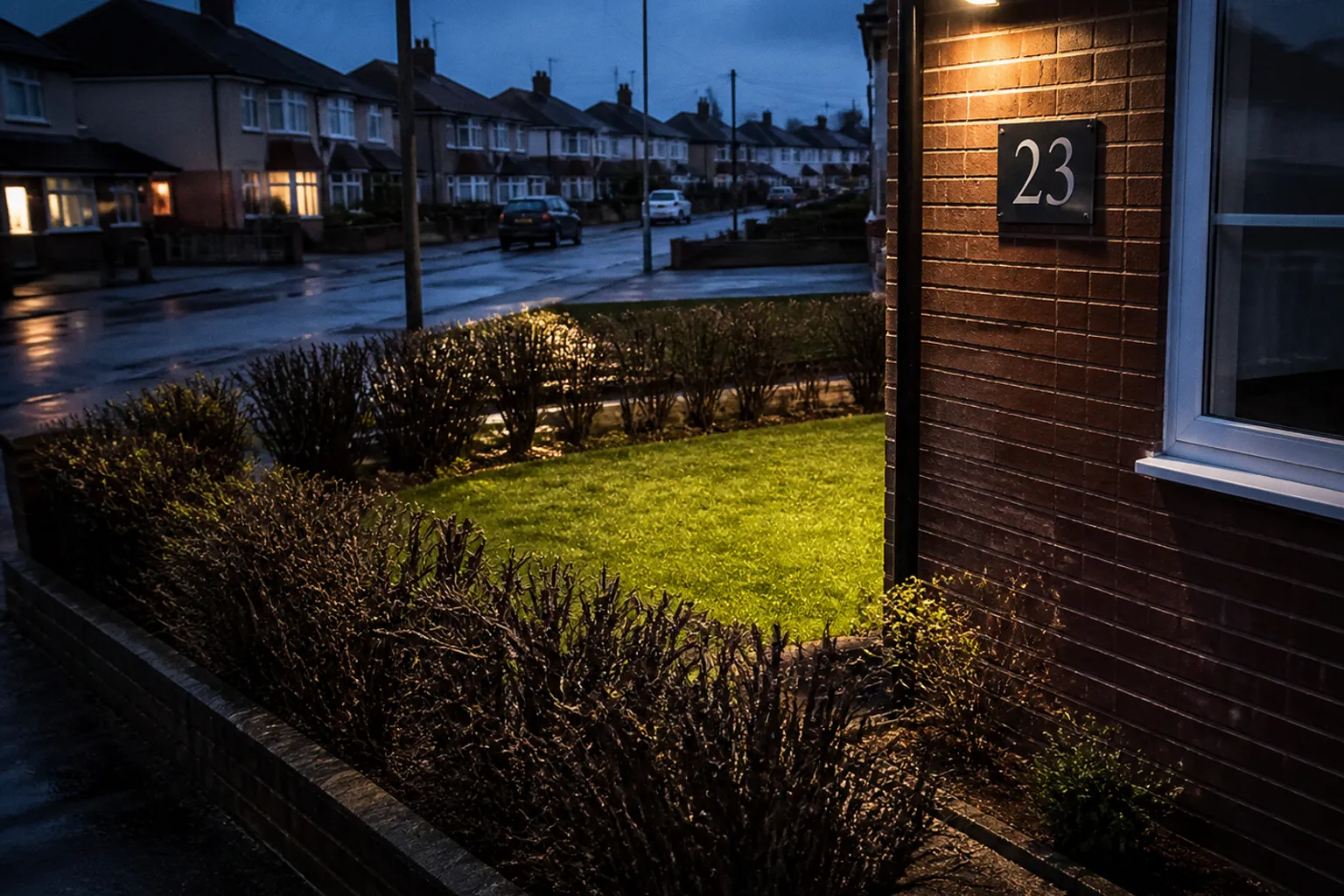
One of the simplest and most effective measures is your house number. Guidelines recommend displaying street address numbers that are at least five inches high and illuminated at night. This isn’t just for pizza deliveries; it’s for emergency services and for neighbours who might need to report an incident at a specific location. It’s a fundamental marker of identity and presence.
Other symbolic barriers include:
- Defined Pathways: A clear, direct path to your front door discourages wandering across lawns.
- Decorative Fencing: A low, open fence (like picket or wrought iron) marks a boundary without creating a visual fortress.
- Pavement Design: Using different materials or patterns for your driveway versus the public pavement subtly signals a change in space.
- Garden Furniture & Ornaments: The presence of well-maintained items suggests regular use and occupancy.
These elements work together to create a narrative of active stewardship. They tell a story of a home that is lived in, loved, and watched over.
The Maintenance Factor: Signaling Ownership to Prevent Crime
This brings us to the most powerful—and most accessible—tool in the defensible space toolkit: consistent maintenance. The "broken window" theory in criminology suggests that visible signs of neglect, like a broken window left unrepaired or graffiti, can signal a lack of social control and invite further disorder. The inverse is equally true.
A well-maintained property is a powerful deterrent. Mowed lawns, trimmed hedges, clean windows, and repaired fences all broadcast a clear message: this home is occupied, its owners are attentive, and any unusual activity is likely to be noticed. It’s the ultimate form of territorial reinforcement. It doesn’t require a security system subscription, just a weekend afternoon and a sense of pride.
For our communities across Grimsby, Cleethorpes, and Immingham, this is where collective effort truly shines. When one neighbour tidies their front garden, it inspires the next. A clean, well-defined streetscape becomes a shared asset, a visual testament to the community’s resilience. It’s a form of passive, 24/7 neighbourhood watch built into the very environment.
Bringing It Home: Your Yard as a Community Asset
Defensible space theory, at its heart, is a partnership between design and community. It’s the understanding that your front garden is not just your private patch of green, but a piece of the public realm that you steward. By applying these principles—clear zones, managed sightlines, symbolic markers, and diligent maintenance—you do more than protect your own property. You contribute to the safety and vitality of your entire street.
Start small. This weekend, take a walk around your property with fresh eyes. Are your sightlines clear? Is your house number visible from the road? Does the transition from pavement to your property feel distinct? These adjustments are often low-cost but high-impact. They are the grassroots actions that, multiplied across a neighbourhood, build a formidable layer of security. In North East Lincolnshire, our strength has always been in our collective spirit. Let’s design our spaces to reflect that, creating streets that are not only safer but visibly cared for, together.