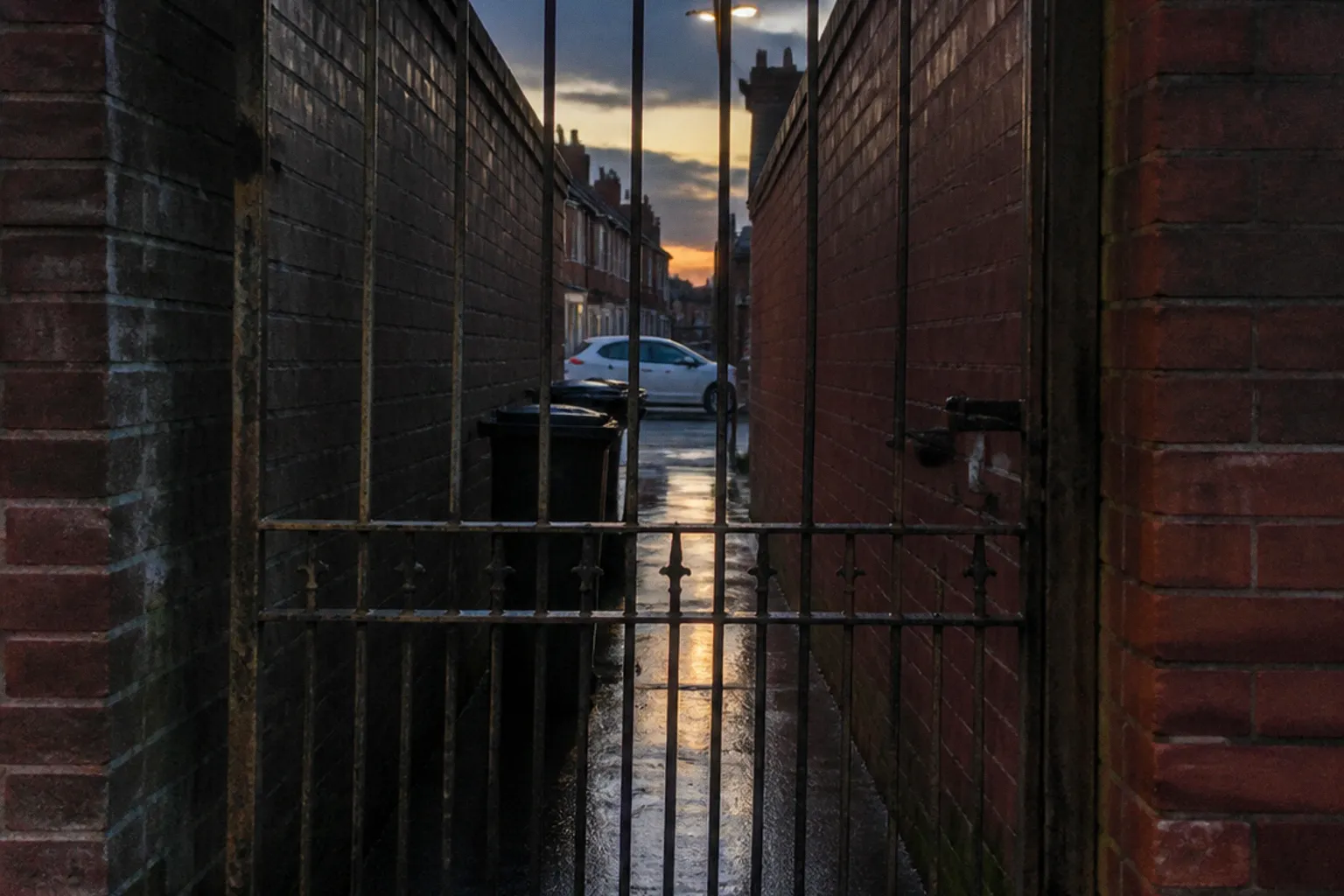
In Grimsby, however, the first question is not what sort of gate residents want. It is whether the route can legally be gated at all, and who would be responsible for paying for it.
North East Lincolnshire Council’s current position is that it does not generally fund alley gates on private land. That leaves residents facing a more complicated decision than simply collecting quotations from installers. Ownership of the ground, rights of access, public rights of way, maintenance duties and funding are separate issues. Confusing them is how a promising security project turns into a dispute between neighbours, landowners and the council.
The distinction matters across the town, from West Marsh to Yarborough and beyond. A rear alley may be a private passageway used by several households, a recorded Public Right of Way, or a route where private ownership sits alongside public access. Each arrangement has a different legal route to gating.
The Legal Divide: Private Passageways vs Public Rights of Way
This is where most disputes start, and where they usually need to end. The rear alley behind a terrace may look public because people have used it for years. That appearance does not settle its legal status.
A private passageway is normally owned by one or more private parties. The deeds may give adjoining households rights to pass along a shared strip behind their properties, or the title may show a separate owner whose land is subject to access rights. Several residents using the route does not, by itself, turn it into a public highway. Equally, occasional council involvement with waste or maintenance does not automatically make the authority the owner.
The title documents and the rights recorded in them can determine:
- who owns the land;
- which households have rights of access;
- whether vehicles, bins or deliveries are covered by those rights;
- who is responsible for maintenance;
- whether a proposed gate would interfere with an existing easement;
- how decisions about shared works must be agreed.
That is why a residents’ map or a long-standing local assumption is not enough. Before anyone orders a gate, the relevant title plans and register entries should be obtained. Where the documents are unclear, legal advice may be needed. A dispute about a gate is often, at root, a dispute about what the deeds permit.
North East Lincolnshire Council’s practical position is important here: on private land, the responsibility for a gating scheme and its upkeep generally sits with the relevant private owners rather than the authority. That includes the design, installation, access arrangements, repairs and longer-term maintenance. The council will not normally collect contributions from reluctant neighbours or take over a private gate simply because it has been installed to address a local security concern.
A Public Right of Way is different. It is a public legal right to pass and repass along a route. The land beneath the route may still be privately owned. The existence of a public right does not mean the council owns every square metre of the footpath, but it does mean that the public’s right to use it cannot be dealt with as though it were an ordinary private alley.
North East Lincolnshire has a network of recorded public footpaths and bridleways, including routes across the urban fringes of Grimsby and Cleethorpes. These routes are recorded on the definitive map and are subject to the legal duties and protections that apply to public rights of way. A resident cannot simply fit a padlock because the neighbouring properties have experienced burglary or anti-social behaviour.
In limited circumstances, access to a public route can be restricted through a formal legal process. That is not the same as asking for permission to gate a private alley, and it is not achieved by installing a barrier first and trying to regularise it later.
| Aspect | Private passageway | Public Right of Way |
|---|---|---|
| Ownership of the ground | Usually one or more private owners, sometimes with rights held by adjoining households | The land may remain privately owned, but the public has a legal right to use the route |
| Public status | Not public merely because several households use it | Recorded as a public footpath, bridleway or another public route |
| Maintenance | Usually rests with the owners and those who benefit under the deeds | The highway authority has duties connected with the public route |
| Gating | Potentially possible if it respects the deeds and all access rights | Requires the appropriate formal legal authority |
| Funding | Usually falls to the private owners who agree to the scheme | Depends on the particular order, project and council arrangements |
| Common use | Rear entrances, bins, gardens and movement between properties | A through-route for walkers and, where applicable, other authorised users |
| Blocking access | Usually a civil dispute about private rights | May involve enforcement under the law applying to the public route |
The practical divide is therefore clear. If the route is private, residents need a properly documented agreement between the people who own the land or hold rights over it. If it is a recorded footpath, they need to engage with the council’s public-rights-of-way process and any relevant statutory procedure.
Neither route is improved by starting construction before the legal position has been checked.
Navigating Public Spaces Protection Orders for Gated Access
A Public Spaces Protection Order, or PSPO, is one legal tool a council may use to regulate access to a public space, including a public right of way, where the statutory conditions are met. The power sits within the Anti-social Behaviour, Crime and Policing Act 2014.
A PSPO is intended for persistent activities that have a detrimental effect on the quality of life of people in the locality, where restrictions are justified and proportionate. It is not a petition, a residents’ vote or a quick authorisation for a gate. The council must consider the evidence, consult as required and make a formal decision.
A PSPO is not a petition and it is not a polite request. It is a regulated intervention in a public space, with consultation, representations and a council decision built into it.
For a gating proposal, the order may provide for access to be restricted at specified times or through specified access points. The precise terms matter. Legitimate users may need keys, codes or another managed form of access. The arrangement must also deal with installation, maintenance, access control and enforcement.
The existence of a PSPO would not convert privately owned land into council-owned land. It would not erase private easements or settle every disagreement between neighbours. Nor would a single serious incident automatically establish that a restriction is legally justified.
A useful case for the council is one that shows a recurring, place-specific problem. Residents should gather material that can be checked rather than relying only on general statements that the alley feels unsafe. This may include:
- dated reports of anti-social behaviour, criminal damage, suspected drug activity or burglary-related concerns;
- police incident numbers and council case references where available;
- records of repeated fly-tipping or waste-related problems;
- photographs showing the location and persistence of a problem;
- a chronology of incidents, with dates, times and precise locations;
- information about how the route is being used and how that affects nearby residents;
- evidence that other measures have been considered and may not deal with the problem adequately.
Anecdotes still have value. They tell the authority where to look and describe the effect on the people who live there. They become much stronger when residents record them consistently. A folder containing dates, reference numbers and photographs gives the council something to assess. A series of unconnected complaints is harder to turn into a formal case.
The public-rights element cannot be treated as a nuisance to be brushed aside. A footpath exists because the public has acquired or been granted a right to use it. Restricting that right affects people beyond the houses immediately beside the alley. Walkers, landowners, local groups, people with mobility needs and other users may all have relevant interests.
The council must therefore consider whether the proposed restriction is necessary and proportionate, and whether the arrangements preserve reasonable access for people with legitimate reasons to use the route. Emergency services, carers, deliveries, waste collection and accessibility all need to be addressed in the proposal rather than left for later.
A PSPO also has statutory limits and review requirements. If an order is extended, varied or replaced, the council must follow the relevant consultation and decision-making rules. Interested people may be able to make representations during a consultation or use the legal routes available to challenge a decision. Those rights depend on the particular order and procedure; they are not a blanket entitlement to prevent every renewal.
That is the point residents sometimes miss. Applying for a restriction is not simply a matter of showing that a gate would be popular. It requires an evidence-based case, a workable access plan and an explanation of why the proposed restriction is justified.
The Financial Reality of Private Alleyway Maintenance in Grimsby
This is where the conversation usually becomes more honest.
If the alley is private, the cost of a gate is normally a private cost. Residents may have to pay for design, fabrication, posts, foundations, locks, access control, signage, installation and future repairs. The exact amount will depend on the site and the specification. Without a quotation for the particular entrance, a per-household figure is guesswork.
The cheapest gate is not necessarily the least expensive arrangement over time. A basic barrier may be inadequate for regular bin movement or vulnerable to damage. A more robust installation may involve repairs to old brickwork, new posts, a self-closing mechanism, restricted access or a plan for emergency entry. Those details should be included in the quotation rather than assumed.
Residents should ask installers:
- Does the quotation include posts, hinges, locks, foundations and making good the surrounding wall?
- Who will hold the keys or manage the access code?
- How will replacement keys be issued?
- Can emergency services open the gate quickly?
- Is the opening wide enough for bins and other necessary access?
- What happens if the lock fails?
- What maintenance is recommended?
- Who pays for repairs or replacement?
- Does the proposed design comply with the rights shown in the deeds?
The agreement between neighbours needs the same level of care. A verbal promise that everyone will contribute may not survive the first repair bill. The group should decide who owns the gate, who holds the keys, how decisions are made and what happens when a property is sold or rented out.
Waste access deserves particular attention in Grimsby’s rear alleys. Some passageways are used for bins, rear entries and the movement of bulky household items. A gate can change those routines immediately. If bins cannot be moved easily, collections may become harder and waste may accumulate. If a resident needs access for a mobility reason, a gate that works for most households may still create an unreasonable barrier for one.
Those are not arguments against gating. They are reasons to settle the practical arrangements before money is spent.
A private gate is also not a complete crime-prevention plan. It can reduce casual through-movement, but it will not stop a determined offender, secure a vulnerable rear window or solve poor boundary maintenance. The strongest private schemes are part of a wider approach that may include well-positioned lighting, secure rear doors and gates, maintained boundaries and prompt reporting of recurring problems.
The council’s current non-funding position makes collective agreement especially important. If the residents cannot agree who will pay, who will have access and who will maintain the installation, the project is not ready to begin. A half-finished scheme can create new access disputes while offering less security than residents expect.
Lessons from the West Marsh Safer Streets 2 Initiative
The West Marsh Safer Streets 2 initiative is useful because it shows the difference between a coordinated public programme and a privately organised alley project.
In June 2021, the Home Office awarded North East Lincolnshire Council a £432,000 grant through the Safer Streets 2 fund. The funding was for the West Marsh area of Grimsby. The programme included alley gates on selected passageways, street-lighting upgrades, CCTV installations and target hardening for individual households. It concluded in March 2022.
Those confirmed components matter, but so do the limits of the example. The grant was a defined programme with a particular area, funding conditions and delivery period. It was not a general promise to fund gates across Grimsby, and it does not mean that a previous project creates an automatic entitlement to another one.
Nor should the West Marsh scheme be treated as a menu from which every street can select a preferred measure. Whether a future programme supports a private alley, funds lighting or offers household security work will depend on the terms of that programme, the area covered, the available budget and the evidence required.
Target hardening is a good example of why the detail matters. The West Marsh project included target hardening for individual households, but that does not establish that every household received the same work or that residents elsewhere will qualify. A local programme may define its own eligibility and the measures it can provide.
The same caution applies to CCTV and lighting. Their inclusion in the West Marsh package confirms that those measures formed part of that grant-funded initiative. It does not prove that a particular alley, junction or rear route will qualify for CCTV or that a future installation will be made in a particular location.
A previous grant can show what a coordinated programme delivered. It cannot turn a one-off funding package into a standing promise for every private alley in Grimsby.
For residents developing a proposal, the useful lesson is to build a case around the current scheme rather than the memory of an earlier one. Monitor North East Lincolnshire Council, policing partners and relevant government announcements for active funding opportunities. Check whether the programme covers private passageways, public routes, household measures or environmental improvements. Then ask what evidence, consent and delivery arrangements are required.
Residents should also keep expectations in proportion. A grant-funded intervention may support a package of measures, but it will still have a boundary around what it can pay for. If the funding does not cover the full cost of a private gate, the remaining liability may still sit with the owners or residents who benefit from it.
Resolving Resident Disputes and Securing Collective Consent
The legal classification is only the first hurdle. Even where gating is possible, the project can fail because the residents have not agreed how it will work.
The people most affected by the gate may not all want the same thing. One household may prioritise security. Another may worry about getting bins through. A landlord may be concerned about responsibility for tenants. An older resident may need reliable access at all times. Someone whose property has a right over the alley may object if the proposed lock makes that right conditional on a neighbour being available.
These concerns should be dealt with before the project reaches the council or an installer. The purpose of the first meeting is not to vote for a gate. It is to establish the route’s legal status, identify the people with rights over it and put the practical objections on the table.
A useful sequence is:
1. Confirm the legal position. Obtain the title information and check whether the route appears on the definitive map as a public right of way.
2. List the affected properties and rights. Include owners, tenants where relevant, rear access users, landlords and anyone with a documented easement.
3. Record the security problem. Keep a shared chronology of incidents, reports, photographs and reference numbers.
4. Define the proposal. Be specific about the location, type of gate, locking system, hours of access and emergency arrangements.
5. Obtain comparable quotations. Make sure each quotation covers the same basic work so that residents are not comparing incomplete prices.
6. Agree responsibility in writing. Set out contributions, ownership, keys, repairs, insurance and future maintenance.
7. Choose the correct route. A private agreement is not a substitute for the statutory process required for a public right of way.
8. Review the arrangement after installation. A gate that cannot be maintained or accessed reliably will quickly become a source of conflict.
Collective consent is not just a sign-up sheet. It needs to be informed consent. Residents should know what they are paying for, what they will have to do when the lock fails and whether the gate affects anyone who is not part of the residents’ group.
The wording of any agreement matters. It should identify the land and the proposed works, explain the contribution method and record the arrangements for keys and repairs. If rights are registered against the properties, the agreement should be checked against those rights rather than attempting to override them informally.
Where one resident objects, the answer is not automatically to describe that person as obstructive. The objection may reveal a genuine access problem or a gap in the proposal. A refusal to contribute does not necessarily remove an existing right of access, and a majority decision does not turn a private route into a public one or vice versa.
Mediation or legal advice may be more productive than repeated arguments in the street. The council can explain its role and the applicable public-rights-of-way process, but it cannot normally resolve every private ownership or contribution dispute between neighbours. Those disputes may require advice from a solicitor familiar with property rights and easements.
The same discipline applies when residents approach the council about a public route. Present the evidence clearly, identify the problem, explain the proposed access arrangements and acknowledge the interests of other users. A case that recognises the public nature of the route is more credible than one that treats public access as an inconvenience to be removed.
Where the Decision Actually Sits
The phrase “alley gating in Grimsby” covers two very different decisions.
For a private passageway, the central questions are ownership, rights, consent, cost and maintenance. The council’s current position is that it does not generally fund gates on private land. Residents therefore need to establish what they own or have the right to use, obtain agreement from the relevant parties and budget for the full life of the installation.
For a public right of way, the central questions are evidence, statutory authority, consultation, proportionality and continued legitimate access. A gate cannot be treated as an ordinary private improvement. The council must follow the relevant legal process, and the public’s rights must be considered alongside the security concerns of nearby residents.
That legal divide should shape the first conversation, the evidence collected and the money committed. It is also the reason a well-run project starts with documents and consent rather than hardware.
A gate can be useful. It can reduce casual access to a vulnerable rear route and form part of a wider crime-prevention package. But it only works when the legal status is understood, the funding position is honest and the people who rely on the alley have agreed how it will operate.
In Grimsby, the sensible question is not simply whether an alley should be gated. It is who has the right to decide, who must pay, and how legitimate access will continue once the gate is in place.