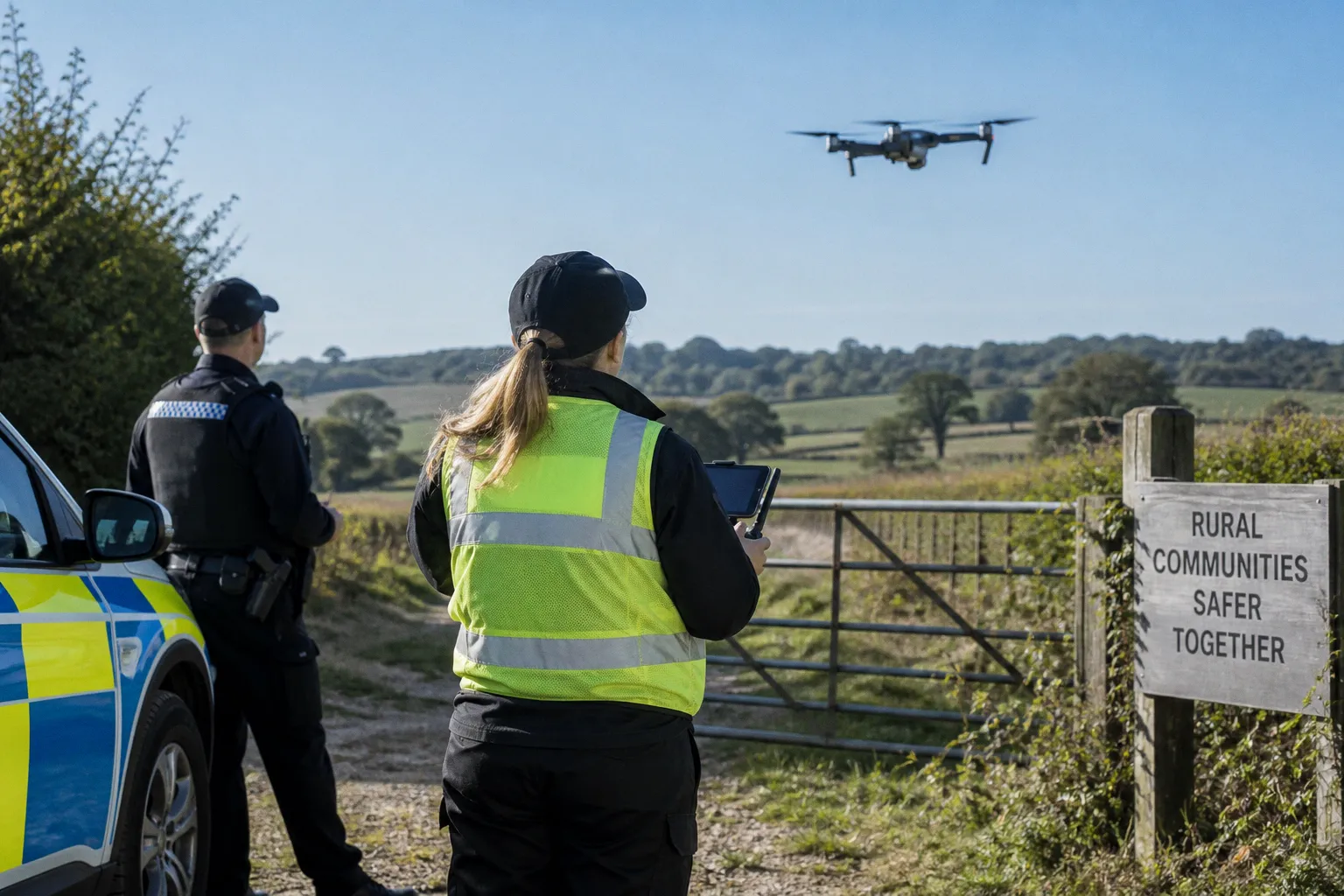
The project is intended to assist responses to burglaries, hare coursing and poaching, while improving evidence gathering and local intelligence. It is an interesting experiment in rural policing, but for North East Lincolnshire it is a Hampshire development, not a newly announced local service.
The control room sets the boundary
Community intelligence is useful only when it reaches the right people promptly and can be acted on responsibly. In this pilot, the police control room is the operational link: trained volunteers are available to support incidents, rather than residents sending up a drone because they have seen something suspicious. That boundary should be made clear from the start.
The scheme may give officers an extra set of eyes, but no such benefit is established in the announcement. Residents deserve straight answers about how volunteers are selected and trained, who decides when they are deployed, what they may record, how any footage is used, and how the work is overseen. A visible presence may be useful, but the public needs to know what happens to the information gathered and who is answerable for it. Those questions are not a rejection of the technology; they are the basic checks that should come with it.
The test is better police work
The case for the pilot rests on two practical claims: that drone support can help police respond to rural crime, and that it can improve the intelligence and evidence available to them. Those are credible aims, but they are still aims rather than results.
Anyone assessing a similar proposal locally should ask what would count as success. Did a deployment provide useful evidence? Did officers receive information that was better or faster? Did the scheme help resolve or prevent incidents? Were volunteers deployed proportionately, with clear supervision and proper handling of recordings? The answer should come from evidence, not from the novelty of the equipment. A tool that sounds impressive on paper must still demonstrate a practical return for the people it is meant to protect.
Keep the idea in view, not the service
For North East Lincolnshire residents, the immediate point is simple: the public information available describes a Hampshire pilot and does not establish a similar local scheme. That makes this a development to watch, not a capability to rely on. If the idea is later considered here, local residents should expect a plain explanation of its purpose, its limits and its oversight before being asked to place confidence in it.
On the beat, residents can still do the useful, unglamorous work. Report rural incidents accurately, give clear descriptions of what happened, and share information through the proper official channels. If a local drone initiative is proposed, ask where it will operate, what information it will collect and who will be accountable for the decisions. Straight answers matter, especially when the technology is being presented as a community asset. Until those answers are available close to home, keep this pilot in view as an experiment elsewhere, not as a promise of extra coverage here.