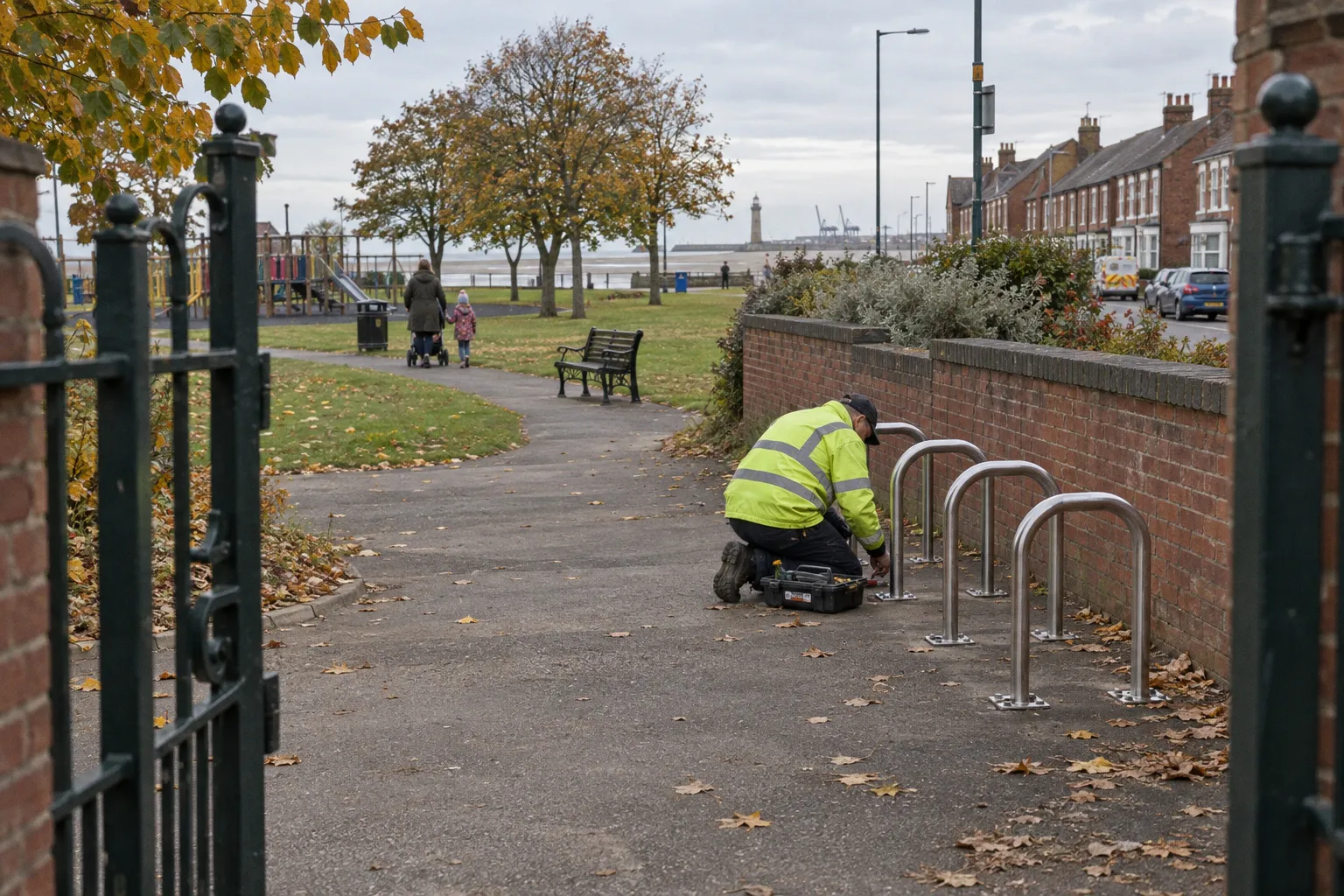
A community safety grant can begin with a very local concern: poor lighting along a route to school, antisocial behaviour around a parade of shops, a youth club that needs to stay open later, or residents asking for practical improvements in an area that has felt neglected for too long. But once public money is involved, a good idea needs more than enthusiasm. It needs a clear partnership agreement, defined responsibilities and a realistic account of how every pound will support safer streets.
For groups across North East Lincolnshire — from Grimsby and Cleethorpes to Immingham and the surrounding neighbourhoods — community grant partnership agreements for safety projects provide the structure behind that work. They connect grassroots organisations with councils, police and crime commissioners, Community Safety Partnerships and other public bodies, while setting out what the funding can achieve and how progress will be demonstrated.
The paperwork should not be mistaken for a barrier to local action. Done properly, it protects the project, the people delivering it and the residents who are meant to benefit.
Why community safety grants need a formal partnership
Community safety is rarely delivered by one organisation alone. A neighbourhood watch group may understand where residents feel most vulnerable. A youth organisation may already have trusted relationships with young people. A council may hold information about public spaces and local services, while the police and other statutory partners bring a different view of risk, prevention and antisocial behaviour.
The strength lies in bringing those perspectives together without blurring the boundaries between them.
Community Safety Partnerships, or CSPs, were established under Section 6 of the Crime and Disorder Act 1998. They bring together statutory responsible authorities including local police forces, fire authorities, councils, health partners and probation services to address crime and antisocial behaviour jointly.
That framework matters because a community grant is not simply a pot of money handed to the most persuasive application. It sits within a wider local safety strategy. A funded project should respond to an identifiable concern and complement the work of public services, rather than quietly taking on a statutory responsibility that belongs elsewhere.
This is particularly important when a voluntary organisation is working alongside several public bodies. The partnership agreement should make clear:
- Which organisation is the accountable grant holder.
- Who is responsible for delivering each part of the project.
- What outcomes the partners are working towards.
- How spending will be authorised and recorded.
- What evidence will be collected during delivery.
- How problems, delays or safeguarding concerns will be escalated.
- What happens if the project changes or cannot be completed.
These details may feel modest beside the ambition of a revitalisation project, but they are what allow a collective effort to remain trusted. They give residents a clear answer when they ask who is responsible, and they help funders distinguish between a project that is carefully prepared and one that is still only an appealing idea.
A strong partnership agreement does not slow down grassroots action; it gives that action a safe route from local concern to lasting improvement.
The agreement is a practical map, not just a compliance document
The language of grants can sometimes make community work sound more remote than it is. In reality, the most useful agreement is a practical map of the project: what will happen, who will do it, what it will cost and how the partners will know whether it made a difference.
For a local safety initiative, that might include evening activities for young people, improvements to a shared outdoor space, volunteer-led reassurance patrols, community events designed to reduce isolation, or a programme that helps residents report and address antisocial behaviour. The agreement should describe the activity in plain terms and connect it to a defined safety objective.
A project does not need to promise that crime will disappear. Community safety work is often more realistic and more valuable when it identifies measurable changes within the organisation’s control. Those might include:
1. Creating regular supervised activity in a place or at a time associated with nuisance behaviour.
The project can record attendance, session frequency and the groups reached, while recognising that wider changes in reported incidents may depend on many factors.
2. Improving how residents share concerns and access support.
A local organisation might establish a reporting route, host advice sessions or provide a trusted point of contact for people who are reluctant to approach formal services directly.
3. Strengthening the use of public or community spaces.
A neglected space may become more welcoming through organised activities, better stewardship and a visible presence from local residents.
4. Building cooperation between existing groups.
A youth club, tenants’ association, faith group, school or sports organisation may each hold a small part of the solution. The grant can help them coordinate rather than duplicate one another.
5. Leaving behind local capacity after the award ends.
Training volunteers, developing a repeatable session plan or creating a sustainable partnership can be as important as the first round of funded activity.
The agreement should also identify what the grant will not cover. This is where the boundary between community-led prevention and core public-sector work becomes essential.
Eligible expenditure and the boundary around core services
Community safety funding is generally intended to supplement public provision, not replace it. Grant agreements under community safety initiatives typically limit funded activity to non-core policing or council work. That means the allocation should add prevention, engagement or local capacity rather than pay for responsibilities that a statutory service is already required to provide.
For a voluntary group, this distinction can be difficult to interpret in practice. A project may work closely with the police, council or other public partners, but collaboration does not automatically make every related cost eligible.
A well-drafted agreement should explain:
- The specific activities that the award supports.
- The categories of expenditure that are excluded.
- Whether equipment, venue hire, staffing, volunteer expenses and communications costs are eligible.
- How changes to the budget must be approved.
- Whether match funding or in-kind contributions are expected.
- Which costs can be claimed before or after the formal grant period.
- How unspent funding will be treated at the end of delivery.
For example, a community group may be able to fund a youth worker’s time for a new prevention programme, provided that role is part of the approved intervention. It should not assume that the grant can cover a core statutory post or absorb an existing public-service cost simply because that cost is connected to community safety.
The same care applies to equipment. A project may need storage, lighting for an activity, communication materials or furniture for a community venue. The agreement should connect each purchase to the approved intervention, rather than relying on a broad description such as “neighbourhood improvement”.
This level of detail is not about making community work bureaucratic for its own sake. It protects the grant holder from having costs rejected later, and it gives funders confidence that the money is being directed towards the agreed purpose.
Building governance that residents can understand
Partnership governance in community projects is strongest when it is clear enough to explain at a residents’ meeting. People should be able to understand which organisation holds the funding, which partners are involved and how decisions are made.
The legal form of a group may vary. Some community organisations are charities or incorporated bodies. Others are informal local groups developing their structure for the first time. Community safety grant schemes operated by local partnerships can require voluntary and community organisations to have at least a formal constitution or memorandum of agreement, together with a dedicated organisational bank account.
Those requirements are not merely administrative hurdles. A constitution explains how the organisation is governed, while a dedicated bank account creates a clean financial trail. Together, they make it easier to distinguish project spending from personal funds or unrelated community activity.
A memorandum of understanding for local safety grants can be useful where several organisations are collaborating but one is taking responsibility for the award. It may set out:
- The purpose of the collaboration.
- The contribution expected from each partner.
- The person or body authorised to make operational decisions.
- The process for approving changes.
- How information will be shared.
- How safeguarding and confidentiality will be handled.
- How disputes will be resolved.
- What happens if one partner withdraws.
The memorandum does not need to turn a small neighbourhood project into a formal corporation. It does need to remove uncertainty. If a local group is buying equipment, a youth organisation is delivering sessions and a residents’ association is providing volunteers, the agreement should not leave those responsibilities to assumption.
Who holds the risk?
The accountable body usually carries the greatest responsibility for financial records, reporting and compliance. That does not mean every partner has the same role, but it does mean that delivery arrangements should be agreed before the money is spent.
A useful governance arrangement might include a small steering group with named representatives from the delivery partners. It should meet often enough to spot problems early, with brief records of decisions and actions. For a short award, this may be simple. For a larger or longer project, the group may need a more developed reporting cycle.
The principle is the same: responsibility should sit with a named person or organisation, not with the partnership as an abstract idea.
Managing money across several organisations
Managing multi-stakeholder safety grants becomes more complex when a project involves several delivery partners, subcontractors, volunteers or venues. The grant holder may receive one payment, but the work can generate many smaller transactions and commitments.
Before delivery begins, partners should agree how financial control will work. A basic arrangement should cover:
- The approved budget and any permitted movement between headings.
- The number of quotations or procurement steps required for purchases.
- Who can authorise spending.
- How invoices, receipts and timesheets will be stored.
- How partner payments will be made and evidenced.
- How volunteer expenses will be recorded.
- What happens when a cost is higher than expected.
- The timetable for financial reporting.
The strongest systems are often the simplest ones that people will actually use. A shared budget tracker, monthly review and clearly named folder for invoices may be more effective than an elaborate process that no volunteer understands.
That simplicity must not become informality. Every partner should know that grant money is restricted to the approved purpose. A group that receives funding for a local safety programme should be able to show which payments relate to that programme, when they were made and who approved them.
Where funding is passed to another organisation, the main agreement should be supported by a written delivery arrangement. It should repeat the relevant conditions rather than assuming that a smaller delivery partner knows the terms of the original award. This is especially important for monitoring, safeguarding, publicity, data handling and the retention of financial records.
Indirect costs and the detail that can affect a budget
One of the least visible parts of community grant management is the treatment of indirect costs. These are expenses that support delivery without being the direct activity itself — for example, administration, general management, finance support or shared office costs.
Under Safer Streets Fund grant agreement guidance, indirect costs used by recipients for delivering interventions are subject to specific caps, while direct intervention delivery posts are excluded from those indirect cost caps. The guidance identifies a 7% indirect cost target figure limit in Safer Streets grant agreements.
That distinction can materially change how a project is budgeted. A member of staff delivering approved sessions may be treated differently from a portion of general organisational administration. The classification should not be guessed after the project has started.
A group preparing an application should separate:
- Direct staff time spent delivering the approved intervention.
- Project-specific administration required to manage that intervention.
- General organisational overheads.
- Venue, travel and material costs directly linked to activities.
- Specialist services or commissioned support.
- Volunteer expenses and training.
The agreement should state how these categories are treated and whether the funder requires a particular method for calculating shared costs. If a community organisation operates several programmes from one building, it may need to explain how any shared rent, utilities or administrative time has been apportioned.
A careful budget is not necessarily a narrow one. It is a transparent one. It shows the real cost of delivering the work while respecting the limits placed around public funding.
The safest grant budget is not the one with the fewest overheads on paper; it is the one whose costs can be explained clearly by the people delivering the work.
Monitoring outcomes without losing sight of the people involved
Reporting can become unhelpful when it focuses only on numbers. Attendance figures, volunteer hours and completed sessions matter, but they do not fully describe whether a project has strengthened confidence or improved the way a neighbourhood responds to problems.
A good monitoring plan combines practical outputs with evidence of change. Depending on the project, this could include:
- Number and frequency of activities delivered.
- Number of residents or young people engaged.
- Volunteer recruitment, training and retention.
- Use of a community venue or public space.
- Referrals to relevant support services.
- Feedback from residents and participants.
- Changes to local partnership working.
- Problems encountered and how the project responded.
Crime and antisocial behaviour data may also form part of the wider picture, but a small local grant should not claim sole responsibility for changes that reflect many influences. The more credible approach is to explain what the project contributed and what the partners observed alongside it.
A project operating in East Marsh, for example, may be helping residents use a shared space more confidently, giving young people a positive evening activity and making it easier for concerns to reach the right service. Those achievements can be documented even when the wider pattern of reported incidents is shaped by policing activity, seasonal change, housing conditions and other factors beyond the project’s control.
Monitoring should be proportionate. A volunteer-led group may not have the capacity for complex data systems, but it can still keep reliable records and gather honest feedback. A short monthly note, attendance record and record of decisions may offer more useful evidence than a late, overcomplicated report assembled at the end of the funding period.
Tiered funding: matching the agreement to the size of the project
Not every neighbourhood idea needs the same level of governance. Small grants for a single activity should not carry the same reporting burden as a substantial, multi-partner programme. At the same time, a modest award still needs a clear purpose and a basic audit trail.
Local community safety schemes commonly use tiered funding models. Small grant programmes may offer awards in the region of £1,000 to £4,000, or up to £2,500 for particular local safety projects. In the Humber region, the Police and Crime Commissioner’s Community Safety Fund has offered awards ranging from £500 to £35,000 for local crime reduction and antisocial behaviour projects.
The exact opportunity, eligibility rules and deadlines will vary, but the principle is useful: the scale of the award should be reflected in the structure supporting it.
| Funding scale | Governance emphasis | Evidence normally needed |
|---|---|---|
| Small neighbourhood award | Clear applicant responsibility, basic constitution or agreement, dedicated account and simple budget | Receipts, activity records, brief outcome update and evidence that the project took place |
| Mid-sized collaborative project | Named delivery partners, written roles, agreed reporting timetable and stronger budget controls | Partner updates, attendance or engagement data, financial records and resident feedback |
| Larger multi-agency programme | Formal grant agreement, governance group, risk management, procurement arrangements and detailed monitoring | Regular narrative and financial reports, outcome evidence, change control and final evaluation |
A larger grant does not automatically produce a better project. It does, however, increase the need for clarity. More money can mean more partners, more procurement, more safeguarding considerations and more potential points of failure. A formal governance structure helps the partnership remain focused on the residents it exists to serve.
What a durable agreement looks like in North East Lincolnshire
The most valuable agreements are built around the actual character of the neighbourhood. They do not copy a generic template and leave local detail to a later conversation.
For a community safety project in Grimsby, Cleethorpes or Immingham, that local detail may include the specific route residents use, the opening pattern of a community building, the age groups already engaged by a youth service, the practical limitations of a shared space or the relationship between several voluntary groups.
A durable agreement should therefore answer five straightforward questions:
1. What local concern is the project addressing?
The answer should be specific enough to guide delivery without overstating what a small grant can solve.
2. What will the funding pay for?
The budget should connect each significant cost to an approved activity.
3. Who will do the work?
Roles should be named, particularly where one group is responsible for funds and another is responsible for delivery.
4. How will the partnership know whether it is making progress?
Monitoring should combine practical outputs with feedback and learning.
5. What happens when circumstances change?
Projects need a route for approving timetable changes, reallocating a cost or responding to a partner’s withdrawal.
That final question is often overlooked. Grassroots projects operate in real places, with real pressures. A venue may become unavailable, a volunteer may leave, a supplier may change its price or a safeguarding concern may require the group to alter an activity. A good agreement does not pretend that plans are immune from change. It sets out how change will be handled responsibly.
Turning funding into lasting community confidence
The purpose of community grant partnership agreements for safety projects is not to produce paperwork that sits in a folder while the real work happens elsewhere. The purpose is to make the real work safer, clearer and more sustainable.
Across North East Lincolnshire, the most promising community safety initiatives are likely to be those that combine local knowledge with dependable partnership. They understand that a grant may pay for a programme, but trust is built through consistency: showing up, listening to residents, keeping promises and being open about what the project can and cannot do.
For groups preparing an application, the best starting point is not a grand claim about transforming an entire area. It is a well-defined local need, a realistic plan and an honest conversation with the organisations that can help deliver it. From there, the agreement can establish the essentials: accountable governance, eligible spending, proportionate monitoring and a shared understanding of success.
That is how a modest community fund can support more than a single activity. It can contribute to revitalisation, strengthen local resilience and give residents a meaningful role in shaping the safety of the places they call home.