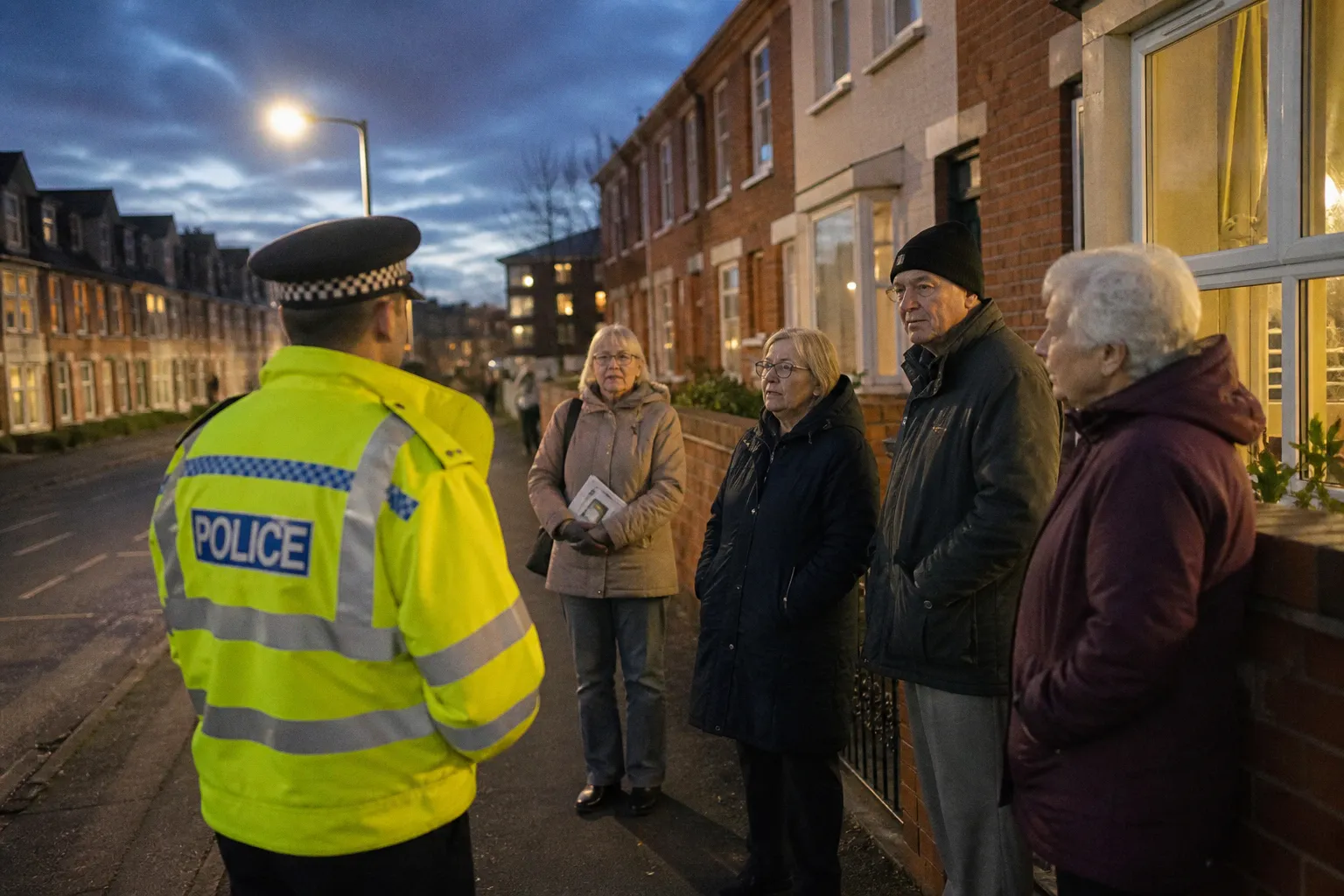
A cluster of recent dispatches from four separate jurisdictions describes the same operational shift: local crime-prevention crews, rural partnerships and youth-focused safety forums are being expanded on the ground, rather than announced at policy level alone. As reported by Gympie Today, a crime-prevention crew in the Gympie region has ramped up its community-safety push. For North East Lincolnshire — where Grimsby, Cleethorpes and Immingham operate under established but continually tested policing and preventative frameworks — these external reports serve a comparative function. They reveal the structural choices other areas are making, and invite scrutiny of whether similar preventative levers are being pulled, audited and reported locally.
The Logic of Preventative Expansion
The Gympie Today item describes a local crime-prevention crew scaling up community-safety activity. Farming Life, covering the United Kingdom, reports on the Rural Crime Partnership's stated focus on protecting rural communities. Read together, both pieces share a resource-allocation logic that prioritises sustained community presence over reactive dispatch. The preventative framework referenced in each case targets the gap between incident reporting and intervention — the operational space in which organised offending, opportunistic acquisitive crime and rural property crime tend to mature before formal detection. The structural question is whether the additional crew hours translate into measurable shifts in recorded incidents or victim-survey data.
Youth Channels and Interfaith Liaison
WXLV reports that the Greensboro Community Safety Department has hosted a youth town hall aimed at amplifying young voices within local safety discussions — an intergenerational input mechanism whose own measurable criteria revolve around participation rates, follow-through and the proportion of proposals that translate into operational change. EIN Presswire covers a Dublin conference that has strengthened partnership working between law enforcement and faith communities to prevent extremism. The two cases represent distinct preventative layers operating alongside conventional policing: civic engagement on one side, interfaith liaison on the other, each with its own reporting obligations.
What the Numbers Will Tell
Across all four reports, the absent variable is identical — published outcome data linking the expanded activity to movement in local incidence rates. Expansion announcements describe inputs, intent and structural design. Until verified before-and-after figures appear, the analytical position remains conservative: additional resources deployed is a necessary but not sufficient condition for fewer recorded incidents. For North East Lincolnshire readers, the practical check is whether comparable preventative channels here — neighbourhood policing, youth engagement, rural liaison — are being scaled against the same outcome metrics, and whether those metrics are being published in a form that residents and local stakeholders can independently verify.