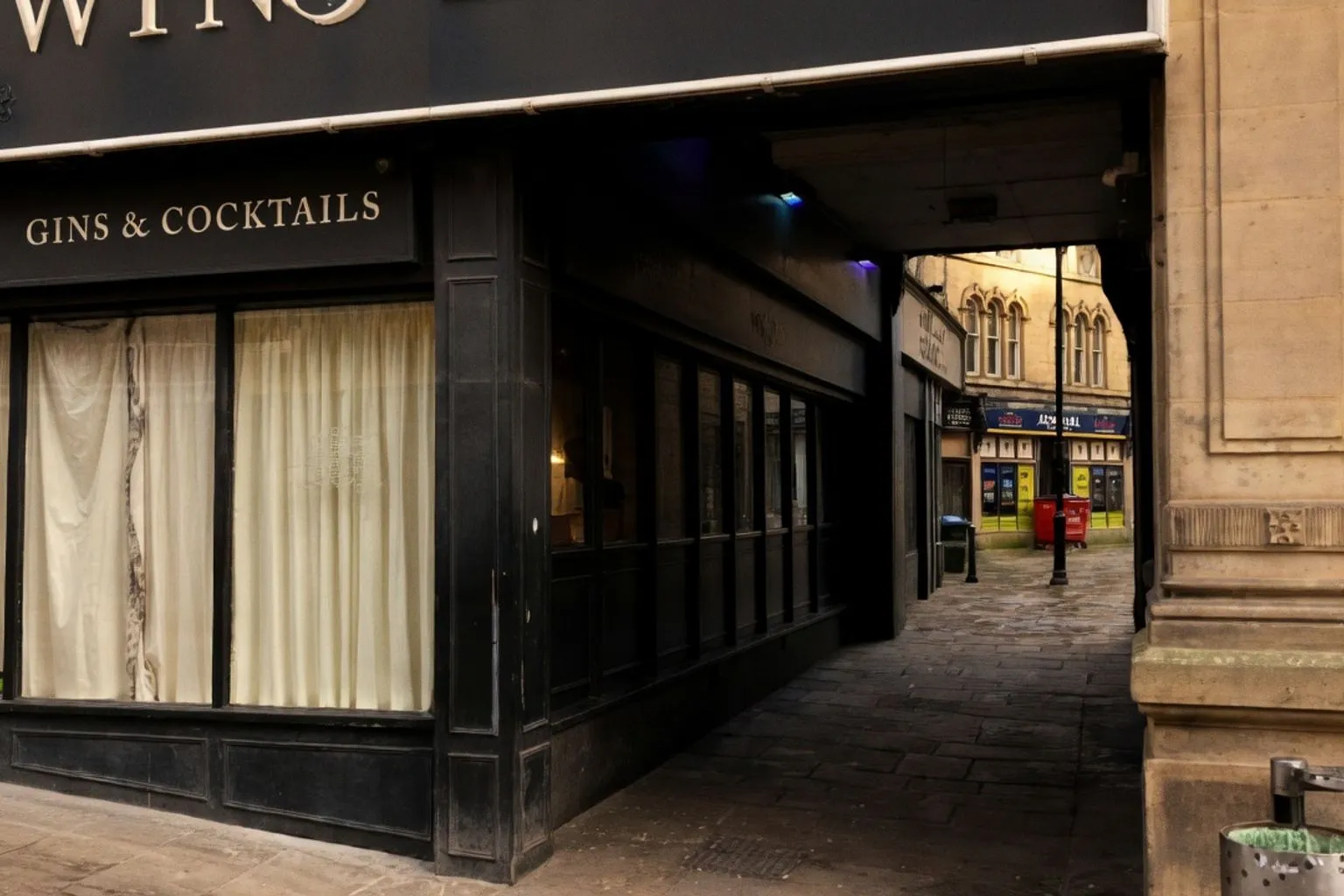
According to the BBC, Bradford councillors have approved plans to gate off a notorious 11-metre alleyway linking Ivegate and Tyrell Street, after police call-outs there reached what the council's own planning application described as "unsustainable" given limited resources. The decision follows a stabbing last week in which an 18-year-old man was injured in the passage — the sort of incident that turns a familiar short cut into somewhere people start crossing the road to avoid.
This is West Yorkshire, not North East Lincolnshire, and I want to be clear about that from the outset. But the shape of the problem is one our readers will recognise from Grimsby town centre, Cleethorpes seafront cut-throughs, and the lanes around Immingham dock. A narrow route that should be a convenience becomes a magnet for anti-social behaviour and serious crime. Reactive policing — officers turning up after a 999 call — cannot be the only answer. Eventually the volume of incidents forces someone's hand, and that someone is usually the council with a planning application rather than the force with a strategy.
The process before the padlocks go on
The alley remains a public right of way, which means Bradford Council cannot simply install the proposed art nouveau-style wrought iron gates tomorrow morning. There is a formal legal closure process to navigate first, and only once that is complete will the ironwork go up. Planning officers have mapped a roughly 100-metre diversion via Ivegate, Tyrrel Street and Queensgate for pedestrians who currently rely on the cut-through. Conservation officers flagged that the passage appears on mid-19th century maps as part of the historic street pattern, but concluded that reducing crime and the demand on limited police resources outweighed the heritage argument. The closure effort itself dates back to 2021, when police first suggested shutting the route, only for the idea to run into a backlash from residents worried about losing a section of an old public street.
What our beat should take from this
Three things, and I would like residents to hold our local teams to account on each one. First, what is our equivalent trigger point? When does a hotspot in Grimsby or Cleethorpes move from "we're keeping an eye on it" to a formal infrastructure intervention — gates, lighting upgrades, rerouting? Second, where is the visible presence? If our neighbourhood officers can show us the patrol data and the call-out figures for known trouble spots, the community intelligence picture becomes something we can all work from. Third, what does the legal process look like on our patch if a closure is ever proposed? Bradford's experience suggests it can take years, and that heritage concerns will be heard alongside safety ones — meaning residents who want action need to make their voices heard early, not after the consultation closes.
I am not suggesting we need a gate on every alley. What I am suggesting is that the public deserves straight answers about how repeat hotspots are identified, what threshold triggers a permanent solution, and which routes are quietly accumulating incidents that nobody is talking about yet. Keep reporting through the proper channels. That is the evidence base which, as Bradford has just shown, eventually moves the bureaucracy.