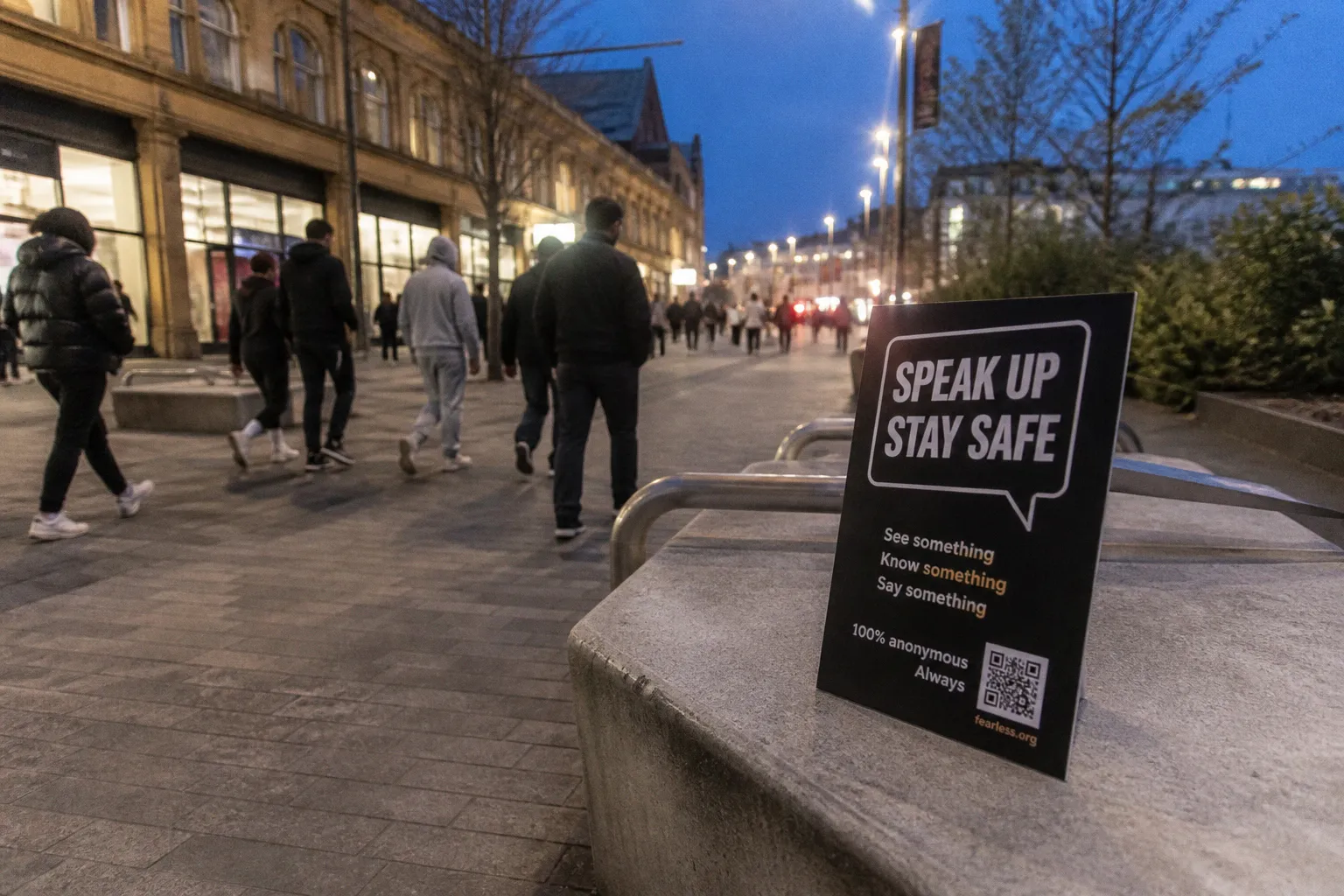
According to the Commissioner's office, the campaign reframes community participation as an upstream preventative mechanism rather than a reactive reporting instrument. For Grimsby, Cleethorpes, and Immingham residents, the structural question is whether the channel translates into measurable local intelligence gains rather than functioning as a symbolic exercise.
Operational frame of the campaign
The initiative centres on Fearless, a reporting service that operates outside the 999 system, allowing individuals to pass on information without immediate face-to-face police contact. The Commissioner's framing positions the youth demographic as both the highest-risk cohort for knife-related harm and the most plausible source of early-warning intelligence on weapon carriage and planned incidents. No enforcement metrics have been published alongside the launch; the current emphasis rests on channel volume and youth engagement rather than arrest or seizure data. The absence of a baseline figure for expected report throughput makes any short-term evaluation a matter of monitoring rather than benchmarking.
The deteriorating national baseline
The campaign enters a resource environment that warrants scrutiny. According to The Herald, knife crime across the UK has reached an eight-year high at the same time that preventative programme funding has been significantly reduced — a pattern of resource allocation that directly undercuts preventative frameworks of this type. Separately, portsmouth.co.uk reports that knife crime homicides in Portsmouth have fallen to a 35-year low, illustrating how regional incidence rates diverge sharply even within the same policy window. For North East Lincolnshire, the relevant comparator is the Humberside force area trajectory, not the national aggregate, and the Commissioner's published figures will determine whether this region tracks closer to the national high or the localised low.
What residents should track
Residents monitoring the campaign should note three measurable indicators over the coming months. First, report volumes disaggregated by age band, which will indicate whether the youth-targeted framing is actually shifting channel demographics. Second, the conversion rate from anonymous submission to actionable intelligence — the metric that determines whether Fearless functions as a preventative tool or a dead-letter drop. Third, any published correlation between channel uptake and recorded knife-enabled crime rates in Grimsby, Cleethorpes, and Immingham specifically. The Commissioner's office has not indicated a reporting cadence for these outcomes, and the absence of a stated evaluation timetable is itself a data point worth recording.