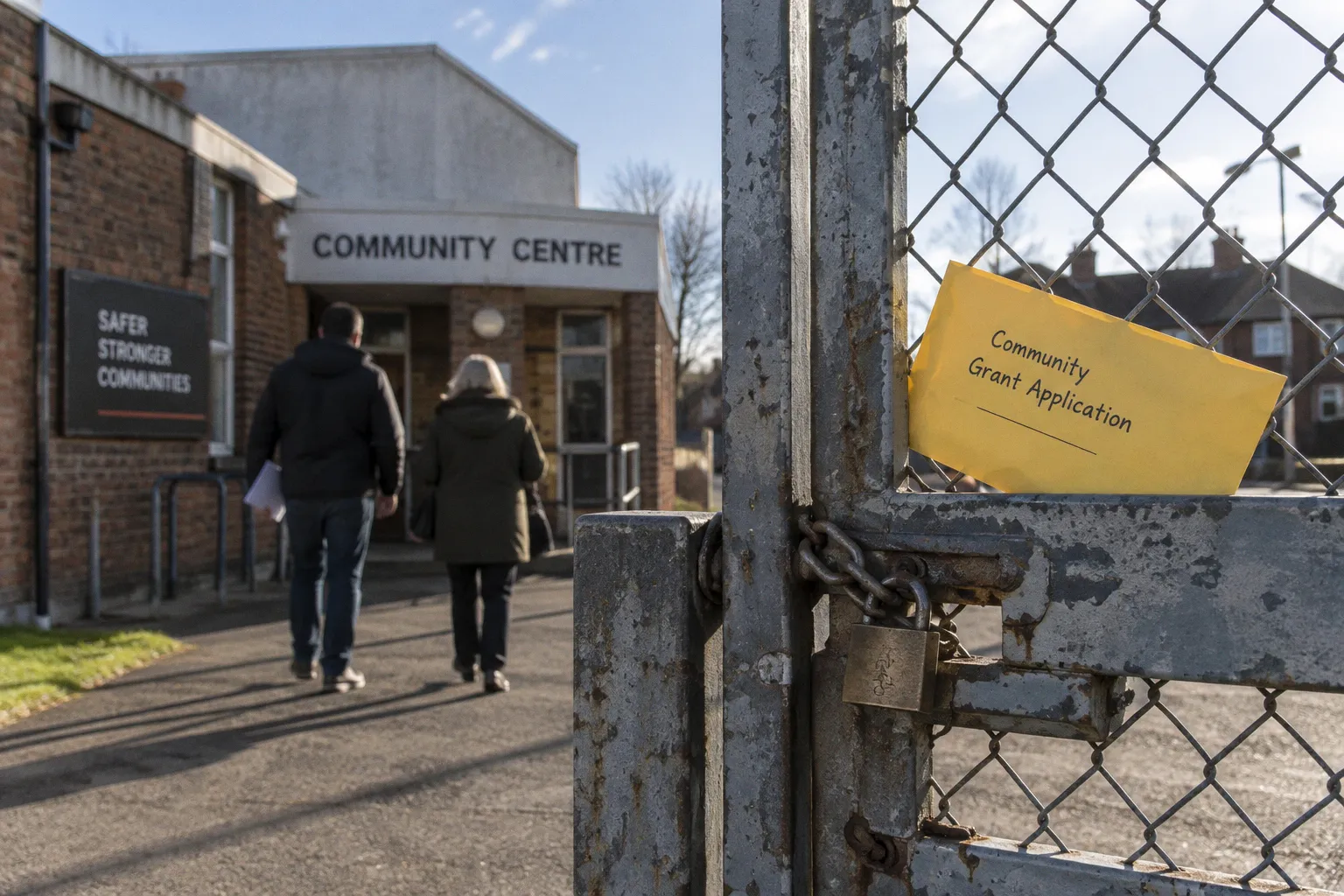
A £35,000 ceiling, a £500 floor, and a 12:00 noon deadline on 7 October 2026. That's the headline of the Office of the Police and Crime Commissioner for Humberside's Community Safety Fund Round 9 — and for the voluntary groups, neighbourhood partnerships, and grassroots organisations across North East Lincolnshire who keep our towns feeling safe, it sets the rhythm of the year. With applications closing in early autumn and funded projects unable to start before 1 January 2027, the window is narrow enough to demand attention now. Yet that single deadline sits inside a much wider funding calendar that stretches into 2027, offering genuine routes for everything from CCTV installations to youth engagement work.
The question most often asked by community organisers isn't whether the money exists. It's which pot fits the idea, when the deadline falls, and what paperwork needs to be ready before the form goes in. This guide maps out the key funding streams available across Grimsby, Cleethorpes, and Immingham, and walks through what each scheme actually pays for — so local groups can plan ahead rather than scramble at the last minute.
The 2026-2027 funding calendar at a glance
North East Lincolnshire sits at the overlap of several funding ecosystems: Home Office-aligned safety initiatives, Police and Crime Commissioner grants, council-administered local funds, and charitable foundations serving Greater Lincolnshire. Each operates on its own timetable, its own eligibility criteria, and its own ceiling — but they share one feature. They reward preparation.
Preparation is the currency of community funding. Groups that understand the cycle a year ahead consistently outpace those who respond to the deadline.
For anyone mapping a calendar year of community safety work, three windows matter most. The OPCC Community Safety Fund Round 9 closes on 7 October 2026 and funds projects starting no earlier than 1 January 2027. The Evan Cornish Grassroots Fund, administered by Lincolnshire Community Foundation, closes on 1 October 2026. The North East Lincolnshire Council Activation and Community Engagement Fund runs on a much longer leash, with applications accepted until 31 March 2027. Beyond these headline schemes, the Humber Gateway Community Fund reopens on 1 January and 1 June each year for smaller grassroots requests, and the Laceby Solar Farm Fund accepts applications on 1 April and 1 October for community benefit work in its catchment.
Comparing the major safety and community grants
| Fund | Award range | Geographic scope | Closing date | Project focus |
|---|---|---|---|---|
| OPCC Community Safety Fund Round 9 | £500 – £35,000 | Humberside (incl. NEL) | 7 October 2026, 12:00 noon | Capital projects, CCTV, equipment, security measures |
| NELC Activation and Community Engagement Fund | £500 – £25,000 | Grimsby town centre (VCSE) | 31 March 2027 | Capital projects, social action |
| Evan Cornish Grassroots Fund | Up to £6,000 | Greater Lincolnshire | 1 October 2026 | Wellbeing, distress reduction |
| Humber Gateway Community Fund | £500 – £2,500 | North East Lincolnshire | 1 January / 1 June (annually) | Grassroots community activity |
| Laceby Solar Farm Fund | Up to £10,000 | Laceby and surrounding parishes | 1 April / 1 October (annually) | Community benefit projects |
This is the working map. The craft lies in matching the idea to the right column before the deadline arrives — and in being honest about what each fund is designed to do, and what it isn't.
OPCC Community Safety Fund: capital investment priorities
The Police and Crime Commissioner's Community Safety Fund has become one of the most consistent sources of capital investment for neighbourhood safety work across the region. Round 9 — the current application window — keeps the same structure that previous successful applicants have come to know: a minimum award of £500, a maximum of £35,000, and a strict focus on tangible, lasting assets rather than ongoing running costs.
What does that mean in practice? It means the fund will support CCTV installations, improved lighting, secure access systems, fencing, gates, alarms, and equipment that helps a community space run more safely for years to come. It will not, under the published guidance, cover staff salaries or general operating expenses. Groups planning to use Round 9 funding need to think in terms of brackets, batteries, and brickwork — the things that stay after the project ends.
The deadline itself is firm: 12:00 noon on 7 October 2026. Late applications, however technically complete, do not get a second look. Projects, once approved, cannot start before 1 January 2027 and must complete within twelve months of that start date. That's a short window for capital work, so planning the procurement timeline before submitting isn't optional — it's essential. A group that needs CCTV installed, for instance, has to allow time for site survey, ordering, and installation before the project end date lands.
For groups in Grimsby's wards that have already benefited from previous Home Office Safer Streets allocations, the OPCC fund offers a complementary route. Earlier rounds delivered £749,500 to East Marsh and £432,000 to West Marsh — the latter including a £20,000 West Marsh Wallet micro-grant pot managed by VANEL, which gave smaller neighbourhood initiatives a direct route into the funding. The £300,000 secured under Safer Streets 5 for Grimsby Town Centre, focused on anti-social behaviour, retail theft, and violence against women and girls, shows the kind of place-based investment the region has been able to attract. Round 9 continues that lineage at a smaller, more targeted scale — and prioritises applications that demonstrate clear local partnership working.
NELC Activation and Community Engagement: Grimsby town centre focus
While the OPCC fund casts a wider Humberside net, the council's Activation and Community Engagement Fund zooms in. Awards range from £500 to £25,000 and are restricted to voluntary, community, and social enterprise (VCSE) organisations working on capital projects in Grimsby town centre. The closing date — 31 March 2027 — gives applicants far more breathing room than the autumn OPCC deadlines, but the geographic specificity means only certain ideas will qualify.
This is the fund for projects that want to breathe new life into a town centre space, install permanent fixtures that make a venue safer or more welcoming, or carry out a capital renovation with measurable community benefit. Think refurbishment of a community hub, accessible entrance improvements, or installation of safety infrastructure in a venue used by residents. It is also, importantly, a capital fund — meaning that revenue costs, salaries, and consumables fall outside its scope.
The longer application window here is a genuine advantage. Groups who find themselves racing the OPCC October deadline can use March 2027 as a fallback — provided their project genuinely sits within Grimsby town centre and carries a capital element. It also opens up space for collaborative bids: two or three VCSE organisations pooling a single capital project, drawing on each member's reach. In a town centre where footfall matters and partnerships matter even more, this kind of collective effort can transform what a small grant can achieve.
Grassroots support: Evan Cornish and Humber Gateway opportunities
Not every safety initiative needs £35,000. Some need a few hundred pounds, a clear idea, and a constituted group willing to do the work. This is where the grassroots funds come in — and where the resilience of North East Lincolnshire's voluntary sector really shows itself.
The Evan Cornish Grassroots Fund, administered by Lincolnshire Community Foundation, offers up to £6,000 for projects that reduce distress and improve wellbeing across Greater Lincolnshire. The deadline — 1 October 2026 — sits just a week before the OPCC window closes, so groups preparing both applications will find their paperwork overlapping. The Evan Cornish framework is slightly different: it leans toward projects with a measurable impact on mental health, isolation, or community wellbeing — a broader remit than the OPCC's capital focus, but with a smaller ceiling and a more competitive applicant field.
The Humber Gateway Community Fund, by contrast, is the smallest and most accessible of the regular pots. Awards between £500 and £2,500 are available twice a year — applications close on 1 January and 1 June — and the fund is specifically ringfenced for grassroots groups in North East Lincolnshire. For a residents' association wanting to host a series of safety workshops, a parent group wanting to install better lighting on a cut-through between estates, or a youth project needing equipment for evening sessions, this is often the most proportionate route.
The smartest community groups treat these funds as a layered toolkit — a small pot for delivery costs, a medium pot for equipment, and the larger capital grants for permanent infrastructure.
For groups based in the Laceby catchment, the Laceby Solar Farm Fund offers another twice-yearly route, with awards of up to £10,000 for community benefit work and deadlines of 1 April and 1 October. It isn't a safety-specific fund, but the kinds of projects it supports — village hall improvements, equipment for local groups, environmental and wellbeing initiatives — often carry a safety dimension when properly framed.
Governance requirements for successful grant applications
Here's the harder truth about funding calendars: deadlines only matter if the application gets past the governance check. Every major grant in this region requires the same baseline — a constituted organisation, a bank account in the group's name, a set of statutory policies (safeguarding, health and safety, equality, data protection), and clear evidence of local need. Informal gatherings of residents, however passionate, cannot directly receive funds.
This isn't a barrier designed to exclude — it's a protection for everyone involved. Funded organisations handle public money, and the systems around them exist to keep that money, and the people it serves, safe. For smaller or newer initiatives, the answer is almost always partnership: linking with an established VCSE organisation that can act as the accountable body, while the residents' group shapes the project itself and keeps its grassroots identity intact.
For groups preparing Round 9 of the OPCC fund specifically, the practical checklist looks like this:
1. Confirm the project is genuinely capital — equipment, infrastructure, or security measures rather than ongoing running costs.
2. Map the procurement timeline back from the 1 January 2027 earliest start date and the twelve-month maximum duration, allowing time for site surveys, ordering, and installation.
3. Gather evidence of local need: ward-level crime figures, consultation responses from residents, incident logs where available.
4. Identify the partnership organisations that will support delivery — parish councils, neighbourhood policing teams, local schools, established VCSE anchors.
5. Prepare the governance documents: constitution, safeguarding policy, equalities policy, recent accounts, and a current bank statement.
6. Submit well before noon on 7 October 2026 — most funding portals slow under final-hour pressure, and panel reviewers are unforgiving on technical errors.
The same framework applies, with variations on theme, to the NELC, Evan Cornish, and Humber Gateway funds. The lesson is consistent: governance readiness is the difference between an idea and a funded project.
Looking ahead: a workable rhythm for community safety work
The funding calendar across North East Lincolnshire rewards groups who plan in advance. The OPCC's October window, the Evan Cornish fund's October close, the council's March deadline, and the twice-yearly grassroots cycles together create a rhythm that any active organisation can plan around — provided they start early enough.
For groups mapping the next eighteen months, the practical sequence looks something like this. Use summer 2026 to scope and develop projects, refine partnership arrangements, and complete governance housekeeping. Submit to Evan Cornish and OPCC by early October. Plan the New Year for any Humber Gateway submission by 1 January. Hold larger capital bids for the NELC window through to March 2027, with a 1 January 2027 start date built in for OPCC-funded work. Repeat the grassroots cycles as the year unfolds, and revisit the Laceby Solar Farm deadlines if the catchment fits.
The strongest applicants I've seen in this region share one habit: they treat the calendar as something to walk alongside, not something to chase. They build relationships with funders throughout the year, refine their projects between rounds, and arrive at each deadline with applications that speak clearly to local need. That's the work that wins — and that's what keeps the funding flowing into the neighbourhoods that need it most.
If your group is ready to begin, the Humberside Police and Crime Commissioner website carries the full Round 9 guidance and application portal. Lincolnshire Community Foundation lists the Evan Cornish criteria. North East Lincolnshire Council publishes Activation and Community Engagement Fund details. Pick the fund that fits, mark the deadline, and start now — because the groups who plan a year ahead are the ones whose projects actually land, and whose streets are safer for it.