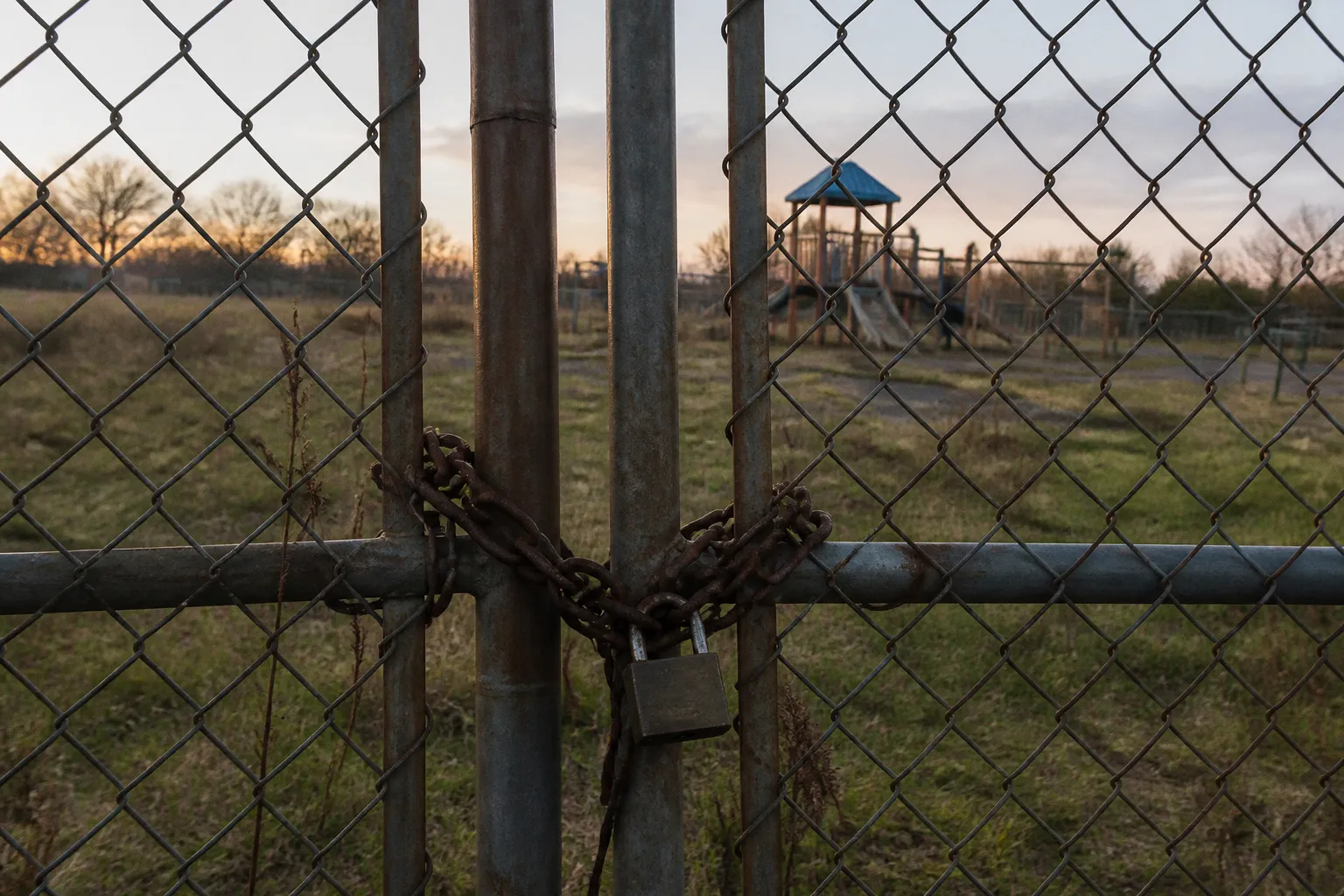
The grant may be awarded, the venue identified and the dates pencilled into the calendar, only for the organisers to discover that the activity cannot proceed without current public liability insurance, a suitable risk assessment or an event management plan.
That is not necessarily a failure of the project itself. It is a failure to connect the funding application with the conditions of delivery. A proposal can explain why a youth session, neighbourhood event or small safety installation is needed, while leaving unanswered the more practical question: who carries the risk when people arrive, equipment is installed or an incident occurs?
Insurance is often the point at which that gap becomes visible. By then, the budget may already be fixed and the grant conditions already accepted.
A grant creates the possibility of a project. Insurance, governance and delivery planning are what make that possibility usable.
The hidden barrier: why insurance compliance halts local projects
The phrase “community safety grant insurance requirements” sounds administrative, but the issue is operational. Public liability insurance is not simply another attachment to add before submitting an application. It can determine whether a group is permitted to run the activity it has described.
For a small voluntary organisation, that distinction matters. A group may have experience of running informal meetings or relying on a venue’s existing arrangements. That does not automatically mean it is insured for a public event, a youth programme, an outdoor installation or an activity involving volunteers and members of the public. The cover held by a church hall, school, landlord or partner organisation may be limited to the premises or to the organisation named on the policy.
The same applies to a previous event. An insurance certificate from an earlier activity does not establish that the current project is covered. The dates, named organisation, location, activity and level of risk may all be different. Some funders or licensing authorities may ask for evidence of cover at a particular stage, while others may expect the applicant to explain how insurance will be arranged before delivery. The relevant grant guidance and any instructions from North East Lincolnshire Council or the venue should decide what is required.
This is why the timing of the insurance conversation is important. If a group waits until it has received an award, it may find that:
- the proposed activity is more expensive to insure than expected;
- the insurer requires additional safeguards, trained supervision or a different venue;
- the policy must name another organisation or interested party;
- the grant cannot be used for the premium because the fund excludes ongoing operational costs;
- the certificate cannot be issued until the event plan and risk assessment are complete.
None of these points necessarily means that the project is impossible. They do mean that insurance cannot sensibly be treated as a final administrative task.
What public liability cover does — and does not — establish
Public liability insurance is designed to respond to claims that a third party has suffered injury or property damage connected with the insured activity. It is not a general certificate of project quality, and it does not replace safeguarding, supervision, health and safety planning or permission to use a site.
A certificate normally confirms the existence of a policy for a stated period. It may not contain every detail a venue or licensing authority needs to see. The policy schedule, exclusions and conditions can be relevant, particularly where the project includes:
- children or young people;
- temporary structures, stalls or equipment;
- physical activities;
- work in or beside a highway;
- volunteers carrying out practical installation or maintenance;
- amplified music or evening activity;
- food, alcohol or other separately regulated elements;
- more than one site or a series of events.
A group applying for public liability insurance for community groups should describe the activity accurately rather than choosing the cheapest generic description. Understating what will happen can create a more serious problem than paying a higher premium. If the project changes after the policy is issued, the organiser should ask the insurer whether the change affects cover.
The venue’s requirements also need to be separated from the funder’s requirements. A grant administrator may ask how insurance costs have been budgeted. A venue may require a certificate before confirming the booking. A licensing or safety process may require further documents. These are related questions, but they are not the same compliance test.
Capital versus operational costs: understanding funding exclusions
The second barrier is financial rather than documentary. Community safety schemes often distinguish between capital spending and revenue, or operational, spending. The exact definitions vary by fund, so applicants should read the current guidance rather than assume that a cost is eligible because it is connected to a safety project.
Capital funding is generally associated with an asset or one-off improvement: equipment, physical infrastructure, lighting, a gate, a camera system or another installation. Operational funding covers the continuing cost of running that asset or activity. Insurance premiums, monitoring, maintenance, staffing, venue hire and renewal costs may fall into that second category, depending on the scheme.
That distinction can create a gap between installation and operation. A group may secure money for equipment but still need a separate plan for:
- annual insurance renewal;
- servicing or maintenance;
- electricity and connectivity;
- monitoring or response arrangements;
- storage;
- volunteer training;
- permissions and inspections;
- replacement of damaged or worn components.
The risk is not limited to large infrastructure. A one-day event can also have costs that sit outside a capital award. Event insurance, stewarding, first aid, equipment hire and additional venue charges may be treated differently from the purchase of a permanent asset.
The responsible approach is to build a funding map before writing the application. It should show what the grant will pay for, what it will not pay for and who will meet the continuing costs once the funded period ends. The map does not need to be elaborate. A clear table can expose the problem early.
| Project element | Question for the applicant | Possible funding issue |
|---|---|---|
| Equipment or installation | Is this a one-off purchase or part of a wider works package? | May be eligible as capital, subject to the scheme rules |
| Public liability insurance | Is cover needed for the event, the organisation or the installed asset? | May be treated as an operational or excluded cost |
| Venue and event delivery | Does the activity require a booking, licence or additional cover? | May need separate revenue funding |
| Maintenance and monitoring | Who will inspect, repair or monitor the asset after installation? | Future costs may not be included in the award |
| Volunteer and staff activity | Are people supervising, installing or handling equipment? | Training, supervision and insurance may require separate provision |
| Renewal | What happens when the policy, licence or equipment warranty expires? | A project can become unfunded after the grant period |
This is particularly important for groups searching for safer streets funding insurance cost information. A headline grant amount says little about the amount available for the actual delivery model. A modest premium can consume a meaningful part of a small award, while a larger project may need cover that cannot be paid from the capital budget at all.
Do not assume that “match funding” solves the problem
Some grant rounds allow or encourage contributions from the applicant, a partner or another funder. In other schemes, match funding may be unnecessary, restricted or calculated in a particular way. Insurance may be capable of being covered by a partner contribution, but that depends on the published rules and on the partner’s willingness to take responsibility for the activity.
The safe wording in an application is not that insurance will automatically count as match funding. It is that the group has identified the cost, confirmed its eligibility and shown the source of payment. If the premium is being contributed in kind or by a partner, that arrangement should be recorded rather than left as an informal promise.
An insurance quote can therefore be useful even when the fund will not pay the premium. It gives the budget a realistic figure, reveals conditions that may affect delivery and gives the group time to alter the project if the cost is disproportionate.
Capital money can pay for what is installed. It does not automatically pay for what must happen every year after installation.
Navigating North East Lincolnshire licensing and governance hurdles
Insurance is only one part of the delivery chain. A community project in Cleethorpes or Grimsby may also involve the council, a venue owner, landowner, highways team, licensing officers, a school, a police partnership or another public body. Each may ask different questions.
There is no single document that makes an activity lawful or risk-free. A policy certificate does not substitute for permission to use land. A grant award does not substitute for a licence. A venue booking does not guarantee that the organiser has permission to hold a public event outside the building.
The first task is to identify the activity precisely. A weekly indoor youth session has a different administrative profile from a street event, a temporary market, a public performance or the installation of equipment in a shared space. The project description should answer basic delivery questions:
- Where will the activity take place?
- Who owns or controls the site?
- Who will be responsible on the day?
- Will children or vulnerable adults attend?
- Will volunteers supervise the public?
- Will anything be erected, moved, powered or connected?
- Will traffic, pedestrians, noise or neighbouring premises be affected?
- Does the activity require a temporary permission, licence or notification?
- What happens if weather, crowding or an incident makes the original plan unsafe?
These questions are not a claim that every project requires a licence or every application will be checked in the same way. They are prompts for identifying which authority or organisation needs to be consulted. The current instructions from the relevant council department, venue or funding body should be treated as the controlling source.
Governance documents need to match the activity
Funders commonly ask voluntary organisations to provide evidence of their legal status, governing document, accounts, bank details or responsible officers. Safeguarding, equality and health and safety arrangements may also be requested, especially where the project involves children, vulnerable people, volunteers or public events.
The important distinction is between having a commitment and being able to demonstrate an operating procedure. A sentence on a website saying that an organisation takes safeguarding seriously is not the same as a policy explaining how concerns are reported, who receives them and what happens next. Whether a particular fund scores such documents, requires them at application stage or requests them before payment depends on its guidance. It should not be presented as a universal rule.
A proportionate governance pack might include:
- the constitution, articles or other governing document;
- details of trustees, directors or committee members;
- the organisation’s bank and financial controls;
- recent accounts or an income-and-expenditure record where appropriate;
- a safeguarding policy if the project involves children or adults at risk;
- a health and safety policy or project-specific arrangements;
- an equality policy or an explanation of how inclusive delivery will be managed;
- a named person responsible for the funded activity;
- a complaints and incident-reporting process.
The point is not to create paperwork for its own sake. It is to make responsibility visible. If a project involves a partner, the application should make clear which organisation is responsible for insurance, safeguarding, volunteers, procurement and incident management. Ambiguity between a small community group and a larger partner can leave both assuming that the other has dealt with the risk.
Event management plans should be practical
A written event management plan is most useful when it describes the real activity rather than repeating general policy language. For a small gathering, it may be short. For a larger public event, it may need a site plan, stewarding arrangements, emergency contacts, first-aid provision, accessibility information and a procedure for cancelling or changing the event.
The plan should be consistent with the insurance proposal. If the application says that twenty volunteers will supervise a public space but the insurance quote describes a private meeting, there is a problem to resolve. If the plan relies on the venue’s fire arrangements, that reliance should be confirmed with the venue. If young people are attending, supervision and collection arrangements should be explicit.
A useful plan normally explains:
1. the activity and its intended audience;
2. the site, opening times and expected attendance;
3. how people enter, leave and move around the space;
4. who is responsible for supervision and decision-making;
5. how hazards will be identified and controlled;
6. what happens in an emergency;
7. how incidents, complaints and safeguarding concerns are recorded;
8. how the event will be adjusted for weather, accessibility or changing conditions.
That is not a guarantee of approval. It is evidence that the organiser has thought through delivery in a way that a venue, funder or council officer can understand.
Strategic budgeting for voluntary sector insurance premiums
The cost of cover depends on the activity and the organisation’s circumstances. There is no reliable universal price for public liability insurance for community groups. A small indoor session, an outdoor event and a project involving temporary structures present different risks. The number of events, participant numbers, turnover, volunteer roles and previous claims history may also affect the quote.
Groups should obtain indicative costs early, but they should not treat an online estimate as a confirmed budget. An insurer may ask follow-up questions once it understands the project. The quotation should be checked for:
- the period of cover;
- the activities included;
- the geographical area;
- the limit of indemnity;
- exclusions and conditions;
- whether volunteers are included;
- whether hired or temporary equipment is covered;
- whether the venue or council must be noted;
- whether separate cover is required for employers’ liability, professional advice, vehicles or specialist activities.
Employers’ liability is a separate consideration where the organisation has employees. It should not be assumed that public liability cover meets every insurance obligation. Likewise, trustees’ or directors’ cover, volunteer personal accident cover and contents or equipment cover may be relevant without being interchangeable.
Annual cover, event cover and partnership arrangements
An annual policy may make sense for a group running regular activities. Single-event cover may be more suitable for a one-off project. Neither option should be selected solely by price. The policy has to correspond to the work being undertaken and the parties responsible for it.
A partnership can sometimes reduce duplication. An established charity, community interest company or venue may already hold insurance and have governance systems in place. But using a partner’s policy is not automatic. The partner must agree to the arrangement, the insurer must confirm that the activity is covered and the roles must be written into a partnership agreement. It should be clear who employs or directs volunteers, who controls the site and who responds to an incident.
For a newly formed group, a partner may also provide more than insurance. It may hold the grant, manage procurement, supervise volunteers or provide safeguarding leadership. That can be a sensible structure, but it changes accountability. The smaller group should not assume that the partner has accepted every risk merely because its name appears on a certificate.
Build the renewal problem into the original application
The first premium is only the immediate cost. If an installation or programme is intended to continue, the group needs to identify what will happen when the policy expires. The same applies to equipment maintenance, venue charges and any permissions that must be renewed.
A simple project budget can divide costs into three periods:
- preparation, including permissions, design and insurance arrangements;
- delivery, including the event or installation itself;
- continuation, including renewal, maintenance, monitoring and review.
That division helps prevent a common mistake: describing a continuing service while budgeting only for its launch. If there is no confirmed source of money for the continuation period, the application should say so and explain how the group will review or scale the activity.
The funding body may not require a long-term guarantee. It may only require a budget for the funded period. Even so, a realistic continuation plan demonstrates that the group understands the difference between receiving money and operating safely.
Lessons from grant rejections in the Humber area
It is tempting to describe grant refusals or licensing decisions as evidence of a single regional pattern. That conclusion requires published decisions or assessment data, not anecdote. A project that was declined may have failed on eligibility, value for money, duplication, incomplete information, timing, capacity or a number of other grounds. Without the relevant decision record, it is not possible to say that insurance documentation is the strongest predictor of refusal.
What can be said more carefully is that missing documentation creates an avoidable weakness. Where guidance asks for an insurance certificate, risk assessment, governing document or delivery plan, the applicant should provide it in the form requested or explain clearly when and how it will be obtained. A panel cannot assess evidence that has not been supplied, and a licensing officer cannot rely on an assurance that has not been documented.
The same caution applies to claims about NELC licensing panels. A request for insurance or an event management plan does not mean that every community activity is subject to an identical panel process. Requirements can depend on the type of event, location, premises, temporary structures and other features. Applicants should establish the correct route for their own activity rather than infer a universal procedure from another project.
A useful review of a rejected application asks four questions:
1. Was the activity eligible under the specific funding round?
2. Did the budget distinguish one-off expenditure from continuing costs?
3. Were the required documents attached, current and consistent with the proposal?
4. Did the application explain who would be responsible for delivery, risk and post-grant costs?
Those questions do not turn a grant application into a formula. They make it easier to find the point at which an otherwise credible idea becomes difficult to approve.
A document-led preparation process
The most efficient order is often the reverse of the order in which groups naturally work. Instead of writing the persuasive narrative first and dealing with administration later, start by defining the delivery model.
Set out the activity, location, audience and responsible organisation. Ask the venue or landowner what it needs. Check the funding guidance for eligible expenditure and required attachments. Obtain an insurance quotation based on the actual activity. Then prepare the risk assessment and event plan. Only after those elements are understood should the group finalise the budget and application narrative.
The following table is a practical way to locate gaps without pretending that every fund or licensing route uses the same test.
| Evidence to assemble | What it should clarify | Who may need it |
|---|---|---|
| Insurance quotation or certificate | What activity is covered, for which dates and organisation | Funder, venue, partner or insurer |
| Risk assessment | What could go wrong and how the risk will be controlled | Organiser, venue or council contact |
| Event or delivery plan | How the activity will operate in practice | Funder, venue, volunteers and partners |
| Governing document and accounts | Who the organisation is and how it is controlled | Funding body |
| Safeguarding arrangements | How concerns involving children or vulnerable people will be handled | Funder, venue and delivery partners |
| Permission or licence correspondence | Whether the site or activity has the necessary approval | Organiser and relevant authority |
| Continuation budget | Who will pay renewal and operating costs | Committee, funder and partner |
The documents should tell the same story. A project that proposes a youth session, for example, should not have an insurance quote for an unrelated adult meeting, a venue booking with different dates or a safeguarding policy that names nobody responsible. Consistency is not a scoring claim; it is simply what allows different parties to understand the arrangement.
The Cleethorpes project should not be designed around the award alone
The central mistake is to treat a grant as the project’s starting point. In practice, the project starts with the delivery obligations: the site, the people involved, the permissions, the insurance, the operating costs and the person who will take responsibility when conditions change.
For a group in North East Lincolnshire, that may mean speaking to the venue before applying, checking the current requirements for a public event, asking an insurer to review the activity description and confirming whether a proposed cost is capital or operational. It may also mean reducing the scope. A smaller, properly insured event is more defensible than a larger programme whose supervision and renewal costs have not been identified.
The same applies to community project insurance in Grimsby and the surrounding area. Local knowledge and strong community relationships are valuable, but they do not remove the need for written arrangements. A trusted volunteer, familiar venue or established neighbourhood group still needs clarity about responsibility and cover when a project uses public space or involves members of the public.
Insurance should therefore appear in the first version of the budget, not the final version. If the fund excludes premiums, identify a separate source. If a partner is providing cover, record the arrangement. If the cost is unknown, obtain a quote and state the assumption. If the required cover cannot be secured, change the activity before the grant application commits the group to an unsafe or unaffordable model.
Closing position
The difficulty facing a Cleethorpes safety project is rarely just the price of a certificate. It is the distance between an attractive proposal and a deliverable one.
Funding guidance, licensing instructions and venue conditions do not always ask for the same documents, and no single requirement applies to every community group. But where insurance, risk assessments, safeguarding arrangements or permissions are required, they need to be identified from the beginning. The current rules for the particular fund and activity must take priority over assumptions drawn from another project.
A grant can pay for equipment, a programme or an event. It cannot by itself guarantee that the organisation is authorised, insured and prepared to deliver it. The groups most likely to avoid a late stoppage are not necessarily those with the largest budgets. They are the ones that test the delivery model early, price its continuing obligations and make responsibility visible on paper.
The paperwork is not separate from the community safety work. It is the framework that allows the work to happen.