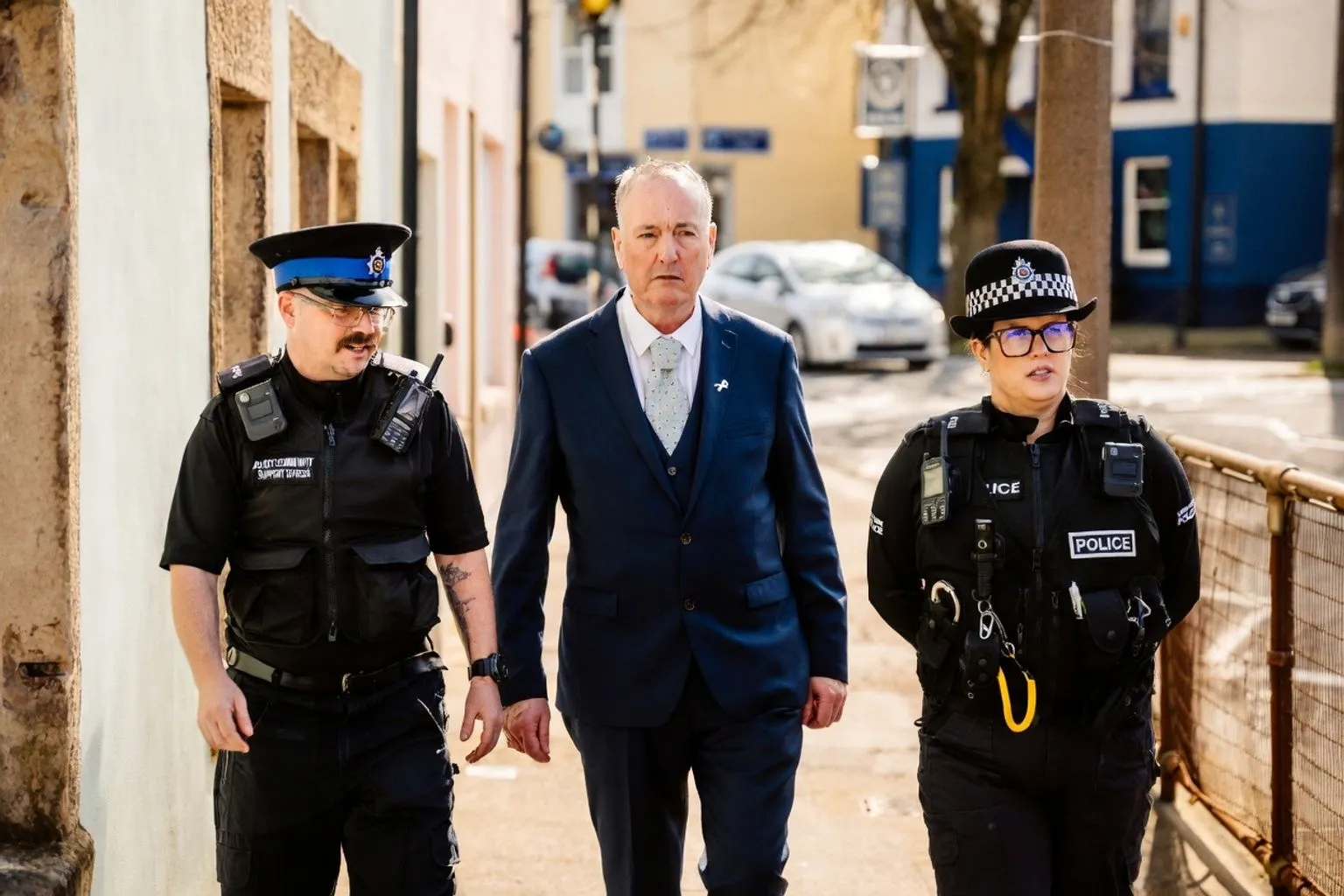
The answer matters more this week, after a cyclist was hurt in a hit-and-run at the Earl Street and Lord Street crossroads and Humberside Police put out a witness appeal.
That is the right starting point. Not the funding announcement itself, but what it tells us about how neighbourhood policing should work — and whether North East Lincolnshire is seeing the same kind of reinvestment on our patch.
What Lancashire did, in plain terms
Lancashire's Police and Crime Commissioner, Clive Grunshaw, has directed £90,638 recovered from criminals into 13 community organisations. The money will fund youth diversion work, anti-social behaviour projects, support for vulnerable residents, and schemes aimed at preventing violence against women and girls. Local charities, councils and community groups will run the projects.
According to the Commissioner's office, the funding covers sports and mentoring programmes, youth engagement, outreach work, creative projects, and online safety campaigns. Several of the schemes are designed to build relationships between local communities and policing teams — exactly the kind of visible, named local work that residents can recognise.
It is, in other words, seized money going back to the streets it came from, not disappearing into a central pot.
What it looks like here
The Lancashire story lands at an awkward moment for North East Lincolnshire. Residents are still digesting the hit-and-run at Earl Street and Lord Street in Grimsby, where a vehicle struck a cyclist and fled the scene. Humberside Police have appealed for witnesses and dashcam footage. That is the kind of incident where community intelligence — your footage, your recollection, your quick call — is exactly what moves an investigation forward.
It also lands against wider reporting of communities feeling left behind by policing. A BBC piece published this week carries the headline "We feel abandoned by police", documenting months of unresolved crime in one neighbourhood. We do not have the full details of that report, but the sentiment will be familiar to readers across our patch who have watched patrols thin out and response times stretch.
So the question is not whether Lancashire has done well. It is whether our local structures — the Commissioner, the constabulary, the council, the community groups — are doing the equivalent with the assets and budgets they hold.
What residents should be asking for
Three practical things, if you want straight answers rather than reassurance.
First, ask Humberside Police and the local crime commissioner what seized-asset funding has been directed into North East Lincolnshire in the past year, and which community organisations have received it. A simple list, published openly, is what Lancashire has done. We should expect no less.
Second, if you saw anything at the Earl Street and Lord Street junction on the evening of the collision, contact Humberside Police with what you know. Dashcam, doorbell footage, even the colour and direction of the car — every scrap of community intelligence counts.
Third, keep pushing for visible presence on the beat. Reinvestment schemes are welcome, but they are not a substitute for officers and PCSOs that residents actually see on their streets. If a funding announcement does not translate into a patrol you can name, it is not yet a safer street.
That is the standard I will hold our local leaders to. I expect them to respond in kind, and I expect residents to keep me posted on what they see out there.